
UK West Country to Witness Largest Solar Eclipse Since 1999
Stunning celestial event on August 12th offers West Country residents their best view of a solar eclipse in 27 years, with up to 95% of the sun obscured.

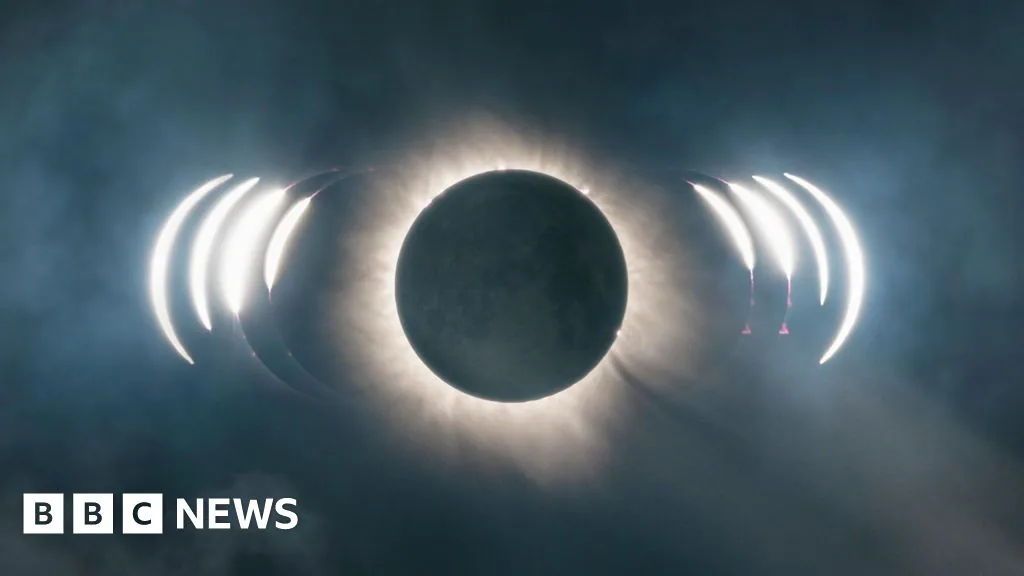
Residents across the UK's West Country are poised to witness a spectacular solar eclipse on August 12th, marking the most significant celestial event of its kind visible from the nation since 1999. Up to 95% of the sun will be obscured by the moon, offering a dramatic spectacle for those in Cornwall, Devon, Somerset, and Bristol. While the UK will not experience a total eclipse, the upcoming event is predicted to be the most impressive partial solar eclipse seen from Britain in over two decades.
The phenomenon occurs when the moon passes between the sun and Earth, casting a shadow. Although the path of totality—the area experiencing a complete solar eclipse—will traverse from Northern Russia to Greenland, Iceland, Spain, and Northern Portugal, the UK will still be treated to a substantial partial eclipse. Astronomers note that the next total solar eclipse visible in the UK is not anticipated until September 23, 2090, underscoring the rarity and importance of this August event.
Viewing times are crucial for this late afternoon/early evening eclipse. In the West Country, the eclipse will commence around 18:17 BST, reach its maximum coverage at 19:12 BST, and conclude by 20:06 BST. Clear skies and an unobstructed view of the western horizon are essential, as the sun and moon will be low in the sky. Locations offering elevated vantage points with an open western aspect, such as hills or specific viewpoints, are recommended.
Prime Viewing Locations and Safety Precautions
Astronomical societies and enthusiasts are identifying prime viewing spots. In Bristol, The Downs Sea Walls Viewpoint and Brandon Hill are suggested. Wales offers viewing opportunities in Cardiff and Swansea, while Wiltshire recommends locations like Cley Hill and Avebury Stone Circle. Somerset boasts Wells Cathedral Green and Little Solsbury Hill, and Devon points to Exmoor National Park and the Norman Lockyer Observatory. Cornwall and the Isles of Scilly are also highlighted for their exceptional viewing potential. Experts advise scouting locations in advance, using methods like the outstretched hand to gauge the sun's position near the horizon.
Crucially, direct, unprotected observation of the sun during an eclipse can cause severe and permanent eye damage. The Royal Observatory Greenwich strongly advises using ISO 12312-2 certified eclipse glasses. These specialized glasses feature safety certification markings. Alternatively, solar telescopes equipped with proper filters or pinhole projectors offer safe indirect viewing methods. Live streaming services from observatories provide another secure way to experience the event. Dr. Stephen Price, chair of the Bristol Astronomical Society, emphasized that only certified eclipse glasses or filtered optical equipment should be used, warning that regular sunglasses are insufficient and dangerous. This upcoming solar eclipse is a remarkable astronomical spectacle, but safety must be the top priority for all observers.
For those interested in capturing the event through photography, landscape astrophotographer Josh Dury recommends placing certified eclipse glasses over smartphone camera lenses for basic shots. More advanced photography with DSLR or mirrorless cameras requires dedicated solar filters attached to the front of the lens. For detailed images, a telephoto lens fitted with a solar filter and a tracking system is advised. Several free public viewing events are planned. The Bristol Astronomical Society, in partnership with We The Curious and the Friends of the Downs and Avon Gorge, will host an event at Bristol's Downs Sea Walls Viewpoint on August 12th, offering free certified eclipse glasses and access to specialist solar telescopes. This exceptional celestial event, the best partial solar eclipse visible in the Southwest England until 2090, presents a unique opportunity to witness the cosmos firsthand, weather permitting.