
Utah Sees Rare Near-Total Lunar Eclipse
Residents across Utah had a chance to witness a spectacular near-total lunar eclipse Thursday night, with the Earth's shadow obscuring most of the moon. The celestial event reached its peak at 10:12 p.m.

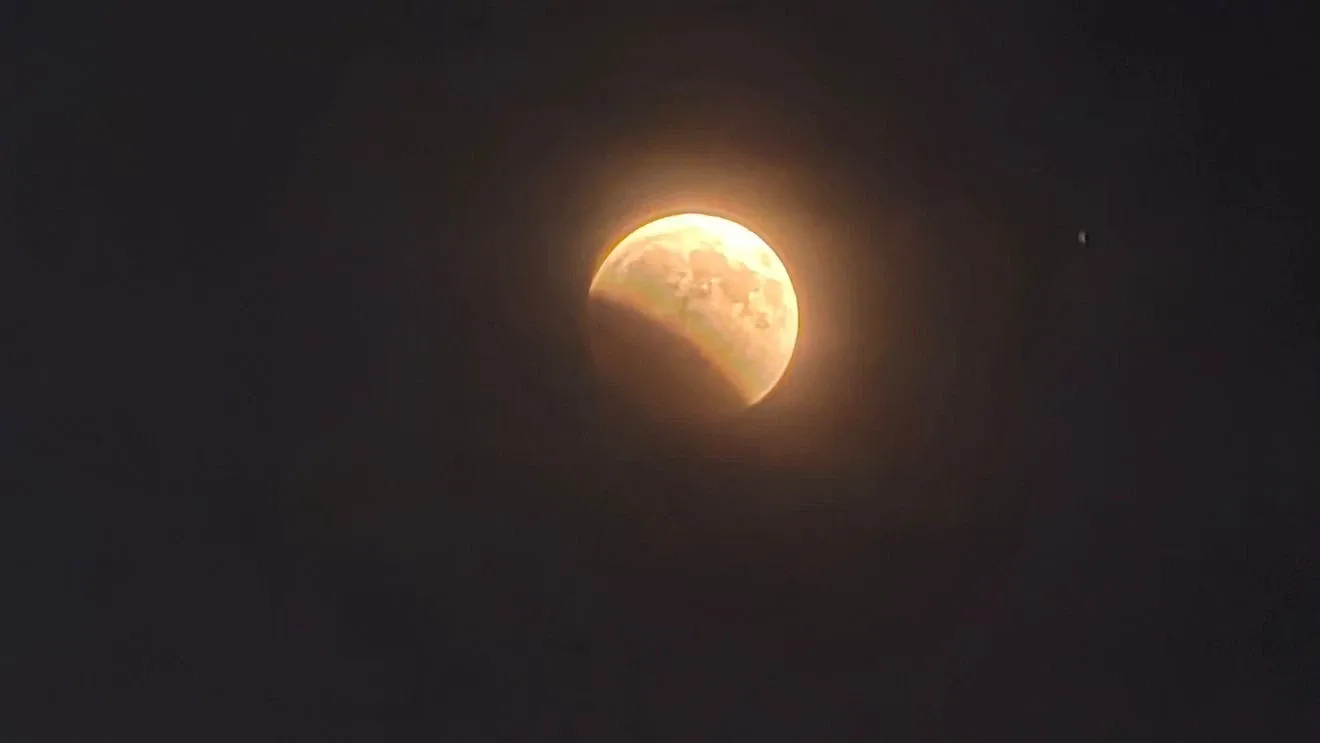
SALT LAKE CITY, UT – Skywatchers in Utah were treated to a dramatic celestial display Thursday night as a near-total lunar eclipse cast the moon into deep shadow. The event, first visible shortly after 8:30 p.m. Mountain Time, saw the Earth's umbra, or darkest shadow, consume all but a sliver of the lunar surface. The eclipse reached its maximum coverage at approximately 10:12 p.m., offering a stunning view for those who observed the phenomenon.
The eclipse continued its slow crawl until concluding around 11:51 p.m., leaving many to wonder when the next opportunity to witness such an event would arise. While Thursday's display was not a full total lunar eclipse, it offered a significant glimpse into the mechanics of celestial shadows. A total lunar eclipse, often referred to as a "blood moon" due to the reddish hue the moon can take on, occurs when the Earth's shadow completely obscures the moon.
Upcoming Celestial Events
For those in Utah who missed Thursday's event or are eager for more, the next partial lunar eclipse is slated for 2028. This future event is also expected to feature a significant portion of the moon being covered by Earth's shadow, with only a small crescent remaining visible. However, the next time Utahns will experience a *total* lunar eclipse is still some years away, anticipated in 2029. This upcoming total lunar eclipse will present a fully engaged view of the 'blood moon' phenomenon.
Beyond lunar events, the prospect of solar eclipses also looms on the horizon for Utah. The state is not slated to witness another total solar eclipse until 2045. This rare alignment occurs when the moon passes directly between the Earth and the sun, casting a shadow that can briefly plunge areas into darkness. An annular solar eclipse, where the moon appears smaller than the sun and creates a "ring of fire" effect, is even further off, with the next one visible in Utah predicted for 2077. These distant dates highlight the rarity of such astronomical alignments and the significance of each visible event.
Lunar eclipses occur when the Earth passes directly between the sun and the moon, casting its shadow on the moon. This alignment can only happen during a full moon. The frequency and visibility of eclipses are subject to the orbital paths of the Earth and moon, making each viewing opportunity a unique experience. While Thursday's eclipse was a partial event, it served as a reminder of the vast and dynamic celestial theatre playing out above us, captivating observers with its natural beauty and astronomical significance.