
Webb Telescope Spots Early Galaxies Challenging Cosmic Models
The James Webb Space Telescope is observing galaxies from 13 billion years ago that defy current cosmological models. These ancient galaxies exhibit characteristics thought only possible in much more mature cosmic eras.

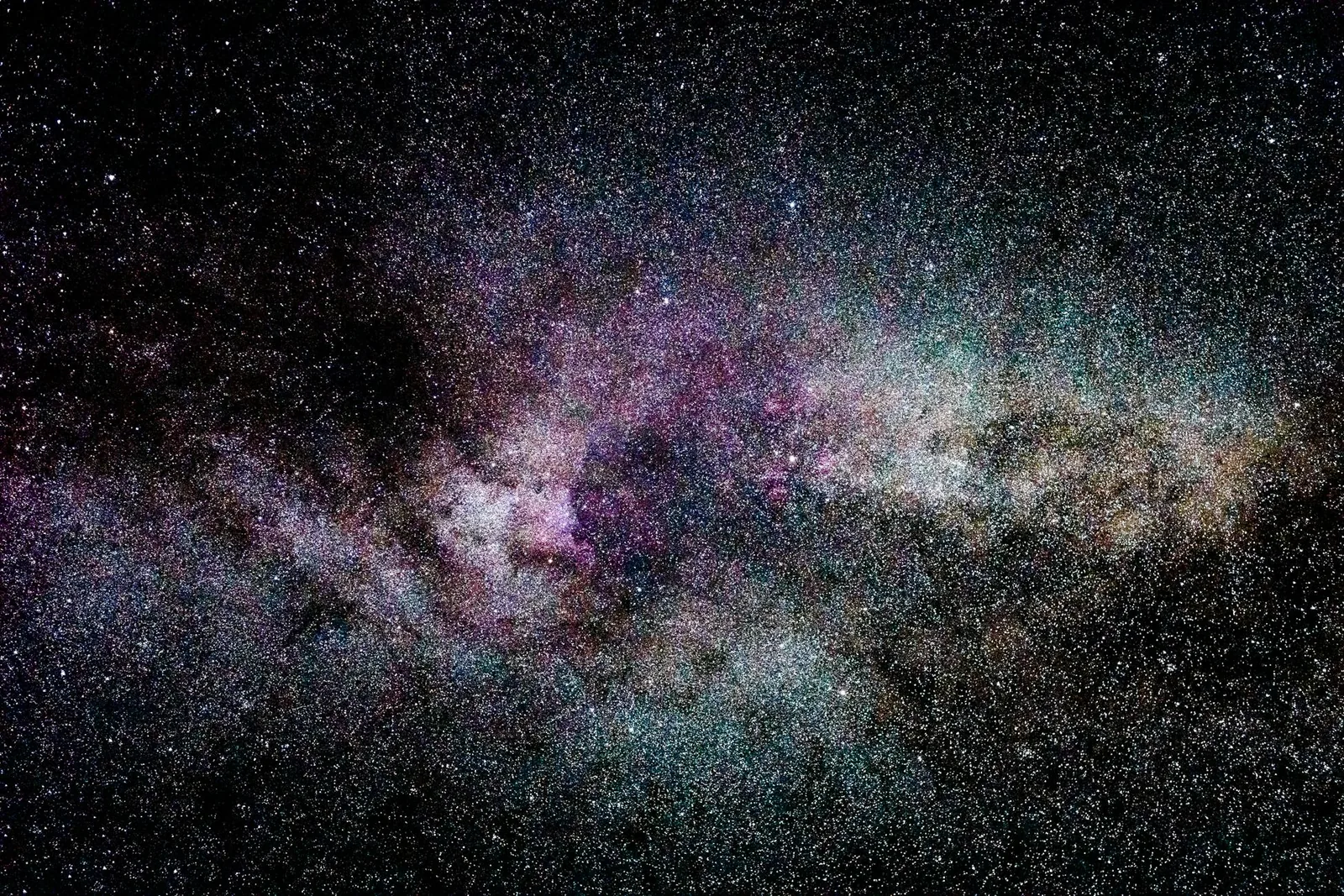
The James Webb Space Telescope (JWST) has detected galaxies dating back to when the universe was less than two billion years old, with several exhibiting properties that contradict established cosmological models. Observations of XMM-VID1-2075, a galaxy previously identified as massive, revealed no detectable rotation, a characteristic typically associated with mature galaxies in the local universe, not infant galaxies.
This finding is part of a recurring pattern observed by JWST: a collection of early galaxies that are individually plausible yet collectively challenge the Lambda-CDM model, the prevailing framework for cosmic evolution that cosmologists were using at the time of Webb's launch in 2021. This model posits that the early universe, within its first 500 million years, would have produced only small, irregular, low-mass galaxies. Structured, massive systems were predicted to assemble over billions of years through mergers.
JWST was specifically designed and equipped with advanced instruments, including a 6.5-meter mirror and infrared capabilities, to capture light from this distant epoch. This light, stretched into the infrared spectrum by the universe's expansion, allows scientists to test the Lambda-CDM model's sharpest predictions about early cosmic structure formation. The telescope's very justification and decades-long development were predicated on this scientific mission.
Challenging the Standard Model
The discrepancies observed by JWST fall into several categories. Firstly, mass: JWST has identified candidate galaxies at redshifts above z=10, existing within approximately 500 million years of the Big Bang, with stellar masses exceeding what the standard Lambda-CDM model, with typical star-formation efficiency, allows. While not impossible, these galaxies push the limits of the model, with some appearing to surpass the theoretical ceiling depending on the assumptions made.
Secondly, structure: The non-rotating massive galaxy mentioned earlier exemplifies this issue. Such 'quenched' galaxies, where star formation has ceased, are expected to appear much later in cosmic history after accumulating sufficient mass for feedback processes to halt star birth. The observed early quenching and lack of rotational support contradict the standard timeline.
Thirdly, morphology: A survey of over 250 galaxies observed between 800 million and 1.5 billion years after the Big Bang revealed most to be turbulent, gas-rich, and still undergoing mergers. This chaotic state contrasts with the smoothly rotating disks that earlier models favored for galaxies of that mass and age.
Fourthly, dust: The detection of around 70 dusty galaxies less than a billion years after the Big Bang poses a problem, as dust is a byproduct of stellar evolution, requiring significant time for stars to form and die. This implies more prior stellar generations than the timeline readily accommodates.
Finally, pace: Reports of young galaxies displaying chemical compositions and structures characteristic of much older systems indicate an evolutionary tempo that the standard star-formation prescription fails to reproduce. Researchers have likened it to two-year-olds behaving like teenagers, highlighting a faster-than-expected developmental speed.
It is important to clarify that these findings do not invalidate the Big Bang theory or suggest the universe is younger than 13.8 billion years. The core tenets of Lambda-CDM, particularly concerning large-scale structures and the cosmic microwave background, remain robust. The tension lies specifically within the model's prescriptions for the first few billion years of cosmic evolution: the efficiency of gas-to-star conversion in early dark matter halos, the speed of stellar enrichment and feedback, and the rate of structural assembly.
Adjustments to assumptions about star-formation efficiency, the initial mass function of stars, or dust correction methods are being considered. These are not minor tweaks but rather recalibrations of parameters that the pre-Webb consensus had set. The continuous stream of data from JWST is effectively prompting a public, real-time re-tuning of these cosmic dials.
Implications and Future Research
The surprise generated by these early results is itself informative. JWST's specific design and funding were aimed at probing this precise epoch and testing established models. The fact that its initial observations have revealed significant deviations suggests the instrument is functioning precisely as intended, providing crucial data that can reshape our understanding.
The next steps involve spectroscopic confirmation of the high-redshift candidates. Spectroscopic analysis is vital to rule out lower-redshift contaminants that might be misidentified. While removing such contaminants softens the mass-time tension, it does not eliminate it.
Cosmological simulations are now being rerun with modified parameters to better match JWST's observations. The scientific community is actively exploring adjusted star-formation efficiencies, feedback prescriptions, and initial mass functions. While a consensus on the correct adjustments may take several more observing cycles, the current data unequivocally indicate that the pre-Webb prescription for early structure formation requires revision. The early universe, as seen by Webb, is proving to be more complex and mature than previously modeled.