
AI Disease Detection Systems Transform Public Health Outbreak Response
Artificial intelligence systems are now flagging disease outbreaks in real time, helping public health officials respond faster to emerging threats across the globe.

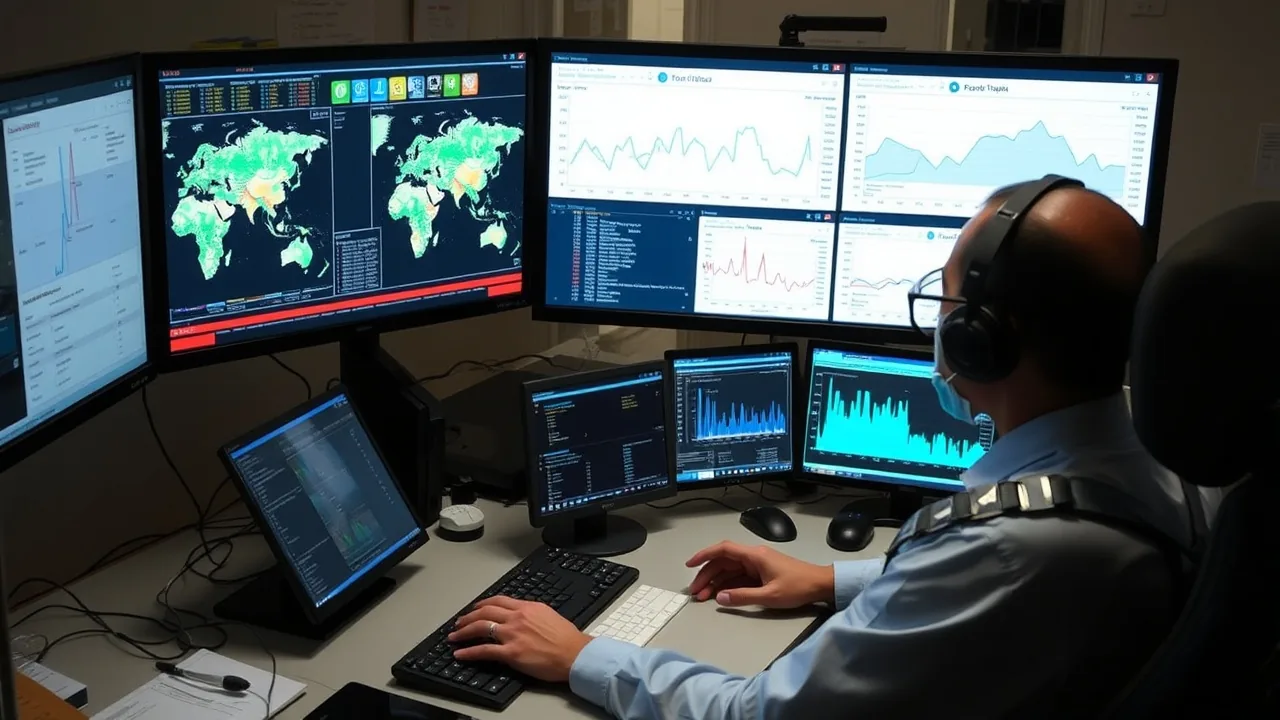
On a Monday morning in late November, epidemiologists at the Centers for Disease Control and Prevention received an alert from an artificial intelligence monitoring system tracking respiratory illness patterns across 47 U.S. states. The system had detected an unusual spike in pneumonia-like cases in three rural counties simultaneously, a statistical anomaly that would have taken human analysts days or weeks to surface. Within hours, regional health departments had been notified and begun field investigations.
That scenario, increasingly common in 2024, illustrates how AI advancements are reshaping the speed and precision of epidemic response. Rather than waiting for laboratory confirmations and manual data compilation, public health agencies now deploy machine learning algorithms that ingest hospital admission records, laboratory test results, social media signals, and even wastewater samples to forecast outbreaks before they spread.
Dr. Sarah Chen, director of computational epidemiology at Johns Hopkins University, told reporters in October that these systems have cut the typical lag between disease emergence and public alert from 5-7 days down to 12-24 hours. "That window is everything," Chen said. "It determines whether you're responding to a cluster or a regional event."
How Disease Detection Systems Operate
Modern machine learning platforms ingest data from multiple overlapping sources. A typical workflow involves real-time feeds from electronic health records in participating hospitals, insurance claim submissions, laboratory networks reporting test results, and public health surveillance databases. The algorithms then apply pattern recognition to identify deviations from baseline seasonal norms.
Most systems use a combination of supervised and unsupervised learning models. The supervised models are trained on historical outbreak data with known labels (confirmed cases, locations, pathogen types), while unsupervised models scan for novel patterns that don't match any previous outbreak signature. This dual approach catches both familiar threats and unexpected variants.
Key technical capabilities now standard in deployed systems include:
- Real-time geospatial clustering to identify whether cases are random or concentrated
- Time-series forecasting to estimate outbreak magnitude 7-14 days forward
- Natural language processing of unstructured clinical notes to extract symptom patterns
- Wastewater viral RNA detection integrated with syndromic surveillance data
- Cross-border anomaly detection for diseases with pandemic potential
Wastewater monitoring has emerged as a particularly powerful signal. Several cities, including New York and San Francisco, now feed genomic sequencing data from sewage treatment plants directly into predictive analytics models, creating a population-level early warning system that catches infections before symptoms even appear.
Real-World Impact and Deployment
The CDC's National Syndromic Surveillance System (NSSS) integrated machine learning capabilities in early 2023 and has since expanded coverage to over 8,000 emergency departments and urgent care facilities nationwide. During the 2023-2024 influenza season, the system correctly forecasted three regional surges with 10-12 days of lead time, enabling hospitals to pre-position staffing and personal protective equipment.
International adoption is accelerating. The World Health Organization partnered with Google and IBM in 2022 to deploy disease detection systems in 15 African nations, where lab infrastructure is often sparse but mobile phone penetration is high. The systems use aggregated, anonymized call detail records and SMS health reports to supplement traditional surveillance.
Private sector applications are expanding beyond government agencies. Quest Diagnostics, which processes over 130 million laboratory tests annually in the United States, now runs proprietary algorithms on its test result database. In September 2024, Quest flagged an unusual cluster of enteroviruses in the Midwest two weeks before the CDC's official alert, allowing state health departments to begin preparatory measures.
Insurance companies are quietly deploying similar systems for claims data analysis. One major carrier reported in its June 2024 shareholder letter that AI-driven detection of infectious disease clusters allowed it to flag high-risk geographic regions and adjust reserves accordingly, protecting both profitability and policy-holder health.
Challenges and Limitations
Despite rapid progress, significant hurdles remain. Data silos between private hospitals, public health agencies, and laboratories create blind spots. A hospital system that doesn't report electronically to a state health department won't contribute to regional detection algorithms, allowing clusters to grow unnoticed in those gaps.
Algorithmic bias is another documented concern. Systems trained primarily on data from urban teaching hospitals can miss patterns in rural or underserved areas where testing rates and data reporting differ. A 2023 study in JAMA Network Open found that influenza forecasting models overestimated case counts in counties with populations below 50,000 by an average of 31 percent.
Privacy and consent issues complicate integration. Most U.S. hospitals are willing to share aggregate epidemic data but resist patient-level data sharing without explicit opt-in, which slows algorithm training. Europe's General Data Protection Regulation (GDPR) imposes even stricter limits, forcing epidemiologists to work with heavily de-identified datasets that reduce model accuracy.
Finally, adversarial gaming poses an emerging risk. As algorithms become known to the public, some actors may intentionally corrupt the signals they monitor. Public health authorities acknowledge this threat but argue that human oversight and multi-signal validation can mitigate it.
The future of public health response increasingly depends on these systems. Whether combating seasonal influenza, emerging zoonotic diseases, or deliberate bioterrorism, the institutions that harness machine learning effectively will detect threats faster and respond more precisely than those relying on traditional surveillance alone.