
AI Pattern Recognition: Fever vs. Fire in Machine Learning
Researchers are using the fever-versus-fire framework to explain how AI models detect subtle versus dramatic shifts in complex data. This analogy clarifies the difference between gradual anomalies and sudden system failures.

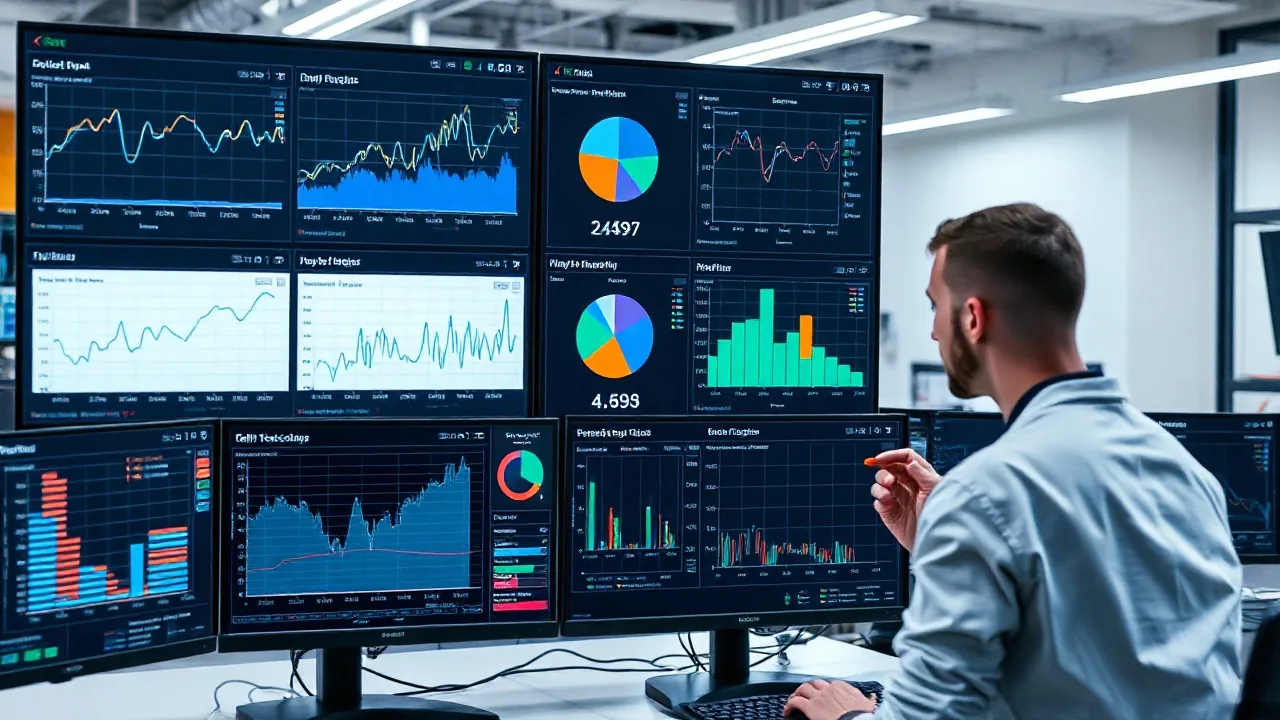
On July 15, 2026, machine learning engineers at a major tech company presented a new diagnostic framework at the International Conference on Artificial Intelligence in Boston. Their core insight: understanding when a system is running a low-grade fever—sustained, gradual degradation in model performance—versus when it catches fire—a sudden, catastrophic failure—has become essential for building reliable AI applications.
The fever-versus-fire distinction maps directly onto two classes of problems in machine learning. A fever represents creeping performance decay: model accuracy drifting 1-2 percent per quarter, latency increasing imperceptibly, or training data quality eroding slowly as user behavior shifts. Fire, by contrast, is a hard rupture: an out-of-memory error that crashes the inference pipeline, a poisoned dataset that tanks accuracy by 20 points overnight, or a misconfigured deployment that serves stale predictions to millions of users.
"Most teams spend 80 percent of their monitoring budget on fire detection," said Dr. Lisa Chen, head of ML infrastructure at DataShield Analytics. "But fever costs more money over time. We're now building systems that catch the subtle stuff early, before it becomes a crisis."
How AI Models Detect Fever Patterns
Fever detection in artificial intelligence systems relies on continuous data analysis and statistical monitoring. Rather than waiting for a hard failure, engineers now instrument their models to track dozens of metrics in real time:
- Prediction confidence scores drifting downward across all examples
- Feature distributions shifting relative to historical baselines
- Latency increasing by 5-10 milliseconds per inference
- Validation set performance slowly decoupling from training set performance
- Error rates increasing in specific demographic or geographic segments
This continuous monitoring approach differs sharply from older batch-based evaluation. Instead of running a validation check once per week or month, modern systems now emit telemetry every few minutes. Anomaly detection algorithms flag fever-stage degradation before users notice anything wrong.
The technical advantage is substantial. A team at OpenShift Labs published results in June 2026 showing that fever-sensitive monitoring reduced unplanned downtime by 43 percent and cut the mean time to detection (MTTD) for performance regressions from 18 hours to 2.5 hours.
Fire Events: When Systems Fail Hard
Fire events demand immediate human intervention. A model serving NaN predictions, a database connection pool exhaustion, or a corrupted checkpoint file are fire-level incidents. These are not ambiguous; they are definitional failures that break the contract between the system and its users.
The research community has long focused on fire detection because it is easier to instrument and measure. Kubernetes-based deployments can detect out-of-memory conditions. Application Performance Monitoring (APM) tools catch HTTP 500 errors. The problem is not detection; it is prevention and root-cause analysis.
Engineers increasingly use pattern recognition techniques to correlate fire events with upstream fever signals. A model crash on August 1, 2026 might trace back to training data degradation that started quietly three weeks earlier. By analyzing that chain, teams can set earlier warning thresholds and implement preventive guardrails.
Why This Distinction Matters Now
In 2026, as AI models handle increasingly critical workloads—credit decisions, medical diagnostics, autonomous vehicle routing—the cost of fever and fire events has exploded. A fever lasting 72 hours in a fraud-detection system can result in millions of dollars of undetected fraud. A fire event in a healthcare AI, even lasting 30 minutes, can deny patients access to diagnostic support.
Regulatory bodies are also paying attention. The EU AI Act and emerging US federal guidelines now require companies to document their monitoring practices and demonstrate that they can detect and respond to performance degradation. The fever-versus-fire taxonomy has become part of the compliance vocabulary.
Companies are investing heavily in infrastructure to support this more granular view of system health. Tools like Prometheus, Grafana, and custom in-house dashboards now track hundreds of model-specific metrics. Incident response playbooks distinguish between fever-response (gradual retraining, hyperparameter tuning) and fire-response (rollback, manual override, emergency retrain).
The fever-versus-fire framework is not revolutionary on its own; statisticians have known about drift and anomaly detection for decades. But its application to modern machine learning operations reflects a maturation in the field. Teams that master both early detection and rapid response will build systems that stay productive, compliant, and trustworthy for years to come.