
Marjane Satrapi's Artistic Vision Meets AI Creative Tools
The acclaimed graphic novelist's distinctive black-and-white style and themes of cultural identity are now inspiring developers building AI art generators. What happens when algorithm meets autobiography?

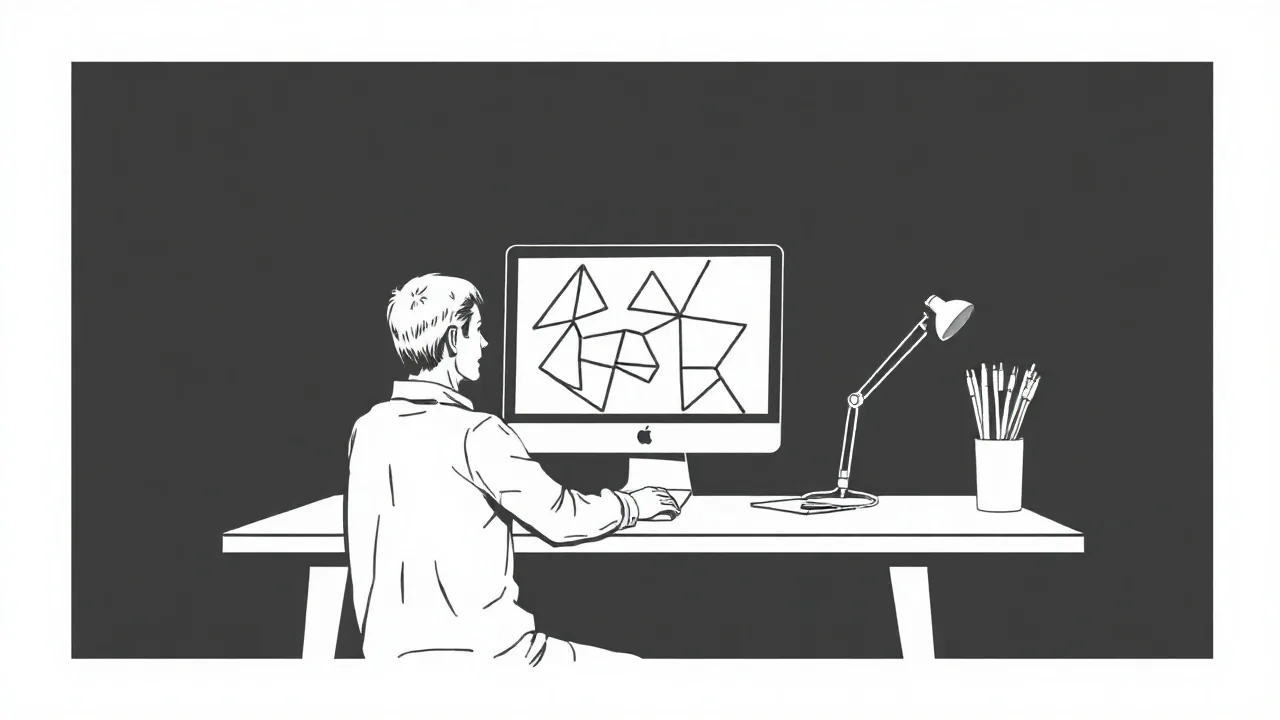
Marjane Satrapi's influence on visual storytelling has reached a new frontier: artificial intelligence. The Iranian-American artist, whose memoir "Persepolis" redefined the graphic novel form with stark black-and-white illustrations and unflinching political commentary, has become an unlikely muse for machine learning researchers and creative technologists exploring how AI can learn from and extend human artistic traditions.
In June 2026, as creative AI tools multiply across platforms, curators and developers are examining what distinctive artistic signatures like Satrapi's offer to neural networks trained on visual databases. Her economical line work, emotional directness, and visual metaphors for complex social themes present a case study in how algorithmic systems might capture artistic intent beyond surface aesthetics.
"Marjane Satrapi's work represents something AI systems still struggle with: the marriage of formal constraint and emotional depth," says Dr. Helena Chen, a computational art researcher at the University of California. "Her drawings achieve maximum impact with minimal elements. That economy of expression is what makes her style both recognizable and, paradoxically, difficult for generative models to authentically reproduce."
How AI Learns from Graphic Novel Masters
Training AI art systems on canonical graphic novels raises both technical and ethical questions. Unlike photograph-based datasets, illustrated works carry author intent embedded in every stroke. Satrapi's visual language—the thick borders, the use of negative space, the recurring motifs of cages and wings—cannot be separated from her autobiographical narrative without losing meaning.
Several emerging platforms have begun experimenting with style-transfer models that isolate the visual grammar of named artists. These systems analyze pixel patterns, line weight distribution, and compositional habits to create new images "in the style of" a given creator. Applied to graphic novels, the challenge intensifies: a faithful reproduction must honor not just visual markers but the conceptual logic that drives panel-to-panel storytelling.
Researchers at MIT's Media Lab published findings in early 2026 demonstrating that models trained on Satrapi's published work could generate novel comic panel layouts with thematic consistency. However, the system failed to independently develop visual metaphors without explicit prompting. The algorithm could copy the surface but not the syntax.
The Ethics of Style, Ownership, and Generative Art
As artistic inspiration becomes algorithmic, questions of attribution and consent loom large. Satrapi has not publicly endorsed any AI initiative using her work. No licensing agreements currently govern how her visual signature is represented in training datasets or commercial applications.
The broader creator community remains divided. Some illustrators and cartoonists view AI as a tool for exploration and democratization of artistic practice. Others argue that training models on copyrighted works without explicit permission constitutes appropriation at scale. Satrapi's silence on the matter reflects a wider uncertainty in the arts establishment about how to navigate machine learning's relationship to human creativity.
Legal frameworks lag behind technical capability. The U.S. Copyright Office has not issued clear guidance on whether training datasets require artist consent or constitute fair use under transformative doctrine. Several lawsuits filed in 2025 and 2026 by visual artists against major AI companies remain pending.
Industry analysts at the Creative AI Alliance estimate that roughly 40 percent of popular style-transfer applications include unlicensed work from recognizable contemporary and historical artists. Satrapi sits at the intersection: her work is globally recognized, culturally significant, and often taught in universities, making it a natural target for training datasets both legitimate and otherwise.
What AI Can and Cannot Learn from Autobiography
Satrapi's greatest contribution to visual narrative is arguably her integration of personal experience with political discourse. "Persepolis" succeeds because its formal innovations serve thematic purpose. The shift from childhood memory to adult reflection finds expression in changing line styles and panel structures. This is not a surface effect that algorithms can extract and reapply.
Digital art tools that leverage machine learning are increasingly marketed to students and emerging artists as companions to human creation. Some platforms explicitly position themselves as tutors, offering feedback on composition and style based on analysis of master works. The implicit claim is that studying Satrapi through an AI mirror teaches something about her intentions.
Yet the evidence suggests otherwise. When students use AI tools trained on Satrapi's style to generate autobiographical comics, the results often feel affectively hollow. The machinery copies the gesture without understanding the conviction beneath it. The algorithmic system can produce a drawing that looks like Satrapi; it cannot produce one that thinks like her.
This gap matters. It suggests that AI tools may be most useful not as replacements for human artistry but as mirrors held up to artistic decision-making. A cartoonist who understands how an algorithm processes her visual logic may develop sharper insight into why she makes the choices she does. The machine becomes not a muse but a methodological tool.
As 2026 progresses, institutions from the Pratt Institute to the Cartoon Art Museum are beginning to commission works that intentionally pair human and algorithmic creativity. These explorations, conducted with transparency and explicit attribution, may chart a path forward. The question is not whether AI will engage with artists like Satrapi, but whether that engagement will honor the labor, intent, and cultural specificity that made their work worth learning from in the first place.