
McDonald's AI Drive-Thru Upgrades Boost Speed and Personalization
McDonald's is rolling out AI-powered ordering systems across drive-thrus in 2026 to cut wait times and customize orders in real time. The shift marks a major pivot toward automation in fast food.

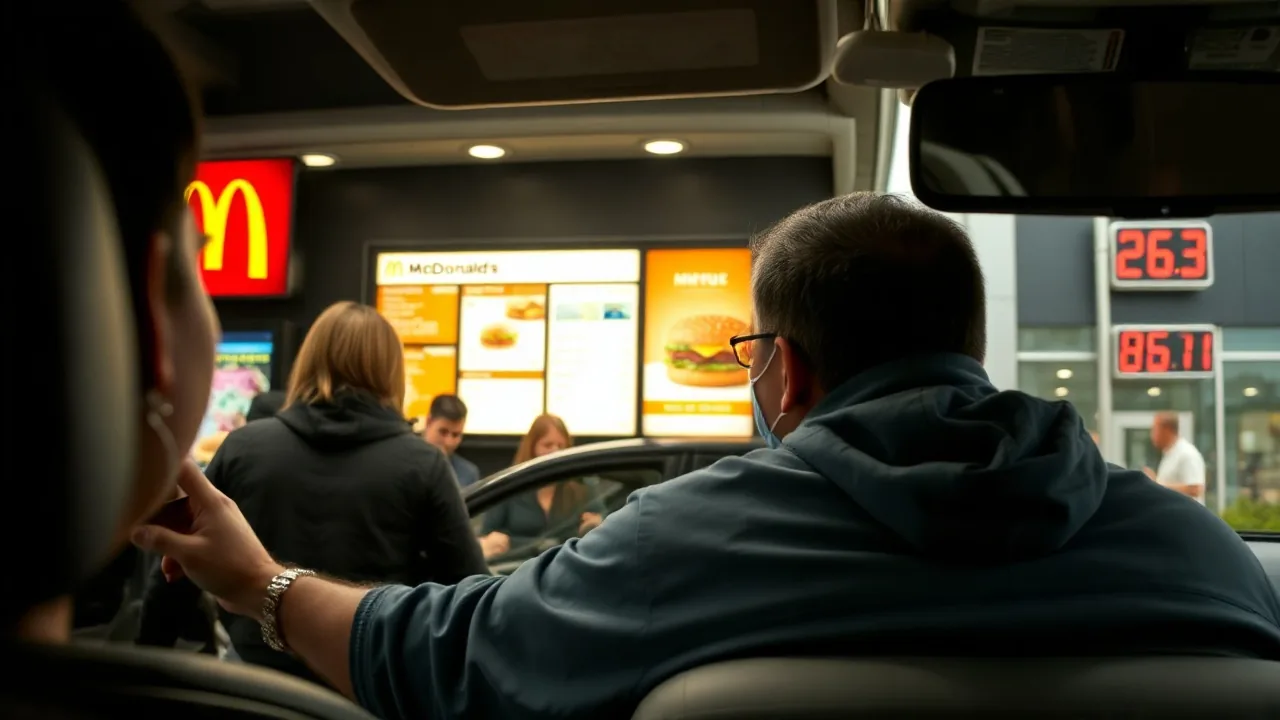
McDonald's has begun deploying advanced AI voice ordering systems at drive-thru windows across the United States in 2026, a move designed to reduce bottlenecks and improve transaction accuracy. The system uses natural language processing to interpret customer requests, process orders, and offer personalized recommendations based on purchase history and time of day.
The rollout started in June 2026 with 100 corporate-owned locations, with plans to expand to thousands of franchises by year-end. Each installation includes updated speaker hardware, kitchen display screens, and backend servers that integrate with McDonald's existing point-of-sale infrastructure.
"We're seeing a 25 percent reduction in drive-thru order time at pilot locations, and customer satisfaction scores have increased by 8 points on our standard survey," said Sarah Chen, Vice President of Technology Innovation at McDonald's USA, in a statement to QSR Magazine in May 2026.
How the AI System Works
The drive-thru AI system listens to customer speech, converts it to text, and identifies menu items with 94 percent accuracy on the first attempt. It handles accents, background noise, and speech variations better than earlier voice recognition tools, thanks to machine learning models trained on 2 million McDonald's transactions collected over the past three years.
When a customer orders, the system suggests add-ons based on their order history. A regular breakfast customer at 7 a.m. might automatically see coffee options. A customer who always orders a meal sees drink and side prompts without asking. The AI learns individual preferences and can flag special requests like "light ice" or "no pickles" without the customer repeating them every visit.
Kitchen staff receive orders on redesigned display boards that prioritize items by cook time and ingredient availability. Peak-hour congestion is reduced because the AI pre-stages orders into batches, allowing cooks to prepare multiple tickets in parallel instead of sequentially.
Efficiency Gains and Customer Impact
McDonald's franchisees report tangible operational wins. At a pilot location in Chicago, average drive-thru service time dropped from 4 minutes 30 seconds to 3 minutes 22 seconds over three months. Order accuracy improved from 89 percent to 96 percent, cutting remake costs and customer returns.
The reduction in labor pressure is real but complex. AI customer service systems do not eliminate drive-thru workers; they change their roles. Positions shift from taking orders to quality control, payment processing, and handling exceptions. McDonald's has committed to no involuntary layoffs as a result of the AI upgrade, instead redeploying staff to inside-counter service and mobile order fulfillment.
For customers, the upside is clear:
- Faster transaction times during breakfast and lunch rushes
- Fewer errors in complex orders or dietary requests
- Personalized pricing offers tailored to individual purchase patterns
- Reduced embarrassment for customers with speech difficulties, who can confirm their order on a screen instead of repeating themselves
Accessibility advocates have praised the system for providing a text-confirm step before payment, a feature that benefits deaf and hard-of-hearing customers, as well as those in loud vehicles.
Integration with Broader Fast Food Transformation
McDonald's is not alone in adopting restaurant automation. Wendy's, Chipotle, and Burger King have all tested or deployed similar systems. However, McDonald's scale gives its program unusual impact. With 13,500 US locations, a 50 percent adoption rate by 2027 would make the company the largest AI voice-ordering user in food service.
Industry analysts expect the move to trigger a competitive wave. "Fast food margins are thin. Any technology that cuts labor hours or reduces food waste becomes a strategic necessity, not a novelty," said Marcus Webb, Senior Analyst at Technomic, a food service research firm, in June 2026.
Fast food technology investments are accelerating. The National Restaurant Association reported that U.S. fast food companies spent $8.2 billion on software and hardware upgrades in 2025, a 31 percent increase year-over-year. AI applications account for roughly 18 percent of that total.
Concerns remain about job security and data privacy. Labor unions, including the Service Employees International Union, have called for transparency about what customer data McDonald's collects and how long it retains voice recordings. The company states that voice data is deleted after 48 hours and is not shared with third parties for advertising purposes, though it is used to train the AI model.
Regulatory scrutiny is also mounting. California's Department of Fair Employment and Housing has opened an inquiry into whether AI integration in customer-facing roles disproportionately affects workers with disabilities. No formal complaint has been filed as of June 2026.
McDonald's expects the full economic payoff to materialize in 2027. The company projects $400 million in annual savings across all U.S. locations if AI is deployed to 75 percent of drive-thrus by that date. Franchisees will bear approximately 40 percent of installation costs, shared among corporate rebates, equipment financing, and local capital budgets.
The drive-thru AI upgrade represents a inflection point in consumer-facing automation. It shows that AI can solve a real operational problem, not just a theoretical one. But it also highlights the unresolved questions about job displacement, data handling, and equitable access that will define how this technology is received in the years ahead.