
Meta's Pocket App Lets Anyone Build Games Via AI Prompts
Meta's new Pocket app, launched August 21, allows users to create interactive games and 'gizmos' using simple text prompts. The tool bypasses traditional coding, but results are confined to Meta's platform.

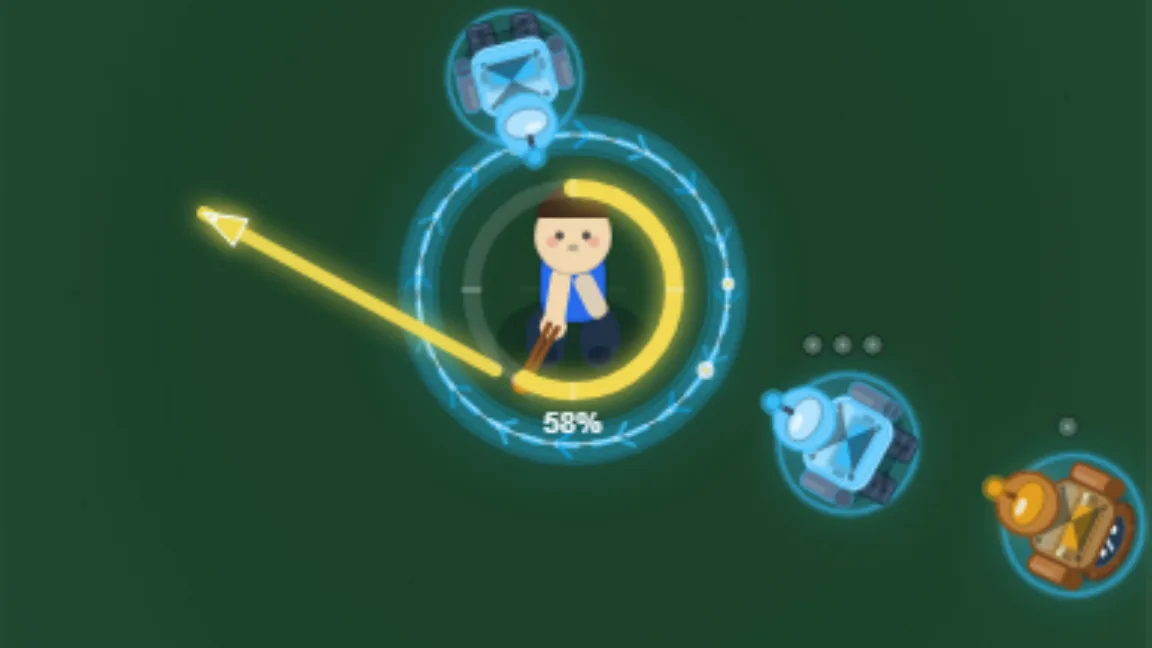
Meta launched Pocket, a new mobile application that empowers users to create functional interactive "gizmos" and game prototypes simply by typing text prompts, without any direct coding. The app, which became available in the US on Friday, August 21, emerged after Meta acquired the team behind the now-defunct vibe-coding application Gizmo in March. Pocket abstracts away the complexities of traditional software development, offering an accessible entry point for individuals with little to no programming experience. The creations can then be shared within a dedicated social feed, complete with interactive elements like likes, comments, and reposts.
The user experience begins with a straightforward text box labeled "Describe an idea…" The author of the article tested the app by prompting a "sling shot" game where users tap and hold the screen to spin a sling, releasing to fire a tangential projectile at incoming enemies. The initial prompt described the core mechanics: "An overhead shot of a man in the center of the screen. When you tap and hold he rotates a sling around him in a circle. When you lift your finger the sling sends out a ball perpendicular to the sling. The longer you hold the faster the ball comes out." Pocket reportedly generated a functional prototype incorporating these mechanics, along with unsolicited but useful additions like explodable targets and basic UI elements such as a score counter and power meter, in under two minutes.
Over subsequent prompts, the author refined the initial concept, transforming it into a more complex game. This involved iterating on enemy types, introducing and then removing an ammo system in favor of a minimum "sling speed" to prevent spamming, and adding various features such as items, an electric fence around the player, and adjustments to the scoring system, enemy patterns, and sound effects. This iterative process allowed for rapid prototyping, turning initial ideas into playable experiences with minimal delay. The author also experimented with a separate juggling game, adding features like a complex score-multiplier system and end-of-game progress graphs. The ease of creating these features through conversational AI prompts was compared favorably to the challenges of early computer science education.
The limitations of AI-generated creations
Despite the generative power of Pocket, the app presents several limitations. Making even minor adjustments, such as moving a user interface element a few pixels, requires a full prompt and results in a lengthy AI rebuild process, contrasting sharply with the instantaneous nature of such edits in traditionally coded applications. Debugging is also more challenging, as the inability to set breakpoints or memory traces means users must rely on visual observation and on-screen displays, potentially overlooking hidden bugs.
Furthermore, the visual and auditory output of Pocket tends toward a generic aesthetic. The system defaults to using emojis or basic shapes for graphics and employs simple "beeps and boops" for sound effects. While users can upload custom sounds or use AI prompts to generate specific graphics, overcoming the inherent baseline uniformity of the generated content can be difficult. The proprietary nature of the platform also means that creations are essentially trapped within Meta's ecosystem, with no straightforward method for exporting or utilizing them independently.
The app includes an "Ideas" tab that suggests potential features or prompt expansions. While some suggestions were irrelevant or redundant, others introduced novel gameplay elements or presentational effects that made the author question their own role in the creative process. The core loop of requesting a feature and testing the AI's implementation proved addictive, encouraging continuous brainstorming and rapid iteration. The entire process is designed for minimal cognitive load, allowing for multitasking, such as playing games while the AI works in the background.
The article concludes by highlighting the contrast between the magical feeling of creation within Pocket and the restrictive nature of its sharing capabilities. The primary method of experiencing creations is through Pocket's internal feed, limiting external distribution and independent use of the developed "gizmos." This walled-garden approach, while fostering engagement within the Meta ecosystem, curtails the potential for users to commercialize or further develop their AI-assisted projects beyond the confines of the application.