
NASA Seeks Volunteers for Simulated Year-Long Mars or Moon Mission
NASA is recruiting U.S. citizens for a year-long simulated mission to Mars or the Moon, starting in August 2027. Participants will live in isolation at Johnson Space Center to test technologies and protocols for future deep space exploration.

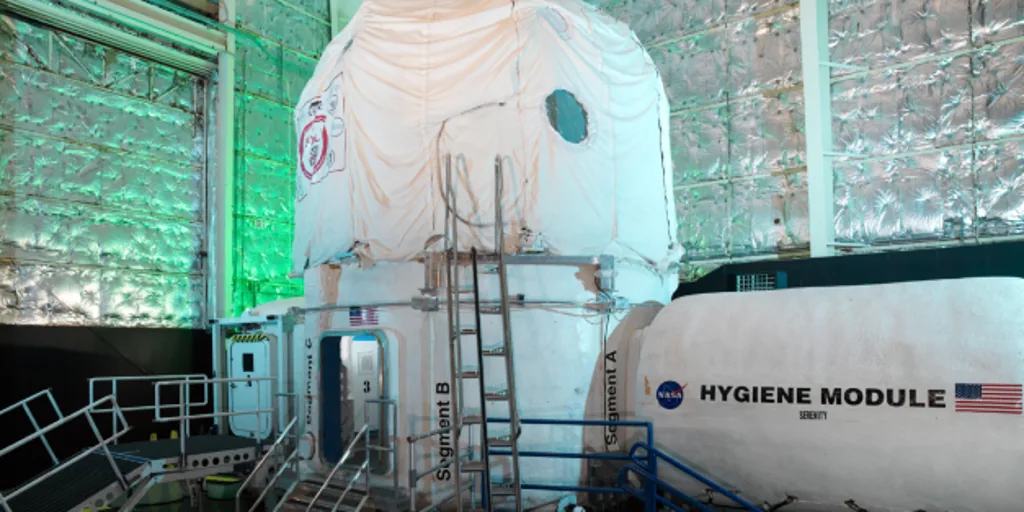
Houston – NASA is opening applications for research volunteers to spend a year living and working in isolation as part of a simulated mission to Mars or the Moon. The agency aims to gather crucial data for future deep space endeavors during the "Moon and Mars Exploration Analog" (M2X) mission, slated to commence no earlier than August 2027 at the Johnson Space Center.
Participants will undergo a year of confinement, mimicking the challenges of interplanetary transit and surface operations, including simulated spacewalks. This groundbreaking initiative integrates elements from NASA's existing Human Exploration Research Analog (HERA) and Crew Health and Performance Exploration Analog (CHAPEA) programs into a comprehensive, single campaign designed to test a wide array of mission scenarios.
"This mission is the first in a ground-based environment that will simulate multiple parts of a Moon or Mars mission, combining elements of NASA’s HERA... and CHAPEA... missions into a single, integrated campaign," according to a NASA statement. The insights gleaned from this extensive experiment are expected to inform the development of sustained lunar presences and support the agency's broader Artemis program and future Martian exploration plans.
Habitat Facilities and Research Objectives
The simulation will utilize two distinct facilities to replicate the journey and stay on a celestial body. The initial phase will take place within a habitat previously used for the HERA mission, serving as the simulated transit spacecraft. This two-story facility, designed to mimic deep-space travel, includes dedicated areas for work, living, sleeping, and hygiene. Following this transit phase, participants will move to the surface habitat, currently utilized by CHAPEA. This unique, one-story structure is 3D-printed and engineered to replicate living conditions on another planet.
The 3D-printed habitat features private crew quarters, a communal workspace, a recreation room, a crop cultivation area, a medical bay, a food preparation zone, an airlock, two bathrooms, and a sandbox for simulated planetary surface excursions. During this surface phase, researchers will closely monitor crew performance under the stringent resource limitations and demanding mission protocols anticipated for astronauts on long-duration missions far from Earth. The overall goal is to assess and validate essential hardware, technologies, operational protocols, and system requirements crucial for maintaining crew health and performance during extended deep space voyages, all within the controlled environment of Earth.
The agency is seeking U.S. citizens or green card holders between 30 and 55 years old, standing no taller than 6 feet 2 inches, and proficient in English. Potential candidates must commit to a roughly 14-month period, encompassing the 12-month habitat stay and additional time for pre- and post-mission training and data collection. Successful applicants will also need to pass a rigorous NASA physical and psychological assessment and participate in a multiday selection process. While NASA has not specified remuneration, it has stated that research volunteers will be reimbursed for their participation.
Beyond basic qualifications, NASA is looking for individuals with strong technical skills and 'astronaut-like' credentials. This includes a bachelor’s degree in engineering, biological science, physical science, or mathematics from an accredited institution, with a preference for advanced degrees in STEM fields. Military experience may also count towards equivalent years of experience. Crucially, candidates must have no dietary restrictions, no history of sleepwalking, and no reliance on sleeping aids. The mission's success hinges on the ability of these volunteers to adapt to isolation, perform under pressure, and contribute valuable feedback for the future of space exploration. These carefully selected individuals will play a pivotal role in shaping the future of human journeys to the Moon and Mars, bringing us one step closer to establishing a sustained human presence beyond Earth.