
Early Human Stab Wound: Earliest Evidence of Face Trauma Found
Analysis of a 100,000-year-old Homo sapiens skull in Israel reveals a fatal stab wound to the face, suggesting the earliest known instance of interpersonal violence.

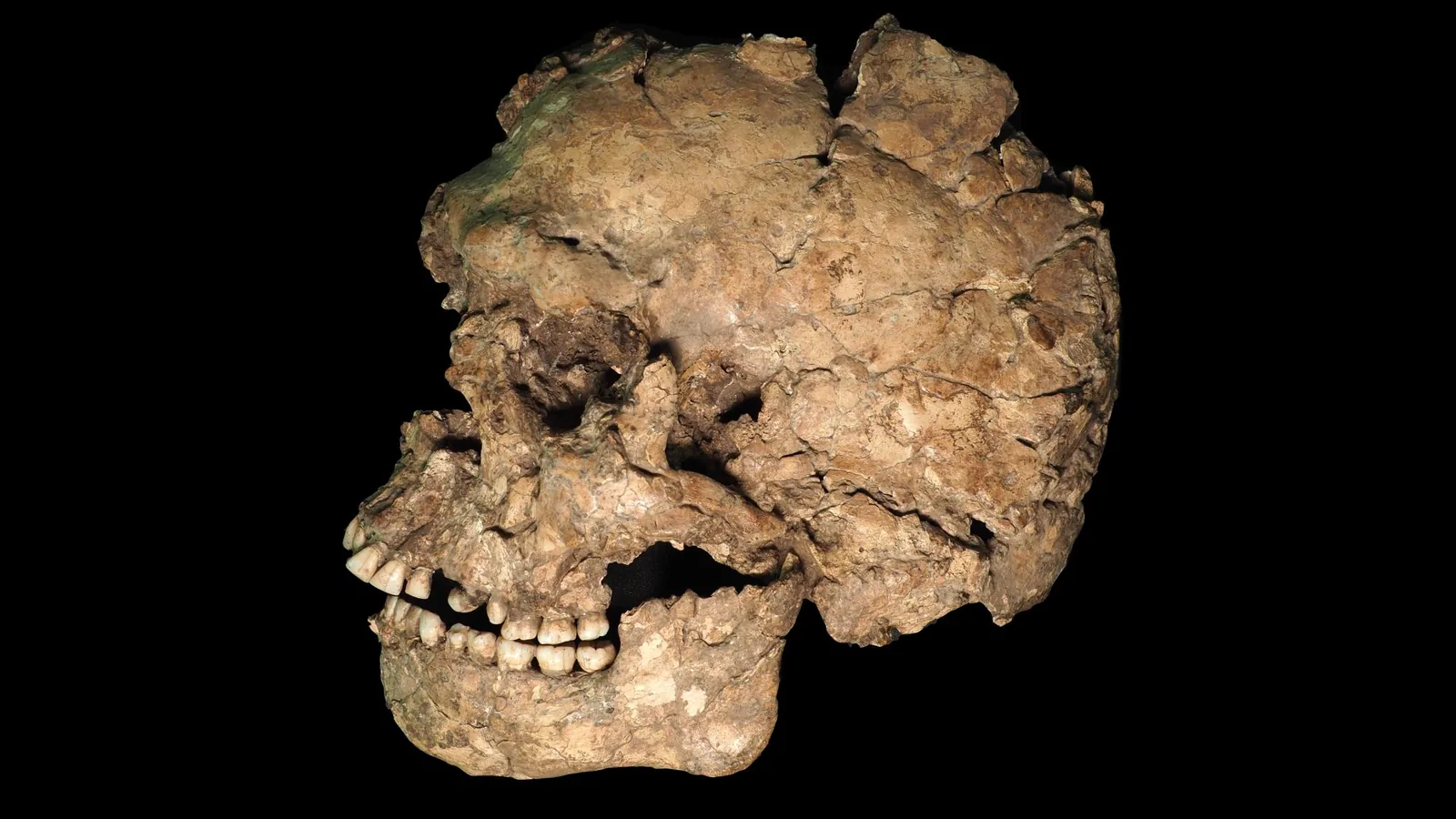
Approximately 100,000 years ago, an early Homo sapiens male suffered a severe facial injury, likely from a sharp stone tool, in what is now Israel. This discovery, detailed in a new study, offers the earliest evidence of interpersonal violence among humans outside of Africa, according to archaeologists.
The international research team meticulously examined the skull and jawbone of an individual, identified as Qafzeh 25, who was deliberately buried in Qafzeh cave. This site in Israel has yielded the remains of at least 27 individuals buried between roughly 145,000 and 92,000 years ago, marking them as some of the earliest known Homo sapiens found beyond the African continent. Previous studies of these skeletons, unearthed between the 1930s and 1970s, had identified head injuries from blunt force trauma in two individuals. However, the latest analysis, utilizing microscopic and micro-CT scanning techniques, uncovered a distinct cut mark on the lower left jaw of Qafzeh 25, affecting a bicuspid tooth and part of the upper jaw.
Evidence suggests the individual survived the attack for a considerable period, as the jawbone showed signs of healing. Researchers noted that while trauma from sharp weapons has been documented in Middle Paleolithic skeletons, it was often attributed to hunting accidents. The specific location and nature of the wound on Qafzeh 25, however, strongly point towards deliberate interpersonal violence. The injury's placement on the left side of the face aligns with forensic observations in modern populations, where craniofacial injuries are more commonly seen on the left due to the prevalence of right-handed assailants in direct confrontations.
Contextualizing Early Human Violence
If this interpretation holds, the finding represents a significant milestone in understanding human behavior. "These results provide new data to the debate on the origin of complex behaviors such as interpersonal violence, the care of injured or sick individuals and funeral practices," stated study first author Ana Pantoja Pérez, a paleoanthropologist at Spain's National Research Center for Human Evolution. The Qafzeh cave itself is renowned for providing clear evidence of early human burial practices, indicating a complex culture among these early migrants. The discovery that this culture also included evidence of violent conflict adds a crucial layer to our understanding of their societal dynamics.
The precise tool used to inflict the wound remains unclear, but the Qafzeh site has yielded flint tools, including scrapers and sharp points that could have been fashioned into spearheads. This suggests the technological capability for such violence existed. The implications of this discovery extend beyond just violence; they highlight that early humans migrating out of Africa possessed sophisticated cultural practices, including planned burials and potentially complex social interactions that could turn violent. This challenges simpler narratives of early human existence, emphasizing a more nuanced picture of their lives and societies.
This research contributes to a growing body of evidence that early human groups were not merely surviving but actively shaping their environments and social structures in complex ways. The presence of both sophisticated tool-making and evidence of interpersonal violence paints a more complete picture of the challenges and realities faced by Homo sapiens venturing into new territories tens of thousands of years ago.