
SpaceX's Starship Changes Launch Dynamics for Satellite Manufacturers
SpaceX's Starship is revolutionizing satellite deployment with its massive payload capacity, forcing manufacturers to adapt designs for a new era of space access. This shift marks a reversal from traditional rocket development.

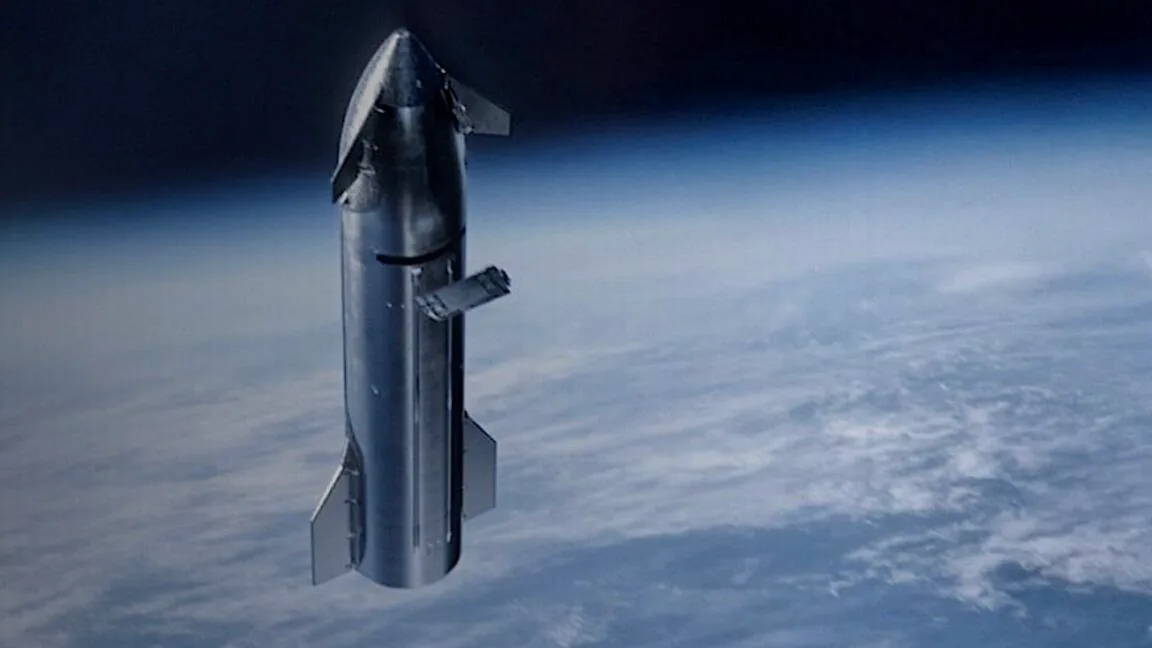
The dawn of 2026 signals a seismic shift in the space industry, with SpaceX's colossal Starship rocket redefining the relationship between launch providers and satellite manufacturers. Historically, rocket designs catered to the evolving needs of satellite operators. Now, the unprecedented payload capacity of Starship, capable of lifting over 100 metric tons to low-Earth orbit, is compelling satellite makers to innovate their own designs to accommodate this powerful new launch vehicle. This reversal in influence promises to unlock novel applications and dramatically alter the landscape of space exploration and commerce.
For a decade, the concept of a rocket like Starship seemed aspirational, largely confined to SpaceX's ambitious vision. Today, however, the entire space sector is eagerly anticipating its capabilities. Beyond its immense payload to orbit, Starship's potential for in-space refueling could extend its reach to the Moon and Mars with similar cargo volumes. While still in its experimental stages, the rocket is already attracting interest from governmental and military entities. NASA and the U.S. military are exploring its use for lunar missions and transporting vital cargo to remote operational theaters. Scientists also anticipate leveraging its vast internal volume for deploying next-generation space telescopes.
A New Paradigm in Satellite Design
This burgeoning era of super-heavy-lift capability fundamentally challenges long-held assumptions in rocket and satellite engineering. Traditionally, launch vehicles were designed to carry a single, large payload or a few smaller satellites stacked vertically within an aerodynamic fairing. The size and shape of satellites directly influenced the design of rockets, creating a predictable demand cycle. Small satellites required smaller rockets, and larger payloads necessitated more powerful launchers. The Space Shuttle, with its ability to deploy multiple satellites, offered a brief departure from this model before its commercial viability waned, eventually being superseded by more cost-effective expendable rockets.
However, SpaceX's Starship is not merely an incremental improvement; it represents a radical departure. The company plans to utilize Starship's cavernous interior for its own next-generation Starlink V3 broadband satellites, potentially carrying up to 60 on a single launch. Unlike the conventional stacked, boxy satellite designs prevalent for over half a century, SpaceX's Starlink satellites feature a flat, stackable architecture. While existing Starlink satellites are launched atop Falcon 9 rockets inside a fairing, the Starship deployment strategy is even more innovative. Satellites will be ejected from the side of the Starship's fuselage through a dedicated door, deployed one by one using a pulley system, before the rocket returns to Earth. This novel approach streamlines deployment and eliminates the immediate need for a large payload fairing, a design choice that began with Starlink in 2019.
Other players in the aerospace industry are also pushing design boundaries. Rocket Lab's Neutron rocket integrates its payload fairing with the booster stage. Blue Origin's New Glenn rocket, particularly its future upgraded variants, aims to bridge the gap between SpaceX's Falcon 9 and Starship. Meanwhile, satellite manufacturers are beginning to adapt. China's Qianfan constellation utilizes flat-panel designs, and Amazon's LEO constellation is also adopting this approach. Muon Space, a startup, recently unveiled its Condor-Ultra platform, specifically designed for mass deployment from Starship. "It is designed for stackable deployments through the opening without requiring the whole fairing to open," stated Greg Smirin, president of Muon Space. "That’s sort of what we're designing to, what us and other customers have an understanding of for [what SpaceX will offer in] the near term, in the sort of ’28 timeframe."
Muon's new satellite, weighing approximately 1.5 metric tons, can also fit on medium-lift rockets. Smirin acknowledged that diverse future missions will necessitate a variety of satellite shapes and corresponding launch solutions. SpaceX is expected to eventually offer alternative deployment systems for payloads incompatible with the current side-ejection method. "There will likely be some other configurations," Smirin added. "This particular one is absolutely designed to work with the Pez dispenser framework. It sort of maps to the high nadir-facing payload face that you want for Earth interaction, that could also work with a stackable Pez dispenser sort deployment." Other companies, including Apex with its Comet and Comet XL designs, and Terran Orbital's Enterprise, are also developing flat-packed satellite architectures. Vast, known for its space station ambitions, is venturing into satellite manufacturing with a flat-panel design for high-density launches. John Rood, CEO of Momentus, credited SpaceX's innovative thinking for prompting better integration between satellites and rockets, a development that benefits companies like his, which focus on hosting experiments and modular components in orbit.