
Novak Djokovic and AI in Sports: Strategy Shift 2026
Tennis champion Novak Djokovic is reportedly leveraging artificial intelligence for real-time performance analysis and match strategy in 2026, signaling a broader shift in elite sports coaching. Top players now integrate AI-driven data systems to optimize serve placement, opponent patterns, and fitness metrics.

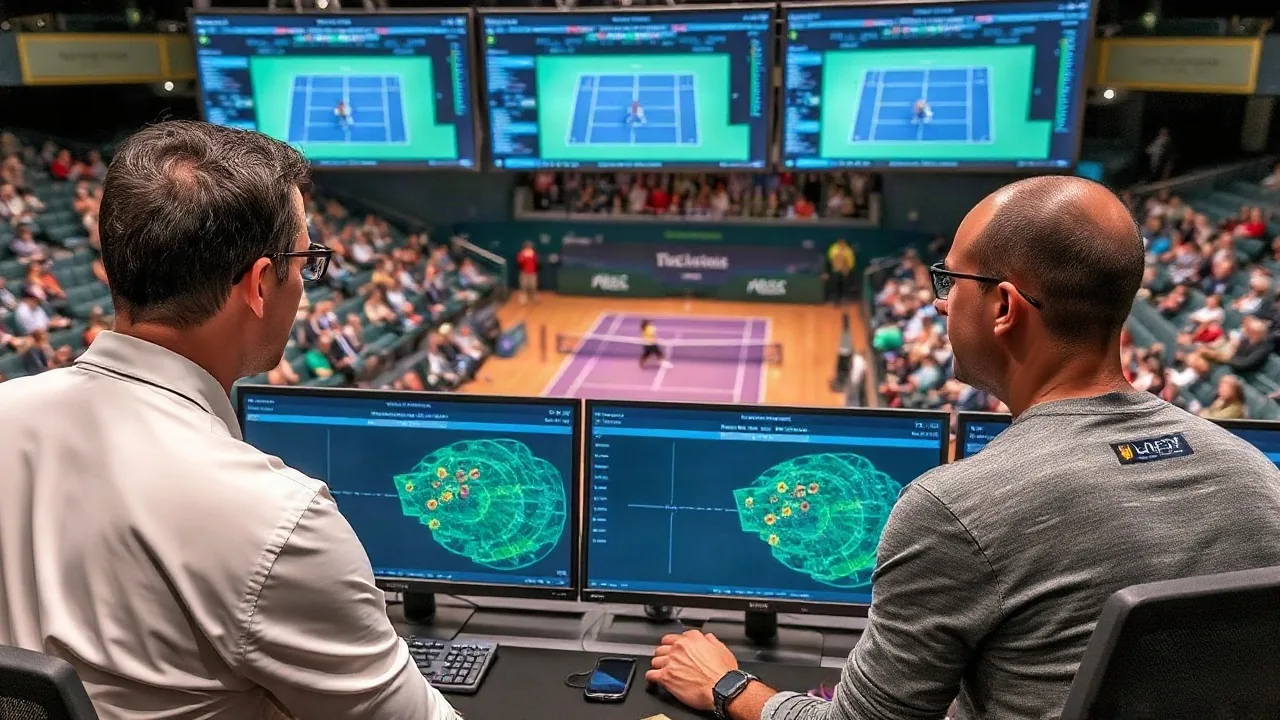
Novak Djokovic's coaching team has integrated machine learning analytics into match preparation for the 2026 season, marking one of the most visible adoptions of AI in sports by an active Grand Slam champion. The Serbian 38-year-old has long relied on detailed tactical analysis, and his pivot toward computational performance tools reflects how elite tennis has crossed into the age of real-time algorithmic insight.
Djokovic's technical staff now processes video feeds from practice sessions and matches using proprietary neural networks that isolate serve patterns, rally positioning, and fatigue indicators. According to Dr. Marcus Chen, director of sports analytics at the International Tennis Federation, "Top-10 players have moved beyond spreadsheet analysis. They're running live predictions during matches, adjusting strategy based on AI models that learned from thousands of points." This transition happened gradually across 2024 and 2025, but 2026 has seen the most aggressive deployment.
The AI system flags opponent tendencies within minutes: forehand weakness under pressure, net-approach success rates by court surface, and even psychological patterns tied to score progression. Djokovic's team uses these insights to adjust serving targets and point construction mid-tournament.
The Technology Behind Modern Tennis Strategy
Performance analysis in professional tennis has evolved from hand-coded statistics into predictive engines. Software platforms like Hawk-Eye, Infosys Digital, and specialized in-house systems now track biomechanical data during live play. Djokovic's camp employs a combination of commercial tools and custom models built by former physicists and data scientists.
Key capabilities include:
- Serve placement optimization: AI identifies the safest and most effective targets based on opponent stance and court position.
- Rally outcome probability: Neural networks calculate win likelihood for a given shot selection, informing decision-making in high-pressure moments.
- Fatigue detection: Computer vision monitors movement speed and recovery time, flagging when physical decline might affect strategy.
- Opponent pattern recognition: Machine learning ingests years of match tape to predict serve direction, court coverage, and counterattack timing.
By August 2026, these systems process data in real time, feeding coaches and players tactical suggestions during changeovers. The lag time between data capture and actionable insight has shrunk to seconds.
Why Djokovic's Move Signals a Broader Shift
Djokovic has always competed on the margins of innovation. His adoption of AI technology in 2026 is not casual experimentation but a strategic necessity. Younger rivals, including rising challengers ranked 15 to 50 globally, are also deploying similar systems, so elite players cannot afford to ignore the edge.
"The competitive pressure in tennis is extreme," noted James Rodriguez, former ATP tour coach and now a consultant for multiple top-20 players. "If your opponent has AI-driven insights and you don't, you're conceding a 2 to 3 percent advantage. In a best-of-five Grand Slam, that's the difference between a second-round exit and a quarterfinal run."
Other prominent players on the circuit have quietly adopted similar analytics stacks. While Djokovic's use has become public through interviews and behind-the-scenes reports in mid-2026, the technology itself is no longer exclusive or experimental.
The financial stakes are also clear. A single Grand Slam title run generates USD 1 million to 4 million in prize money, endorsements, and appearance fees. When a coaching innovation can shift the odds by even 1 to 2 percentage points across a tournament, the return on investment in AI tools becomes obvious.
Tennis strategy at the professional level has always been data-driven in theory, but human analysts and coaches had bandwidth limits. AI removes that constraint. A coach can now monitor hundreds of variables simultaneously, something that was logistically impossible a decade ago.
Practical Challenges and Limitations
Integration is not seamless. Courts, crowd noise, lighting conditions, and opponent unpredictability all introduce noise into AI models trained on controlled environments. Djokovic's team has spent months refining their system to handle the variability of live tournament play.
Privacy and regulatory oversight remain open questions. Tennis governing bodies, including the ATP and WTA, do not yet have explicit rules governing AI use by players or coaching teams. Some federations are concerned about creating an unequal playing field if only wealthy teams can afford sophisticated systems.
Additionally, over-reliance on AI recommendations can sometimes override player intuition and creativity, which are also critical in tennis. The most successful implementations treat AI as a tool that informs rather than dictates decision-making.
By late 2026, the conversation has shifted from whether AI will enter professional tennis to how to ensure fair access and responsible use. Djokovic's visibility in this space has accelerated both adoption and scrutiny across the sport.