
AI and South Park: How Satire Shapes Digital Comedy
South Park's latest seasons tackle artificial intelligence through sharp satire, revealing how comedy shows mirror real-world AI anxieties. Creators now face the challenge of staying ahead of technology itself.

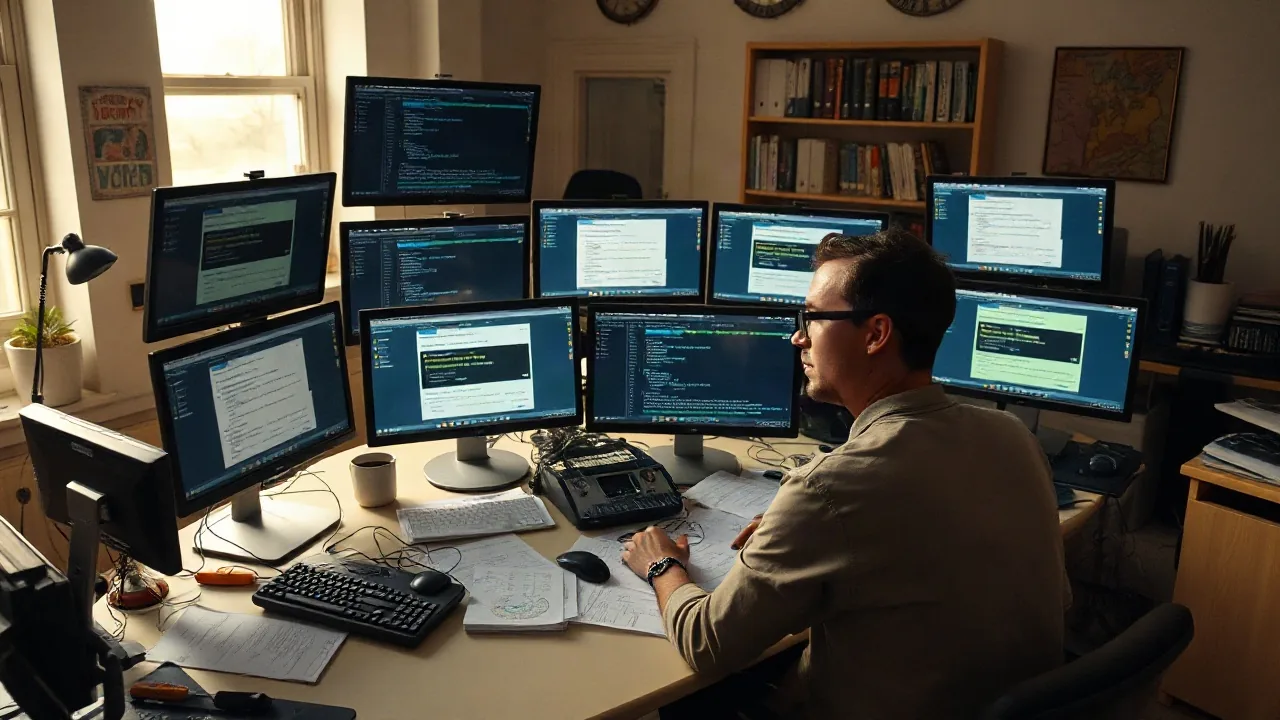
In Season 26 of South Park, the show's writers deployed AI as both plot device and social commentary, embedding the technology into episodes that lampoon how American culture absorbs and misunderstands machine learning. The series, which has thrived on absurdist responses to current events since 1997, turned its satirical lens toward artificial intelligence debates that have dominated conversation in 2026.
Matt Stone and Trey Parker, the show's creators, have always moved fast. They script, animate, and air episodes within days of trending news cycles. But AI presents a different challenge: the technology itself evolves faster than a traditional comedy writer's room can follow.
"Satire works best when you're pointing at something everyone recognizes," said media critic Dr. James Chen, who studies television and technology at UC Berkeley. "With AI, the ground keeps shifting. By the time South Park finishes an episode, the thing they're mocking has either been solved or made ten times worse."
Satire Meets Real-World Uncertainty
South Park's approach to satire has always relied on exaggeration as truth-telling. When the show mocked airline customer service in 2009, it amplified real frustrations. When it satirized cryptocurrency in 2022, the jokes landed because they mirrored actual investor behavior and regulatory confusion.
AI poses a different problem. Unlike a specific policy decision or corporate scandal, artificial intelligence is abstract. Its dangers are contested. Its benefits are unevenly distributed. The technology itself remains partially opaque even to engineers building it.
The 2026 season addressed this directly. Episodes featured townspeople obsessed with AI tools for everyday tasks, only to discover the systems produced hallucinations, biases, and sometimes simply made things worse. The humor lay not in mocking AI itself but in showing how normal people adopt new technology without questioning it.
This approach mirrors how South Park has always handled digital media disruption. The show didn't mock the internet's existence; it satirized how humans behave online. Similarly, the AI episodes don't argue against machine learning's utility. They mock the uncritical embrace of tools that users don't understand.
Comedy in the Age of Algorithmic Culture
What makes South Park's 2026 pivot significant is timing. By September 2026, AI adoption had moved from tech-industry speculation into mainstream workplace and consumer life. Large language models power customer service. Image generators make art in seconds. Predictive algorithms shape hiring, lending, and content distribution.
For a show that built its reputation on rapid response to cultural moments, this is ideal territory. South Park's writers can observe real behavior instead of hypotheticals. They can interview people frustrated with chatbot customer service. They can film scenes in offices where employees face pressure to use AI tools that cut their productivity in half.
The show's influence on how Americans perceive technology has proven substantial. After South Park's 2006 episode on the Nintendo Wii, sales spiked. The show's crypto mockery in 2022 arrived as mainstream skepticism was hardening. Its commentary matters partly because millions watch it and partly because it often arrives at cultural truths before mainstream journalism fully articulates them.
Dr. Chen noted that pop culture analysis of technology often lags behind either technical reality or public concern. "South Park occupies a sweet spot," he explained. "It's fast enough to catch the moment when a technology shifts from curiosity to anxiety, but it's also produced by people smart enough to understand what they're satirizing."
The Satirist's Dilemma: When Reality Outpaces Comedy
The fundamental challenge for South Park in 2026 is that real developments often exceed what comedy writers can imagine. In early 2026, AI systems began generating not just text and images but deepfake videos at consumer-grade quality. Workers reported spending hours correcting AI outputs rather than avoiding them. Regulatory proposals emerged in both Congress and the EU that ranged from thoughtful to absurd.
Stone and Parker have adapted before. They famously pivoted entire episodes when real-world events made their satirical setups too close to tragedy. They've also extended storylines across multiple episodes when a topic demanded deeper exploration than a single 22-minute episode allowed.
For AI and comedy, South Park's advantage is structural. The show operates at the intersection of speed and insight. It can mock AI applications without endorsing or condemning AI itself. It can show how ordinary people navigate confusion without taking a political stance on regulation.
This balancing act defines effective satire. The goal isn't to supply answers but to clarify questions. When South Park shows characters unthinkingly adopting AI solutions, the joke isn't that AI is bad. It's that humans rarely stop to ask what tools are actually for before adopting them.
As artificial intelligence continues reshaping work, entertainment, and communication through 2026 and beyond, comedy shows like South Park serve as a cultural mirror. They reflect anxieties, expose contradictions, and sometimes reveal truths that earnest analysis misses. The show's 2026 season demonstrates that satire remains one of the most agile tools for navigating technological change, even when the technology changes faster than anyone expected.