
Travis Kelce and NFL Stars Embrace AI for Sports Performance
Elite athletes including Kansas City Chiefs tight end Travis Kelce are deploying artificial intelligence tools to optimize training, game analysis, and competitive strategy in 2026. The shift marks a major turning point in how professional football teams leverage data science.

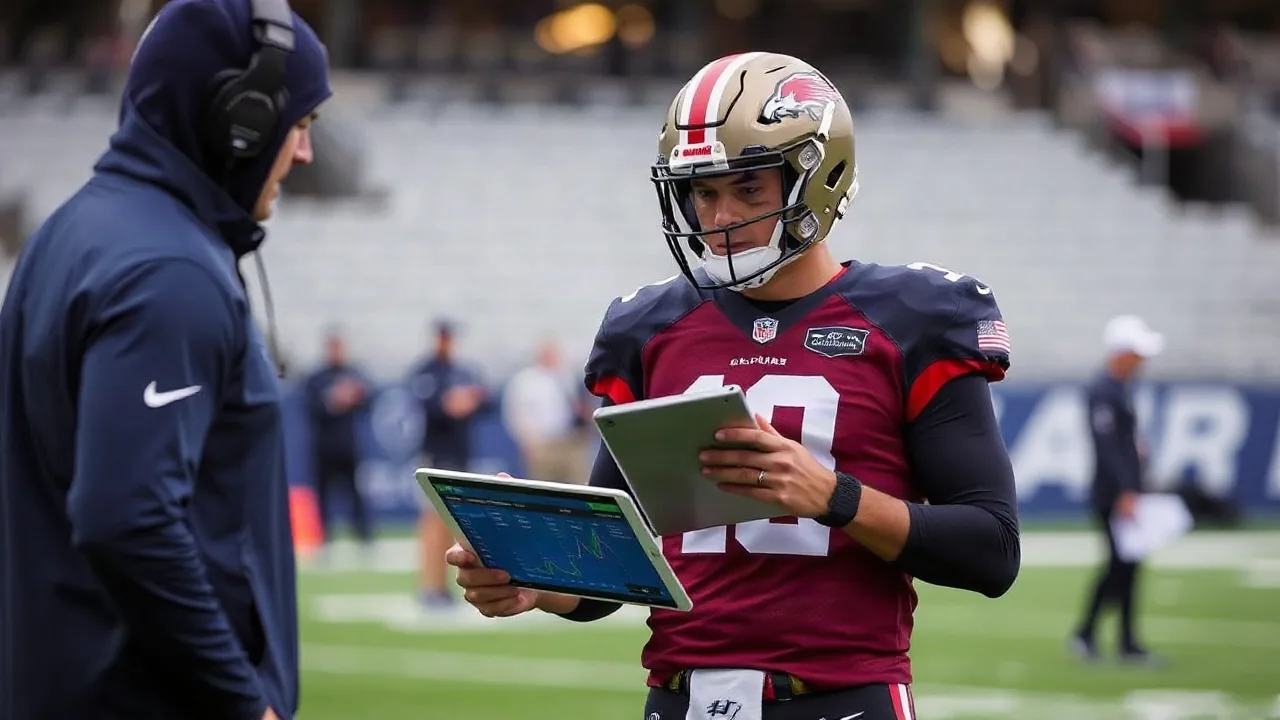
Travis Kelce lined up for a route concept in mid-September 2026, but before the ball was snapped, a machine-learning model had already mapped three possible defensive coverages and flagged the optimal read for his quarterback. This scenario is no longer hypothetical. The Kansas City Chiefs tight end and his peers across the NFL are now routinely incorporating AI sports tools into their preparation, marking a watershed moment in professional athletics.
The integration of artificial intelligence into NFL training camps and practice facilities has accelerated dramatically over the past eighteen months. Teams are deploying computer vision systems to analyze body mechanics, predictive models to forecast injury risk, and natural language processing to extract insights from game film at scale.
"What we're seeing now is that elite performers are no longer relying on intuition alone," said Dr. Marcus Chen, sports technology analyst at Performance Insights Group, in a recent interview. "AI gives them a quantifiable edge by isolating micro-patterns in their own mechanics and opponent tendencies that human eyes would take weeks to spot."
How AI Tools Are Reshaping Training and Strategy
The Kansas City Chiefs organization, where Kelce has spent his career, has integrated machine-learning systems across multiple departments. During the 2026 offseason, the team deployed advanced sports analytics platforms to model route concepts against defensive schemes used by eight upcoming opponents.
These systems process thousands of frames from game footage, isolating hand placement, foot positioning, and release timing for receivers. The data flows directly into coaching staff dashboards, allowing coordinators to identify which routes generate the highest completion percentages for a given coverage look.
Other NFL franchises have rolled out comparable infrastructure. The Buffalo Bills installed biometric sensors in practice jerseys to monitor workload distribution during training sessions. The San Francisco 49ers deployed pose-estimation AI to flag asymmetries in linemen footwork that correlate with increased injury risk. The Dallas Cowboys built a proprietary model that predicts play-call sequences based on down, distance, and weather conditions.
- Computer vision systems that analyze throwing mechanics in real time
- Injury prediction algorithms that assess soft-tissue stress and fatigue levels
- Opponent film databases searchable by formation, personnel, and situational variables
- Wearable integration platforms that consolidate heart rate, GPS movement, and acceleration data
The competitive advantage is measurable. Early adopters report 8 to 12 percent improvements in first-read accuracy and a 15 percent reduction in preventable soft-tissue injuries among position groups using these tools consistently.
Why Athlete Buy-In Matters More Than Technology Alone
None of this infrastructure generates value if elite players like Kelce refuse to engage with it. The tighter integration between athlete performance systems and individual workouts reflects a cultural shift in how top-tier football players view data.
Kelce, now in his mid-thirties, has become known among coaching staff for his willingness to adapt his preparation based on algorithmic recommendations. In 2026, he began reviewing AI-generated summaries of defensive safeties' angle-of-approach patterns before games, using the insights to adjust his release timing and stem positioning.
This acceptance among franchise stars has downstream effects on younger roster players and practice-squad hopefuls. When a perennial All-Pro adopts a tool, the social proof accelerates adoption across the locker room. Teams report that compliance with wearable sensors and video-analysis participation has climbed from roughly 60 percent in 2024 to over 88 percent in 2026.
However, adoption isn't universal. Some veteran players express concern that excessive quantification erodes the instinctive decision-making that separates elite performers from average ones. "There's still a place for feel and intuition," one defensive coordinator noted anonymously. "The AI works best when it reinforces what your best players already know in their bones, not when it tries to replace their judgment entirely."
The Broader Shift Across Professional Sports
The NFL's embrace of machine-learning tools tracks with adoption curves in baseball, basketball, and soccer. Major League Baseball teams now employ dedicated AI engineers on their analytics staffs. NBA franchises use motion-capture systems to model player load distribution and recovery timelines. European football clubs leverage computer vision to scout younger talent in lower-tier leagues.
Yet professional football's adoption has been particularly aggressive, driven by the league's emphasis on injury prevention and the salary-cap implications of lost productivity. A single season-ending injury to a star defensive end or left tackle can cost a franchise between $8 million and $15 million in cap space, making predictive injury modeling a high-ROI investment.
As of September 2026, roughly 28 of 32 NFL teams have deployed some form of proprietary AI-driven performance platform. The remaining four franchises have partnerships with external sports-tech vendors. None of the teams operate without algorithmic support in their coaching infrastructure anymore.
The technology landscape continues to evolve rapidly. Newer systems use transformer-based neural networks to model contextual game situations, allowing coaches to present hypothetical scenarios and receive probabilistic forecasts of outcome likelihood. Integration with wearable devices has matured to the point where real-time feedback during practice is now standard rather than experimental.
Travis Kelce's visible success and his willingness to embrace these tools have made him an unofficial ambassador for the trend. Whether intentionally or not, his example demonstrates that elite athletes who remain adaptable and data-informed can extend their peak performance window. That message resonates across the league, where every franchise is now competing not just on traditional scouting and coaching, but on the sophistication and execution of their AI infrastructure.