
Ancient Fossil Reveals 567 Million-Year-Old Origin of Sexual Reproduction
A newly discovered fossil in Canada pushes back the known origin of sexual reproduction by 10 million years, pointing to a deep-sea creature from 567 million years ago.

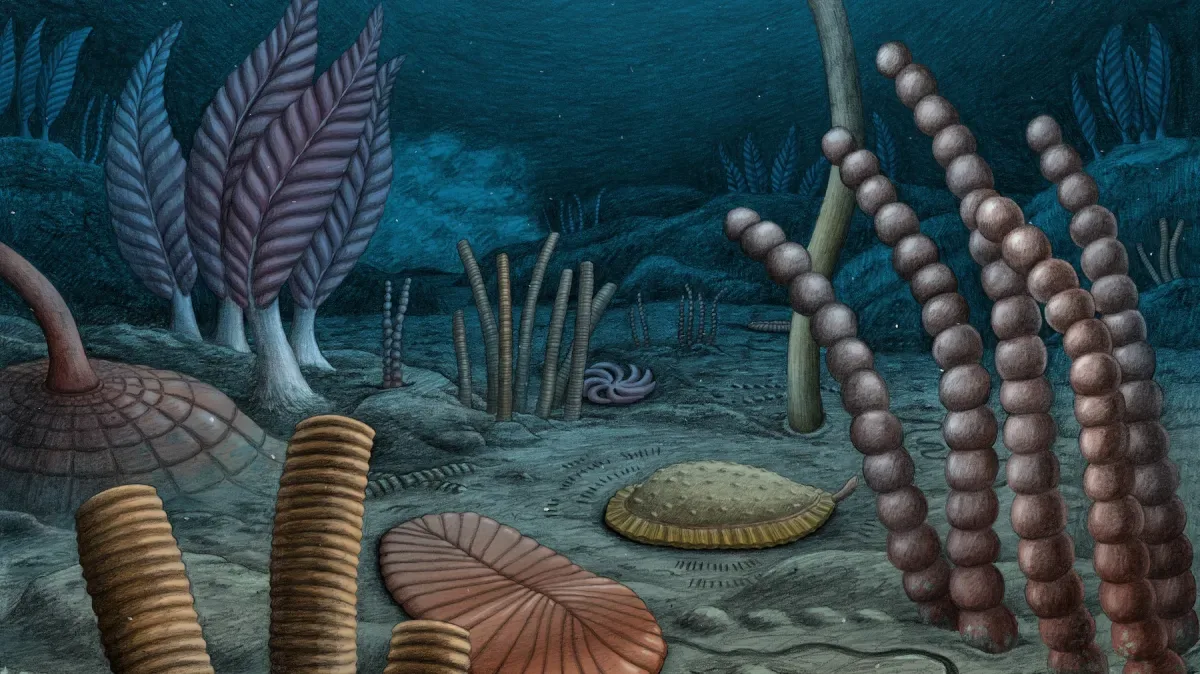
Scientists have unearthed a fossilized organism in Canada that offers compelling evidence pushing back the origins of sexual reproduction by approximately 10 million years. The ancient creature, a tube-shaped, coral-like organism, lived around 567 million years ago in the deep sea, according to research published recently. This discovery challenges previous understandings of when complex reproductive strategies first emerged in Earth's history.
The fossil, found embedded in ancient rock layers, displays characteristics that indicate asexual reproduction methods alongside the earliest known signs of sexual reproduction. Previously, the oldest definitive evidence for sexual reproduction dated back to around 557 million years ago. This new find suggests that the evolutionary pressures leading to sexual reproduction were at play even earlier, shaping life in the planet's primordial oceans.
New Insights into Early Life's Evolution
The organism, tentatively identified as a primitive cnidarian, a group that includes modern corals and jellyfish, was preserved in exceptional detail. Its structure indicates that it was capable of both budding, a form of asexual reproduction, and a more complex process that involved the exchange of genetic material, a hallmark of sexual reproduction. This dual capability would have provided a significant evolutionary advantage, allowing the organism to adapt to changing environmental conditions more effectively.
Dr. Anya Sharma, a lead paleontologist on the project from the University of Toronto, stated, "This fossil is a remarkable window into a critical period of early animal evolution. It demonstrates that sexual reproduction wasn't just a latecomer; it was an early innovation that significantly contributed to the diversity of life we see today." The preservation quality of the fossil allows researchers to study cellular structures, providing unprecedented detail about the organism's reproductive mechanisms.
The implications of this discovery extend beyond understanding reproductive strategies. It also provides new data points for reconstructing the Tree of Life, the evolutionary chart depicting the relationships between all known species. Pinpointing the emergence of key biological processes like sexual reproduction helps scientists better understand the timeline and patterns of diversification in the Cambrian period, a time of rapid evolutionary innovation.
Prior to this finding, researchers relied on molecular clock data and less conclusive fossil records to estimate the origins of sexual reproduction. The new fossil evidence provides a tangible anchor point, allowing for a more precise calibration of evolutionary timelines. The deep-sea environment where the creature lived was likely characterized by fluctuating nutrient levels and potential predation, factors that could have driven the evolution of more robust reproductive methods.
The Canadian Geological Survey, which assisted in dating the rock strata, confirmed the age of the fossil at 567 million years. This places the origin of sexual reproduction firmly within the Precambrian era, long before the explosive diversification of life seen in the subsequent Cambrian period. Further analysis of the fossil is planned, including isotopic studies to understand the organism's diet and habitat more comprehensively.