
Ancient Teeth Reveal Gene Exchange Between Early Human Relatives
Analysis of 400,000-year-old teeth from China reveals genetic evidence of interbreeding between Homo erectus and Denisovans, shedding light on human ancestry.

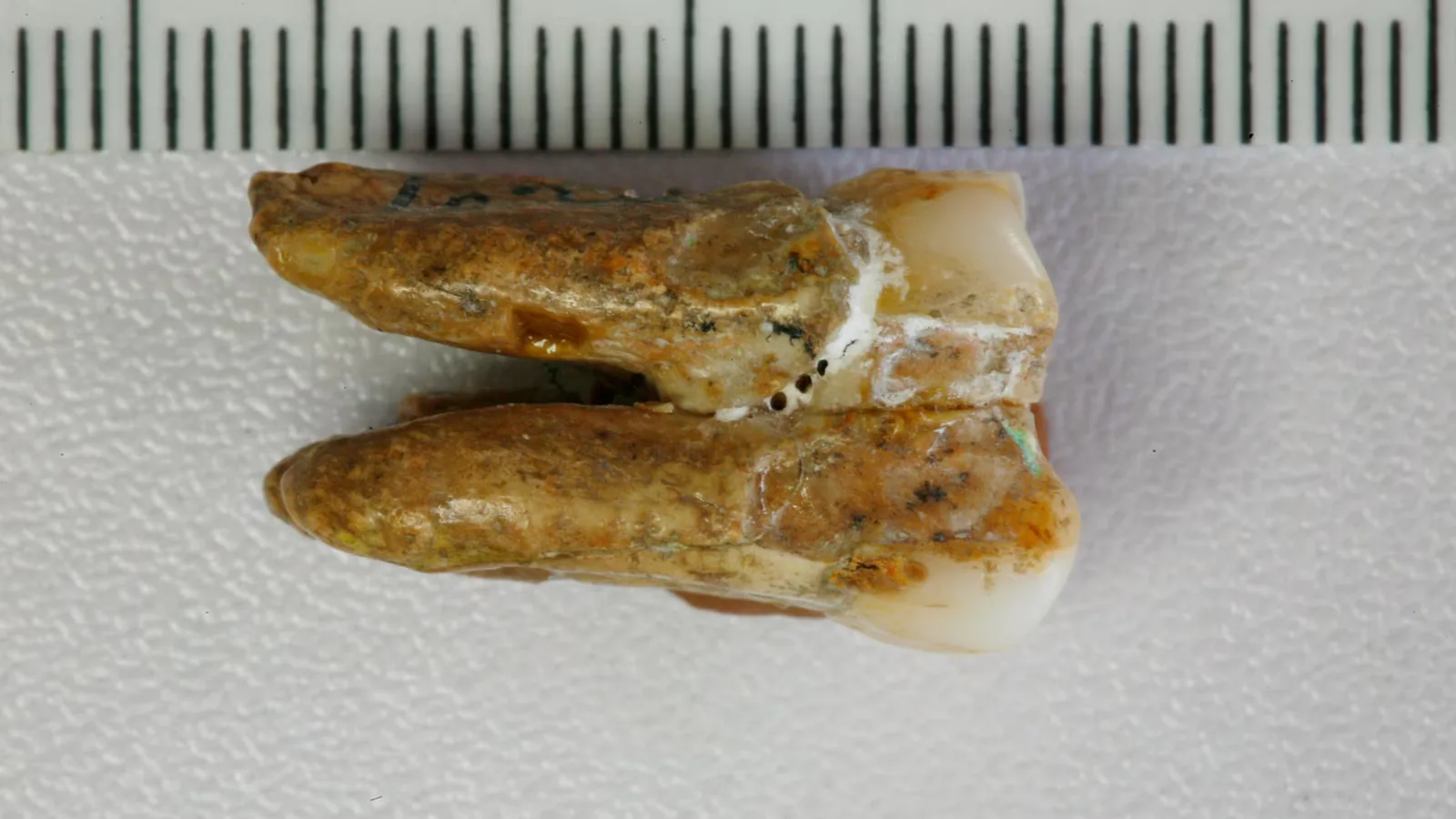
Scientists have uncovered compelling genetic evidence of interbreeding between ancient human relatives, including Homo erectus and Denisovans, by analyzing proteins from 400,000-year-old teeth. The findings, published in a new study, offer a rare glimpse into the complex evolutionary landscape of our ancestors and hint at how these interactions shaped modern human genetics.
The research focused on enamel proteins extracted from the teeth of five males and one female Homo erectus individuals unearthed in various locations across China. These proteins, remarkably preserved despite their age, contain genetic clues that have long eluded scientists due to the poor preservation of ancient DNA. The study identified two key mutations within these enamel proteins. One mutation appears to be a unique marker for East Asian populations of Homo erectus, while the second is more significant. This second variant is present in a small percentage of modern humans and also in Denisovans, an extinct group of archaic humans. This shared genetic trait strongly suggests that Homo erectus individuals interbred with Denisovans, passing on their genes.
This discovery opens up new avenues for understanding human evolution, particularly the intricate relationships between different hominin species. For decades, the exact lineage and interactions of early human relatives like Homo erectus, Denisovans, Neanderthals, and modern humans have been a subject of intense scientific debate. Fossil evidence has been scarce and often fragmented, making it challenging to piece together the complete picture.
Unraveling Ancestral Connections
The presence of the Denisovan-linked mutation in the ancient Homo erectus teeth suggests a direct gene flow between these two groups. However, the pathway to modern humans is still being investigated. Researchers hypothesize that the gene variant made its way to present-day humans through subsequent intermingling with Denisovans. This intricate genetic inheritance highlights a dynamic history of interaction and gene exchange among diverse hominin populations. Paleoanthropologist Ryan McRae of the Smithsonian National Museum of Natural History, who was not involved in the study, called the research "a really cool and exciting way, using new methods" to trace our ancestry.
The exact phylogenetic relationship between Homo erectus and Denisovans remains a complex puzzle. One possibility is that Homo erectus is a direct ancestor of the Denisovans, from whom the genetic traits were inherited. Alternatively, separate populations may have coexisted and interbred. The limited fossil record and the difficulty in extracting ancient genetic material present significant hurdles in confirming these hypotheses. Further discoveries of hominin fossils and advanced techniques for analyzing trace ancient DNA are crucial for a more definitive understanding of human evolutionary history.
Study author Qiaomei Fu of the Institute of Vertebrate Paleontology and Paleoanthropology in China emphasized the need for more evidence. "We really need to get more DNA and bits of Homo erectus to figure out how this predecessor is exactly related to other humans," she stated. The ongoing quest to map our evolutionary past relies heavily on such innovative analyses of ancient biomolecules, offering a deeper appreciation for the complex tapestry of human origins and the ancient gene exchange that has shaped who we are today. This latest research, utilizing ancient enamel proteins, provides a significant step forward in deciphering the intricate connections between early human relatives and their enduring legacy within the human genome.