
Remora Fish's 'Cloacal Diving' Behavior Puzzles Scientists
New research reveals remora fish may be more parasitic than previously thought, with some observed 'cloacal diving' inside manta rays and whale sharks.

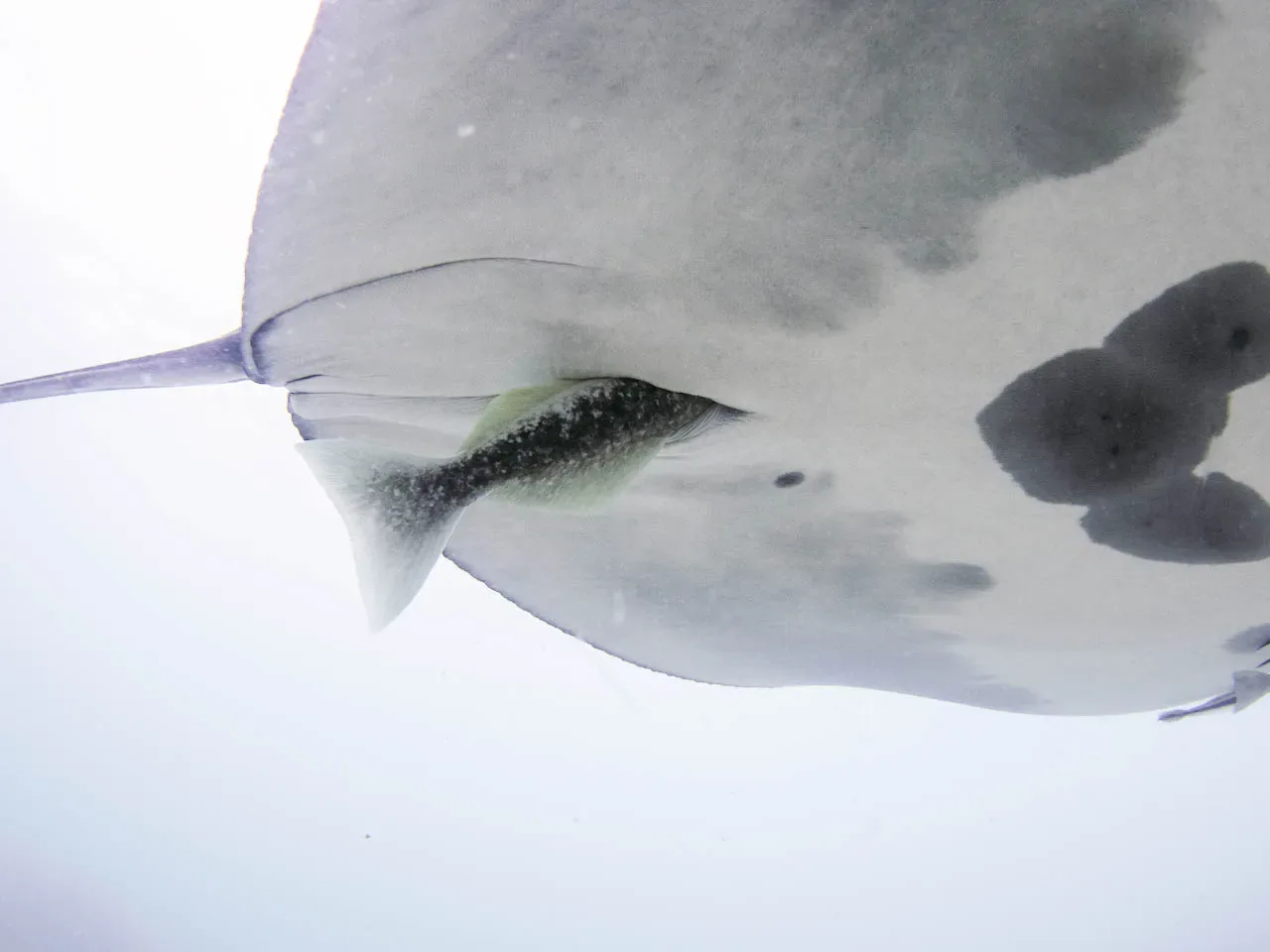
Scientists are rethinking the relationship between remora fish and their hosts, as new evidence suggests these famously "clingy" creatures may engage in behavior that is harmful rather than symbiotic. Traditionally, remoras were believed to offer a mutualistic service by cleaning parasites off larger marine animals like sharks, manta rays, and sea turtles, while benefiting from free transport and scraps of food. However, a recent study published in Ecology and Evolution presents a compelling case that remoras might be acting more like pests, with observations of them entering the cloacae of their hosts.
The research, led by Emily Yeager, a PhD student at the University of Miami, highlights a phenomenon dubbed "cloacal diving." This involves remoras partially or fully entering the cloaca—a multi-purpose opening used for excretion, mating, and birthing in many animals—of their larger associates. While remoras have been known to attach to hosts, the extent of their internal excursions has come under scrutiny, challenging the long-held narrative of their helpful nature. "The narrative is shifting," Yeager stated, detailing how observations are increasingly pointing towards a more complex, and potentially parasitic, dynamic.
A Shift from Symbiosis to Parasitism
Previous understanding painted a picture of remoras as beneficial hitchhikers. They were thought to remove dead skin and parasites, reducing disease risk for hosts, while their own needs were minimal. Yet, recent findings suggest this symbiosis might be heavily skewed. A 2025 paper indicated that sea turtles carrying one to three remoras grazed less, hinting at a negative impact. Furthermore, researchers have noted that remoras rarely clean their hosts' shells, and their strong suction can cause damage. The new study by Yeager and colleagues gathered evidence from footage spanning 15 years across Florida, the Maldives, and Mozambique. They documented seven instances of cloacal diving in manta rays and also noted remoras inside the gills of these large fish. "Most of what we know about remoras are from these weird, one-off observations," Yeager explained, underscoring the difficulty in studying these elusive fish.
One striking observation, captured by a free-diver in 2023, showed a remora actively inserting itself into a manta ray's cloaca after being startled. The video depicts the manta ray visibly shuddering before swimming away. Yeager noted the significant size difference: some remoras appeared nearly as wide as the manta ray's cloaca, making for a tight fit. The implications of such an act are concerning. The remora's suction cup, used for attachment, is known to damage tough shark skin, and could potentially inflict more serious harm on the sensitive internal tissues of a manta ray's cloaca. Scientists have not yet observed how a remora exits such a confined space, though Yeager speculates they can, otherwise more tails might be seen.
The benefits for the remora are apparent: unparalleled shelter. The cloacal dive could be a startle response, offering immediate refuge. However, the cloaca is not an ideal long-term habitat. Breathing would be a challenge for a fish so densely packed inside. For the manta ray, the costs appear substantial. If the remora's suction is engaged, it could cause significant internal damage. While manta rays have methods for dislodging external parasites, like breaching or rubbing against rocks, a cloacal trespasser is far more difficult to expel. Yeager also raised concerns about how a remora might interfere with the host's bodily functions. "You have to assume that there's some issue pooping," she said, adding that mating and birthing could also be disrupted. The possibility that remoras might feed on host feces from within the cloaca, similar to observed behaviors in other animals, has also been raised.
The findings are prompting a re-evaluation of interspecies relationships in marine ecosystems. The study, supported by ongoing surveys from organizations like the Marine Megafauna Foundation and the Manta Trust, suggests that nature's interactions are often more nuanced than simple categorizations of mutualism or parasitism. As Yeager and her colleagues gather more data and hear from other researchers who have witnessed similar phenomena, the understanding of remora behavior is likely to continue evolving. Future technological advancements may offer clearer insights into why these fish engage in such peculiar and potentially harmful activities. For now, the "cloacal diving" of the remora adds another complex layer to the mysteries of the ocean.