
Craig Venter, Genomics Pioneer Who Created Synthetic Life, Dies at 79
Craig Venter, a groundbreaking scientist known for decoding the human genome and creating the first synthetic life form, has died at the age of 79. His career was marked by both immense scientific achievement and a controversial "bad boy" reputation.

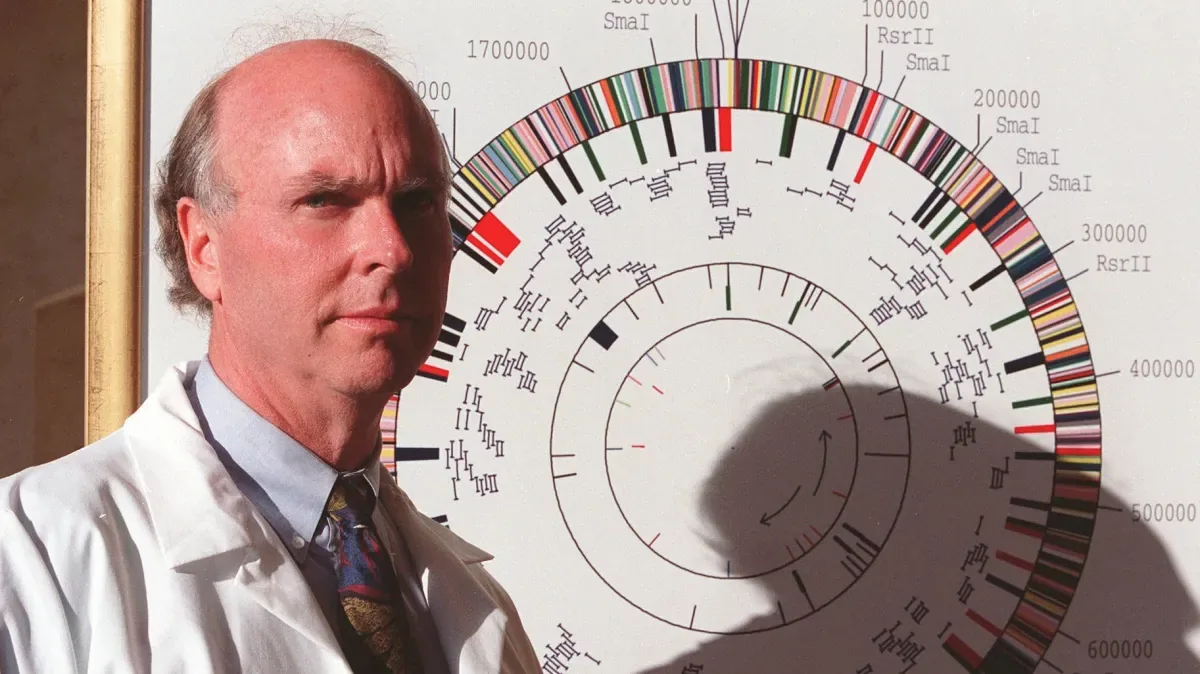
Dr. Craig Venter, a pioneering biochemist and entrepreneur who achieved landmark milestones in mapping the human genome and constructing the first self-replicating synthetic cell, died on September 15, 2023, at the age of 79. Venter, who was often described as the "bad boy of genomics" for his confrontational style and ambition, passed away in San Diego, California. His work fundamentally altered the landscape of biological research and biotechnology, pushing the boundaries of what was thought possible.
Venter first gained widespread recognition in the late 1990s for his role in the race to sequence the human genome. His private company, Celera Genomics, utilized a novel "shotgun sequencing" approach that significantly accelerated the process, ultimately challenging and complementing the publicly funded Human Genome Project. This rapid sequencing effort provided an invaluable resource for understanding human biology and disease, laying the groundwork for personalized medicine.
From Genome Sequencing to Synthetic Life
Following his work on the human genome, Venter continued to push scientific frontiers. In 2010, his research institute, the J. Craig Venter Institute (JCVI), announced the creation of the first artificial, self-replicating single-celled organism, dubbed "Synthia." This synthetic bacterium was created by synthesizing a bacterial genome and transplanting it into a cell that had had its own DNA removed. The achievement was hailed as a monumental step in synthetic biology, opening possibilities for designing new organisms with specific functions, from producing biofuels to manufacturing pharmaceuticals.
Throughout his career, Venter was a polarizing figure. He thrived on competition and was unafraid to challenge established scientific norms and institutions. His supporters lauded his vision, speed, and ability to translate complex scientific discoveries into practical applications and commercial ventures. Critics, however, sometimes questioned the ethical implications of his work and his aggressive business tactics. Venter himself often embraced his controversial image, seeing it as a catalyst for progress.
Born in Salt Lake City, Utah, in 1946, Venter pursued a career in medicine before shifting his focus to research. He earned a Ph.D. in physiology from the University of California, San Diego, in 1975. His early work focused on receptor proteins, but he soon recognized the immense potential of genetic sequencing. His journey from academic researcher to the head of multiple biotechnology companies, including Celera Genomics and Synthetic Genomics Inc., exemplified his drive to bridge the gap between scientific discovery and real-world impact.
The legacy of Craig Venter extends far beyond his technical achievements. He inspired a generation of scientists to think audaciously about the potential of genomics and synthetic biology. His contributions continue to influence fields ranging from medicine and agriculture to environmental science, underscoring his profound and lasting impact on modern biotechnology.