
Remoras Filmed Entering Manta Rays' Cloaca for First Time
Scientists have documented remoras swimming into the cloacas of manta rays, a behavior observed seven times over 15 years and believed to offer protection or access to food.

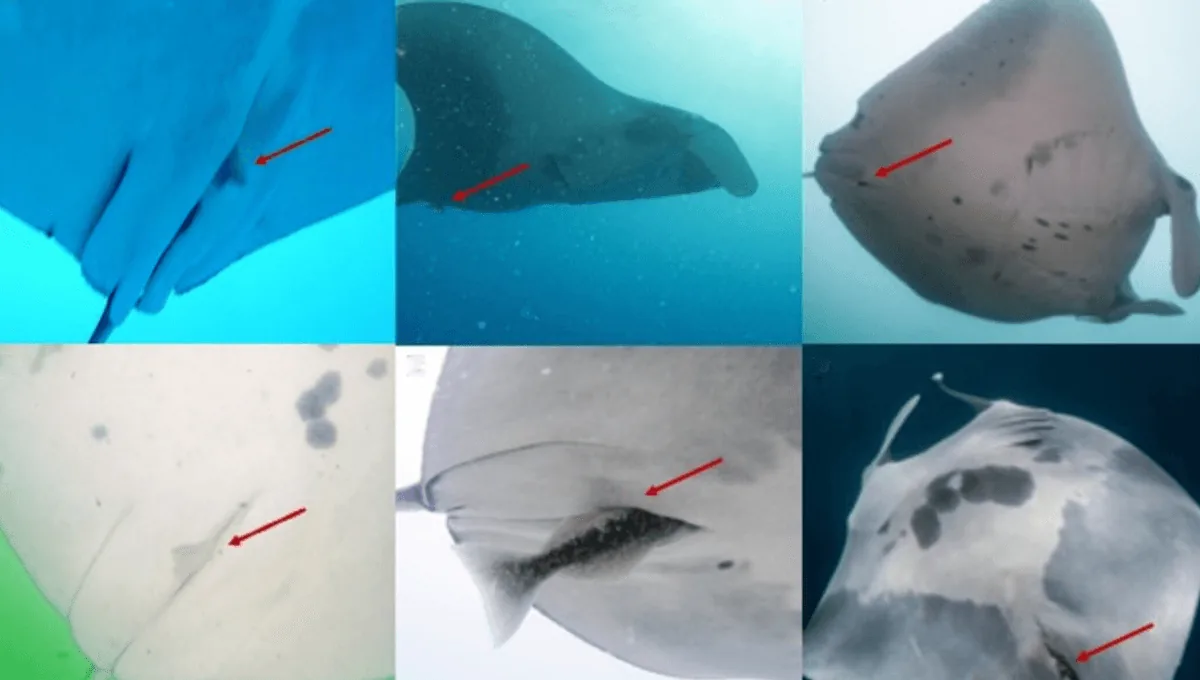
In a startling discovery, marine biologists have captured footage of remoras, known for their symbiotic relationship with larger sea creatures, entering the cloacal openings of manta rays. This never-before-documented behavior, observed on seven occasions spanning 15 years, reveals remoras swimming directly into the posterior openings of various manta ray species, with their tails often visible for a fleeting moment.
The groundbreaking study was spearheaded by PhD candidate Emily Yeager, in collaboration with institutions including the University of Miami Shark Research, the Marine Megafauna Foundation, and Manta Trust. One particularly striking observation occurred in July 2023 when a freediver in Florida witnessed the event firsthand. According to the study's authors, the diver approached an adult Atlantic manta ray from behind. A medium-sized remora was initially seen near the manta ray's pelvic fins. As the diver moved to the ventral side of the ray, the remora rapidly inserted itself into the manta ray's cloacal opening. The manta ray briefly shuddered in response before continuing its swim, with the remora still inside.
While this specific interaction is unusual, the underlying behavior is not entirely new to the fish world. The pearlfish, for instance, is known for inhabiting the digestive tracts of sea cucumbers. Remoras themselves have previously been recorded entering the mouths, gill slits, and even cloacas of whale sharks. The recent findings, however, offer a more detailed look at this specific remora manta ray dynamic.
Understanding the Remora's Risky Dive
Researchers propose several potential advantages for remoras engaging in this behavior. Primarily, it offers a secure shelter from predators. Secondly, it may provide access to undigested food particles, essentially feeding on fecal matter. A third theory suggests that entering the host's body might reduce drag, facilitating a smoother journey through the ocean compared to clinging externally. While this strategy appears beneficial for the remoras, the implications for the manta rays are less clear.
The study authors noted that a remora’s presence within the cloaca could potentially interfere with crucial biological functions. These include mating, live birth, and defecation, especially if the cloacal diving occurs for extended periods. "Although the exact mechanisms driving cloacal diving and gill attachment behaviors remain unclear, it is apparent that Echeneidae-host relationships are more physiologically and ecologically complex than previously understood," the study concludes. This research highlights the intricate and often surprising interspecies dynamics at play in marine ecosystems.