
Andean Mouse's Survival Secrets at 7,000 Meters Revealed
Scientists have uncovered the remarkable adaptations that allow the tiny Andean leaf-eared mouse to thrive at extreme altitudes of 7,000 meters, a zone previously thought impossible for mammals. The study reveals enhanced metabolism and an unexpected ability to neutralize plant toxins.

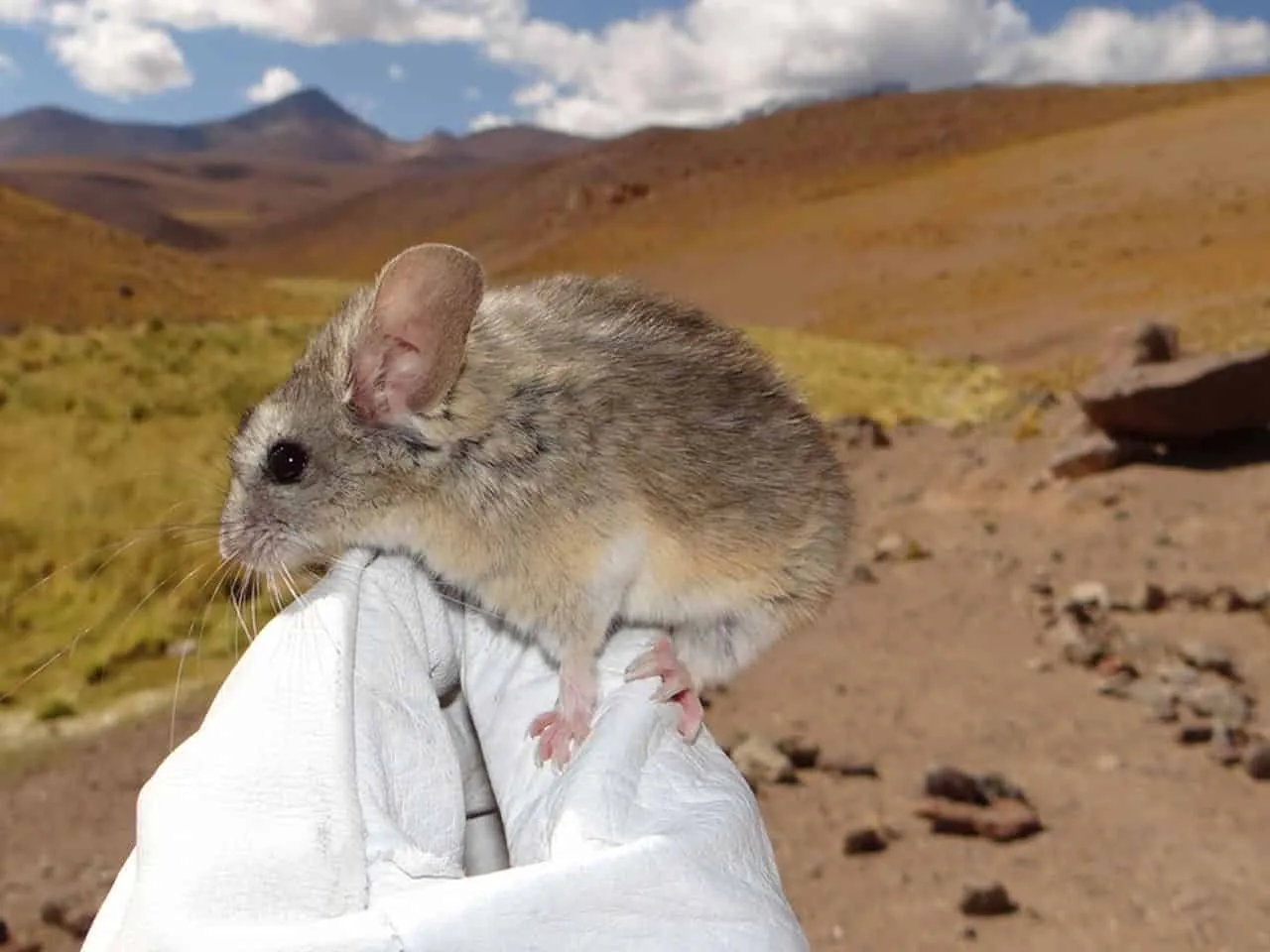
In a groundbreaking discovery that redefines the known limits of mammalian survival, scientists have finally deciphered how the tiny Andean leaf-eared mouse (Phyllotis vaccarum) thrives at staggering altitudes of up to 7,000 meters (23,000 feet) near the Andes "death zone." This species flourishes in an environment so hostile that even seasoned human climbers struggle, overturning long-held biological assumptions about where mammals can permanently reside.
"It was completely unexpected. People did not think mammals could survive at these altitudes, but they’re there," stated Graham Scott, a professor and expert in animal physiology at McMaster University, highlighting the astonishment within the scientific community. For over a century since the mouse's discovery in 1912, researchers have pondered its ability to endure an environment characterized by thin air, sub-freezing temperatures, limited sustenance, and fierce winds.
A new study, culminating from years of rigorous expeditions across the Andes, has now provided the answer. Researchers compared mice from sea level to the volcanic summits, analyzing over 160 individuals. They employed a comprehensive approach, combining whole-genome sequencing, physiological experiments, muscle analyses, metabolic measurements, and population genetics. This allowed them to identify the unique biological changes distinguishing high-altitude mice from their lowland counterparts. Even more remarkably, high- and low-altitude populations continue to interbreed, suggesting that natural selection actively favors these extreme adaptations.
Metabolic Mastery and Toxin Neutralization
The study revealed that these high-altitude mice have evolved into incredibly efficient biological furnaces. Their skeletal muscles are packed with an unusually high number of mitochondria, the cellular powerhouses responsible for generating energy. This allows the mice to sustain higher rates of aerobic metabolism, effectively producing heat while consuming minimal oxygen. "They’re more like a marathon runner than a sprinter. Their muscle cells are packed with mitochondria that allow them to sustain heat-producing activity for longer periods," Scott explained. Instead of relying primarily on carbohydrates, the mice have shifted towards burning fats, a more stable fuel source for both shivering muscles and specialized brown fat tissue that generates heat independently of muscle activity.
This intricate metabolic strategy, coupled with genetic adaptations for energy production and improved blood vessel regulation under chronic hypoxia, enables them to maintain body temperature in near-constant freezing conditions. Intriguingly, unlike some other high-altitude specialists that evolve enhanced hemoglobin, these mice appear to have optimized multiple physiological systems to ensure tissue function in oxygen-poor environments.
Perhaps the most surprising finding, however, was not related to oxygen levels, but to food. The barren volcanic slopes where these mice live offer scarce vegetation, lichens, and other materials. Many of these plant sources contain toxic chemical compounds that would pose a significant challenge for most mammals. "We were initially focused on the most obvious environmental challenges, things like low oxygen and cold, but there were important factors we didn’t expect, including how these animals deal with what they’re eating," Scott commented. Genetic analysis uncovered evidence of natural selection acting on genes involved in breaking down plant toxins, indicating a sophisticated detoxification system that allows these mice to consume and process substances lethal to many other creatures.
This discovery expands our understanding of high-altitude adaptation, which has historically focused on respiration and oxygen transport. The research, led by experts including Graham Scott and Grant McClelland from McMaster University, suggests that metabolism, nutrition, and detoxification are equally crucial for survival in extreme environments. The insights gained from studying these remarkable Andean leaf-eared mouse populations could potentially offer valuable clues for future biomedical research, particularly in understanding cellular responses to prolonged oxygen deprivation, a phenomenon relevant to conditions like cancer. Future studies aim to detail the specific diet of these mice and the precise function of their detoxification genes, further illuminating the secrets of life at the edge of the world.