
Gene Editing Advances Hint at Future of Designer Babies, Scientists Caution
New precision gene-editing techniques are raising the possibility of modifying human embryos, reigniting ethical debates about "designer babies." Scientists emphasize significant hurdles remain for safe therapeutic use.

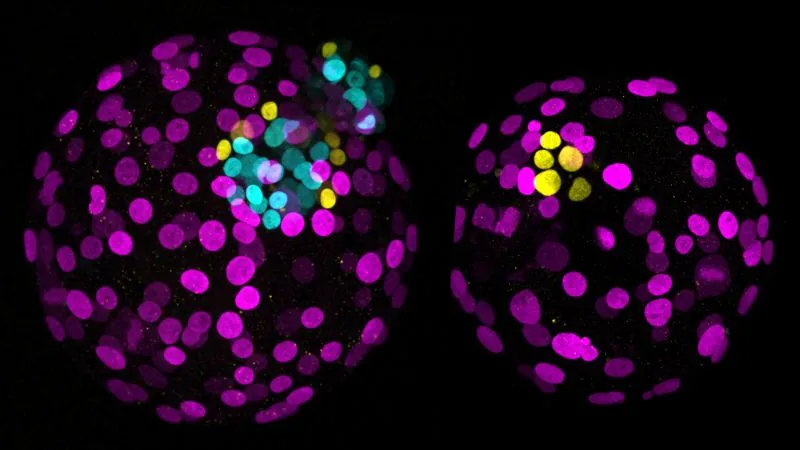
New research demonstrates unprecedented precision in editing human embryos, reigniting discussions about the future of gene-editing technologies and the controversial prospect of "designer babies." While advancements in gene editing are already transforming treatments for genetic diseases, the ability to alter the DNA of embryos for heritable changes remains a subject of intense scientific and ethical scrutiny. The consensus and laws in many nations currently prohibit germline editing – modifying embryo DNA to prevent genetic diseases from being passed down through generations.
Scientists involved in the latest studies have stressed that despite the significant progress in precision, substantial obstacles persist before human germline editing could be safely applied. "Six years ago, I thought the use of gene editing in human embryos was a non-starter," said Amander Clark, a professor of molecular cell and developmental biology at the University of California, Los Angeles. "This work restores the possibility that gene editing for therapeutic purposes could be possible with IVF embryos in the future," Clark, who was not involved in the new research, commented via email. Lab research on human embryos, typically donated by in vitro fertilization patients, is heavily regulated globally and generally limited to a 14-day period after conception.
Ethical Hurdles and Scientific Precision
Public opinion on gene-edited babies remains uncertain, with ethical concerns about intentional genetic enhancements for desirable traits frequently overshadowing the medical applications. The gene-editing tool known as CRISPR-Cas9, widely used in research, has revolutionized biology but can be imprecise, sometimes causing unintended changes like chromosome loss in human embryos. This imprecision led to widespread condemnation when Chinese researcher He Jiankui announced in 2018 the birth of twins from modified embryos, resulting in a jail sentence for him.
However, newer techniques, such as base editing, offer a more refined approach, capable of altering a single DNA base at a time. Base editing has seen clinical success, being used in trials for leukemia and a rare genetic disorder in infants. Two recent studies, published in June 2026, utilized base editing on early-stage human embryos. One study, led by Kathy Niakan of the University of Cambridge, used the technique to investigate the function of the NANOG gene, crucial for early embryo development, and found base editing significantly reduced the risk of unintended chromosomal errors compared to standard CRISPR-Cas9. "Base editing can precisely change a single nucleotide base pair to another in an entire human genome of around 3 billion base pairs — that’s an incredible feat," Niakan stated.
In a separate study, Dietrich Egli of Columbia University used base editing to modify genes related to cholesterol regulation (PCSK9) and fetal hemoglobin production (HBG) in fertilized eggs. While these studies advance the understanding of gene editing in embryos, Egli cautioned that clinical application is still distant. Both research teams encountered challenges, including "mosaicism," where the intended edit does not occur in all cells, and some "off-target" edits affecting unintended genes. "This is a long stairway with many different steps and maybe some plateaus in between," Egli explained. "We started at the very bottom and we’ve made a few steps in that direction, but I think we can look at the progress that has been made, and the discussion can be had about the pros and cons of going further."
Helen O’Neill, an associate professor at University College London, highlighted the value of genome editing in human embryos for understanding early life development and improving IVF success rates. She noted that focusing solely on "designer babies" overlooks the potential clinical benefits for patients with serious inherited conditions where current genetic testing is insufficient. Laurie Zoloth, a professor at the University of Chicago, reiterated the ethical concerns, emphasizing that embryo editing remains risky and should be prohibited for non-research purposes due to safety concerns. Existing methods like genetic screening and preimplantation genetic testing already offer ways to avoid passing on genetic abnormalities, she pointed out.