
Gorilla Tickles Reveal 15 Million Year Clue to Human Speech Evolution
New research suggests the development of human speech wasn't a sudden leap but a gradual, 15-million-year evolutionary process. Scientists studied vocalizations from gorillas and chimpanzees to uncover this ancient clue.

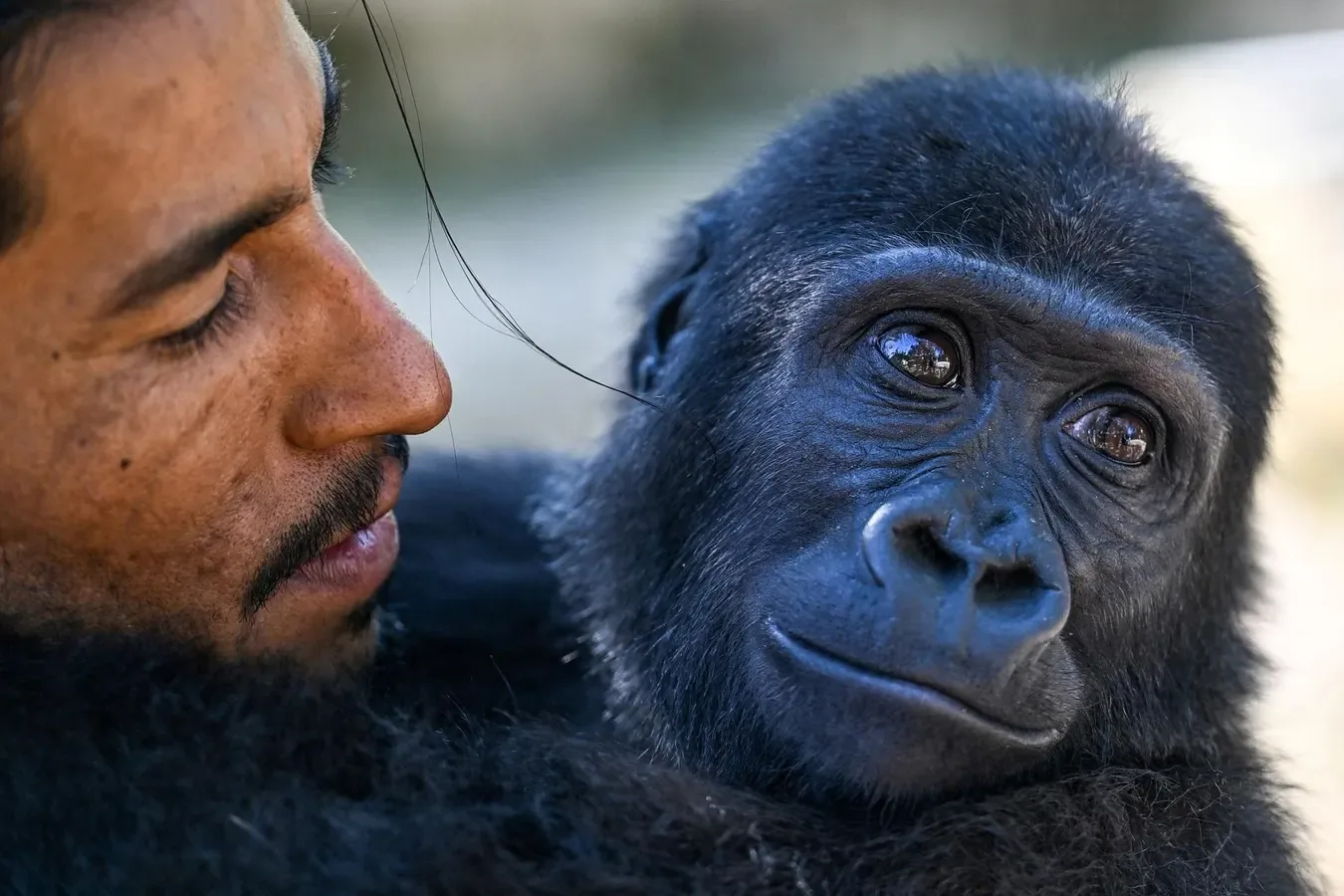
Scientists at the University of Warwick have uncovered evidence suggesting that the evolutionary path to human speech was a gradual process spanning at least 15 million years, rather than a sudden development. Their findings, derived from studying the vocalizations of gorillas and chimpanzees, challenge long-standing theories about the abrupt emergence of human vocal control.
The research, led by Adriano Lameira, an associate professor at Warwick’s ApeTank research group, utilized recordings from chimpanzee play sessions and observed the reactions of gorillas to tickling. Lameira stated that laughter “provides a rare evolutionary window” into the historical transformations of vocal abilities. This unique approach allowed the team to explore the ancient origins of vocal control, which predates the existence of early humans.
Tracing Vocal Evolution Through Primate Laughter
The study posits that the capacity for complex vocal communication, a hallmark of human language, developed over an extensive period. By analyzing the sounds and control exhibited during tickling-induced laughter in great apes, researchers aimed to identify pre-cursors to the sophisticated vocalizations used in human speech. This perspective shifts the timeline of vocal evolution significantly, pushing its origins back into a much earlier epoch of primate history.
Traditionally, many scientists believed that the intricate vocal control necessary for human speech evolved relatively recently in our evolutionary lineage. However, this new research indicates a much deeper history, suggesting that the foundational elements of vocal flexibility were in place millions of years before Homo sapiens appeared. The University of Warwick study could potentially be extended to other primates, such as gibbons, to further map the evolutionary trajectory of vocal control across different species, according to a university release.
Understanding the evolution of speech is fundamental to grasping human cognition and social development. The ability to communicate complex ideas through modulated sounds allowed early humans to cooperate, plan, and transmit knowledge, playing a crucial role in our species' success. This research into primate vocalizations offers a novel perspective on how these essential communication tools may have first begun to develop.