
August 12 Skygazing: 4 Major Celestial Events Unfold
Skywatchers can anticipate an extraordinary night on August 12, 2026, with a solar eclipse, the peak of the Perseid meteor shower, and a six-planet parade gracing the heavens.

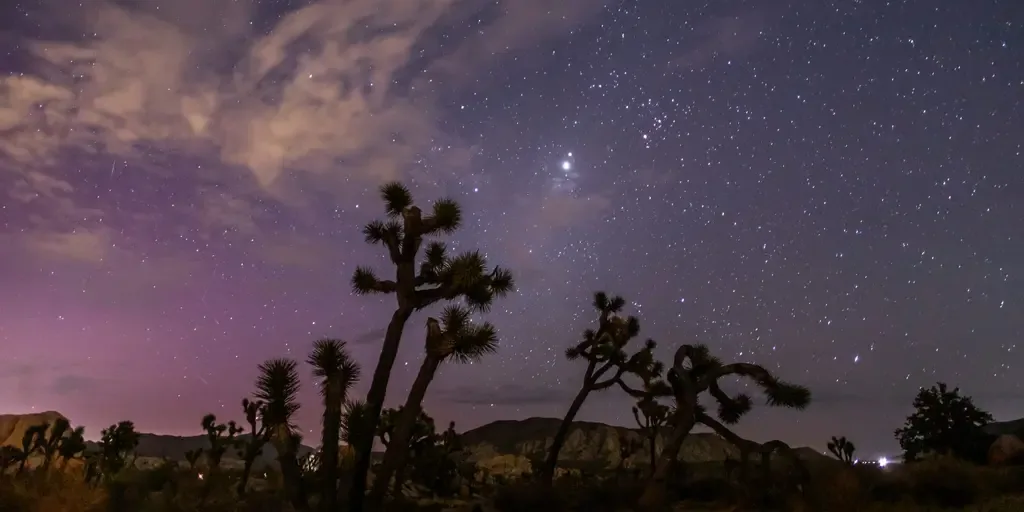
August 12, 2026, promises an exceptionally busy night for celestial enthusiasts, featuring a rare alignment of four major astronomical events: a solar eclipse, the peak of the Perseid meteor shower, a parade of six planets, and a new moon. This confluence of cosmic phenomena offers a prime opportunity for observation, enhanced by the generally favorable night temperatures of August.
The planetary spectacle begins in the pre-dawn hours of August 11 and continues for several subsequent nights, according to The Planetary Society. This impressive lineup includes Jupiter, Mercury, Mars, Uranus, Saturn, and Neptune. While Jupiter, Mercury, Mars, and Saturn are likely visible to the naked eye, catching glimpses of Uranus will require binoculars, and Neptune will necessitate a telescope.
Adding to the night's events, the new moon rises on August 12 at 1:37 p.m. Eastern Time. This phase of the moon is crucial for skywatchers, as its absence from the night sky significantly darkens the heavens, making fainter objects like meteors and planets much more visible.
Simultaneously, a total solar eclipse will traverse a path across northern Russia, Greenland, Iceland, and northern Spain, with a small portion of Portugal also within the path of totality, NASA reports. In the United States, a partial solar eclipse will be observable from regions spanning from Alaska to North Carolina. NASA strongly advises observers to use appropriate eye protection, such as certified solar viewing glasses, handheld solar viewers, or other safe solar filters, to prevent severe eye damage from the Sun's intense rays.
Perseid Meteor Shower Peaks Amidst Lunar Darkness
The celestial show culminates with the peak of the Perseid meteor shower on the overnight hours of August 12 into August 13. Originating from the debris trail of Comet Swift-Tuttle, the Perseids are renowned for their brilliance, capable of producing up to 100 meteors per hour at their zenith, solidifying their status as one of the year's most spectacular meteor displays.
This year's Perseid display is particularly auspicious due to the coinciding new moon. The darkened sky will dramatically enhance visibility, allowing skywatchers a better chance to witness the streaks of light. According to NASA, observers should direct their gaze towards the northeast after full darkness falls, watching for the constellation Perseus to ascend above the horizon. "This is where the meteors originate, but let your eyes wander, because they can flash across any part of the sky," the space agency noted.
For optimal viewing of the Perseid meteor shower and the other events, experts recommend finding a location away from city lights, allowing about 30 minutes for your eyes to adjust to the darkness. This combination of events on August 12, 2026, offers an unparalleled opportunity for both amateur and seasoned astronomers to witness the grandeur of the cosmos.