
Artemis II launch tore hole in Earth ionosphere, scientists say
A pre-print study reveals that NASA's <a href="/search/Artemis%20II">Artemis II</a> moon launch created massive disturbances in the Earth's ionosphere.

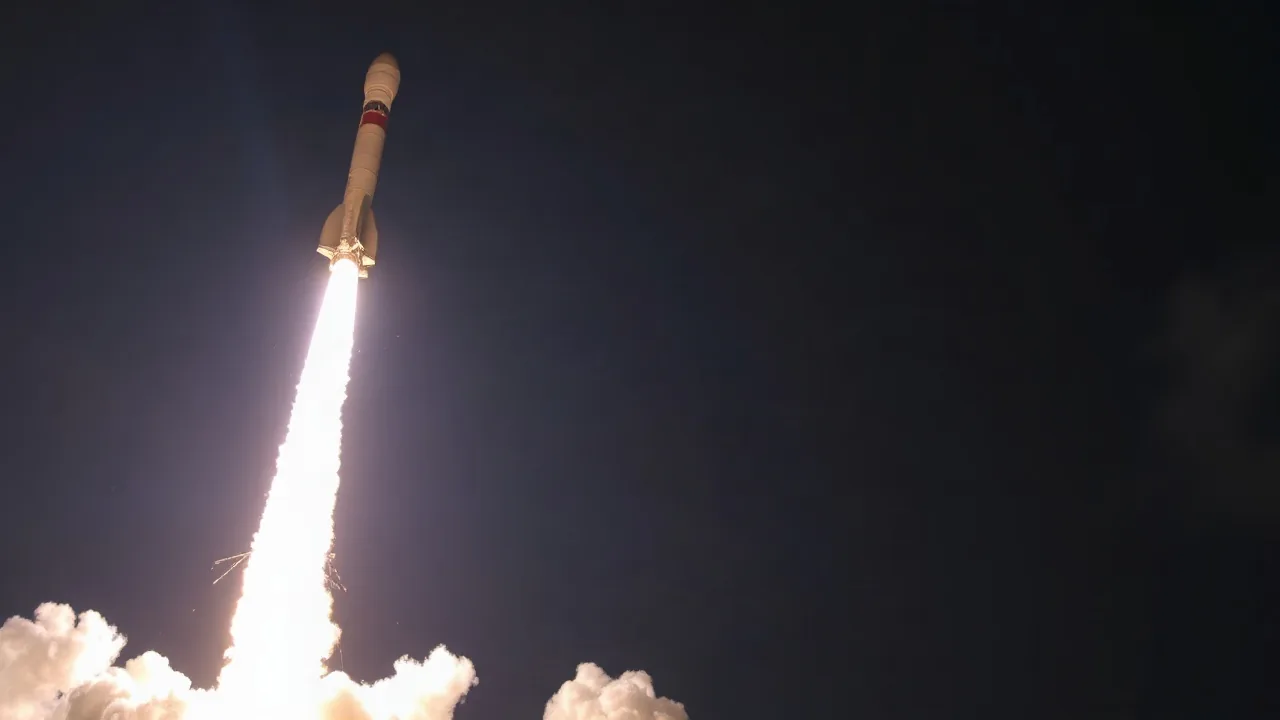
The launch of NASA's Artemis II mission created massive disturbances in the Earth's upper atmosphere that scientists say could have impacted GPS and other communications. According to a pre-print study by researchers from National Cheng Kung University in Taiwan, the disruptions caused by the Artemis II rocket were stronger than those produced by any other rocket launches to date, raising concerns about future frequent and powerful launches.
The Artemis II mission launched on April 1, 2026, sending four astronauts on a nine-day journey around the Moon and back. It represented the first crewed mission to the Moon since the Apollo programme, acting as a stepping stone for establishing a permanent human presence on the lunar surface. Despite the success of the mission, researchers published a study in Geophysical Research Letters stating that the launch and subsequent rocket burns generated three distinct disturbances in the ionosphere.
Ionospheric Impact and Future Risks
The ionosphere is the layer of the atmosphere reaching about 80 to 640 kilometers above the Earth's surface. The first disturbance from Artemis II happened during liftoff from Kennedy Space Center, creating shock-acoustic and gravity wave modulations. However, the subsequent upper-stage burns proved much stronger than the initial launch. An hour after liftoff, the apogee raise burn created a second disturbance, while a third occurred roughly 25 hours later due to the trans-lunar injection burn.
The study authors note that the apogee raise burn triggered shock waves and unprecedented large-scale disturbances that elongated 50 degrees of longitude across North America. The researchers state that this marks the first time a single space mission produced three instances of ionospheric disturbances over the same region during successive orbit maneuvers.
While the study found no widespread GPS disruption from the initial liftoff, the recorded changes in the ionosphere point to potential problems for future rocket launches. Such atmospheric shifts could interfere with radio signals and affect technologies relying on GPS positioning, such as drones and self-driving cars.