
Dodo Bird Intelligence Reassessed: Study Challenges Stupidity Myth
A new study using CT scans of dodo skulls suggests the extinct bird was as intelligent as modern pigeons, debunking a long-held myth of its dull-wittedness. Researchers found its forebrain size was comparable, challenging its historical reputation.

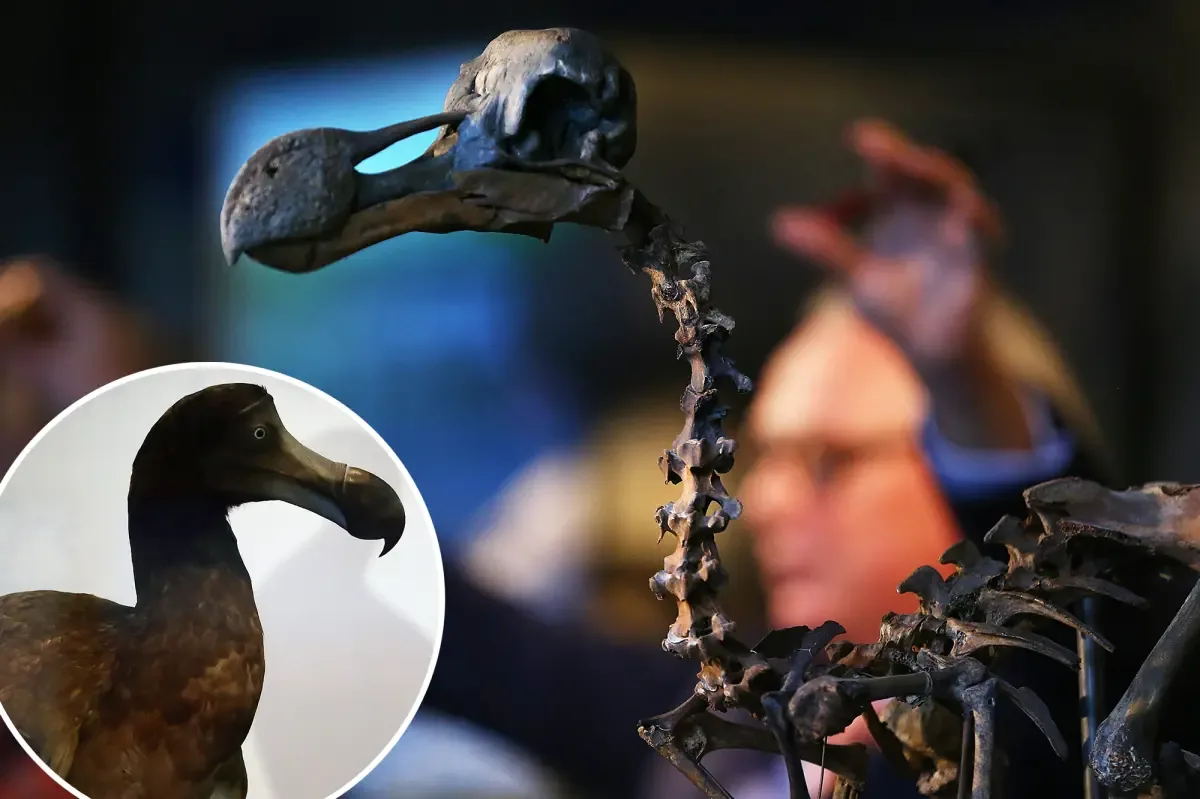
Scientists have overturned a centuries-old perception of the dodo bird as a symbol of extreme stupidity, revealing in a new study that the extinct flightless creature may have possessed cognitive abilities comparable to modern pigeons. The findings, published in a leading zoological journal, challenge the long-standing stereotype of the dodo as a clumsy and foolish animal.
For decades, the dodo, which inhabited the island of Mauritius in the Indian Ocean, has been shorthand for obsolescence and dim-wittedness. This reputation stemmed from early accounts by Dutch sailors who arrived on the island in the late 17th century. The birds, having evolved without natural predators, were reportedly unafraid of the newcomers, leading to their rapid demise through hunting and the introduction of invasive species like dogs, cats, pigs, and rats. Some historical narratives even suggested sailors exploited the dodos' perceived lack of intelligence, using their distress calls to lure others.
Reconstructing the Dodo's Mind
To investigate the dodo's true cognitive capacity, an international team of researchers employed advanced high-resolution CT scanning technology on three of the world's only known complete dodo skulls. This non-invasive technique allowed them to create detailed 3D reconstructions of the birds' cranial structures, providing unprecedented insight into brain size and organization. The team then compared these reconstructions to the cranial data of various pigeon species, relatives of the dodo.
The analysis revealed that the dodo's forebrain, the region associated with higher cognitive functions like learning and memory, was proportionally similar to that of other pigeons. "In other words, there is no evidence the dodo was less intelligent than any other pigeon," the researchers stated in their findings. This conclusion is further supported by previous research indicating that the dodo's overall brain size relative to its body mass was also consistent with that of its avian cousins.
Regarding the dodo's famously trusting nature towards humans, the study suggests it was a natural adaptation to its environment. "They simply had nothing to fear until humans arrived, as is common for island species with no predators," the researchers explained. This lack of fear was not an indicator of low intelligence but rather a consequence of its isolated evolutionary history on Mauritius.
However, the study did identify one notable difference: the dodo's optic lobes, responsible for processing visual information, were smaller than those of many pigeon species. This suggests an adaptation to low-light conditions, potentially enabling the dodo to forage effectively during dawn and dusk or even at night. Such an adaptation could have provided a crucial advantage in accessing food resources, particularly against competitors like giant tortoises that were primarily active during daylight hours.
This reassessment of the dodo's intelligence comes at a time when the concept of de-extinction is gaining traction. Companies like Colossal Biosciences are actively pursuing technologies to potentially bring back extinct species, including the dodo, using advanced genetic engineering and artificial egg technologies. While the dodo's fate remains a cautionary tale of human impact on biodiversity, this new research offers a more nuanced understanding of the creature itself, moving beyond the simplistic label of 'bird brain' and highlighting its unique evolutionary journey.