
Pigeon Navigation: Magnetic Sense Found in Livers, Study Reveals
New research indicates that pigeons may use magnetic sensors located in their livers to navigate, especially when visual cues are unavailable. Immune cells within the liver are suspected to play a key role.

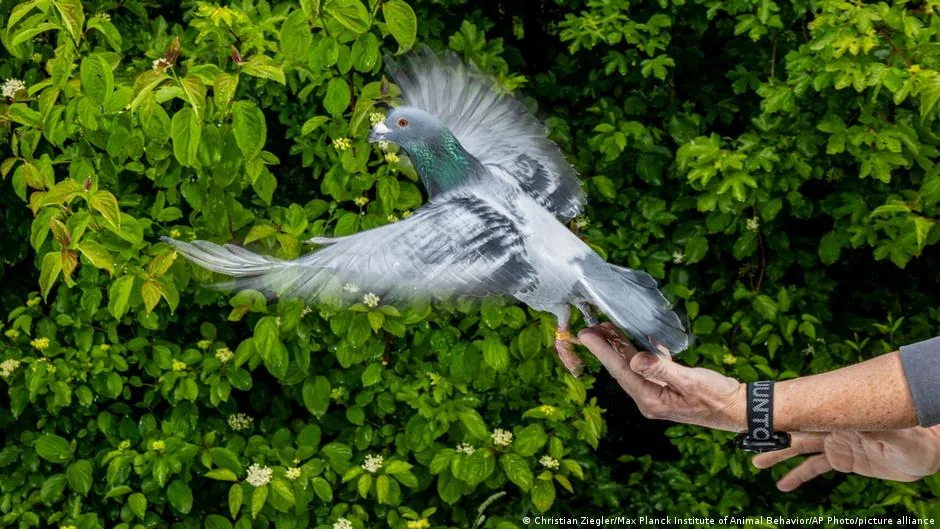
Scientists have uncovered a potential key to the remarkable navigational abilities of pigeons, suggesting that the birds' livers may contain magnetic sensors crucial for finding their way home. The study, published this week in the journal Science, highlights the role of specialized immune cells in the liver that accumulate iron, enabling them to detect magnetic fields.
For decades, researchers have understood that pigeons, also known as rock doves (Columba livia), utilize magnetoreception as part of their complex navigation system. While connections to the beak, eyes, and brain have been explored, this latest investigation points to a surprising location: the liver. The research team from the University of Bonn and the Max Planck Institute of Animal Behavior employed a range of physical, morphological, functional, and genomic assays to identify the presence of superparamagnetic macrophages in pigeon livers. These macrophages, immune cells involved in breaking down old red blood cells, store iron, which could allow them to interact with magnetic fields.
The study's findings suggest a direct link between liver function and magnetic orientation. "We found that after macrophage depletion, pigeons flying under overcast conditions lacked their usual orientation capabilities," the researchers stated. This impairment was not observed when the sun was visible, indicating that visual and solar cues are also vital components of their navigation. However, the inability to navigate magnetically without their livers' assistance led the scientists to conclude: "We propose that in homing pigeons, superparamagnetic macrophages in the liver are required for finding magnetic direction."
A 'Gut Feeling' with a Physical Basis
Martin Wikelski, Director at the Max Planck Institute of Animal Behavior, commented on the findings, suggesting that what appears to be an instinctual "gut feeling" in bird navigation may indeed have a tangible physical mechanism. The immune cells identified are situated near nerve cells within the liver, leading researchers to hypothesize that they might transmit magnetic directional data directly to the pigeon's brain. "We didn't expect immune cells to act like sensors for magnetic fields at all. Our results reveal a previously unknown mechanism for magnetic perception in animals," said Christian Kurts, co-senior author and Director at the Institute of Molecular Medicine and Experimental Immunology at the University Hospital Bonn. This discovery opens a new avenue in understanding animal sensory systems.
Even before this specific study, the liver and spleen were considered potential sites for magnetic properties due to their role in red blood cell processing and iron storage. Clivia Lisowski, the study's first author from the University of Bonn and the University Hospital Bonn, noted that these organs were already targets for investigation. "We had some clues that the liver and spleen have magnetic properties, because they break down red blood cells and so store much iron in the body," Lisowski explained.
The ability of pigeons to find their way home over hundreds of miles has been recognized and utilized by humans for millennia. This innate skill is woven into ancient myths and historical accounts, from Noah's Ark to Greek mythology, where pigeons served as divine messengers. Ancient civilizations, including the Greeks and Romans, harnessed this capability for communication, relaying news of victories and military intelligence across vast distances. Even in the more recent past, as technology advanced, pigeons played a critical role in communication networks. The Reuters news agency, for instance, was founded on the swift communication provided by carrier pigeons carrying stock prices and news between cities in the mid-19th century. Their importance extended into wartime, with pigeons serving valiantly in World War I and being integral to intelligence-gathering operations like Britain's MI14(d) Operation Columba during World War II, where they delivered vital information from occupied territories back to Allied forces.