
Simone Biles Health Scare Drives Sports Medicine Innovation
Recent health concerns involving elite gymnast Simone Biles highlight how advanced sports medicine and healthtech are reshaping athlete recovery and injury prevention in 2026.

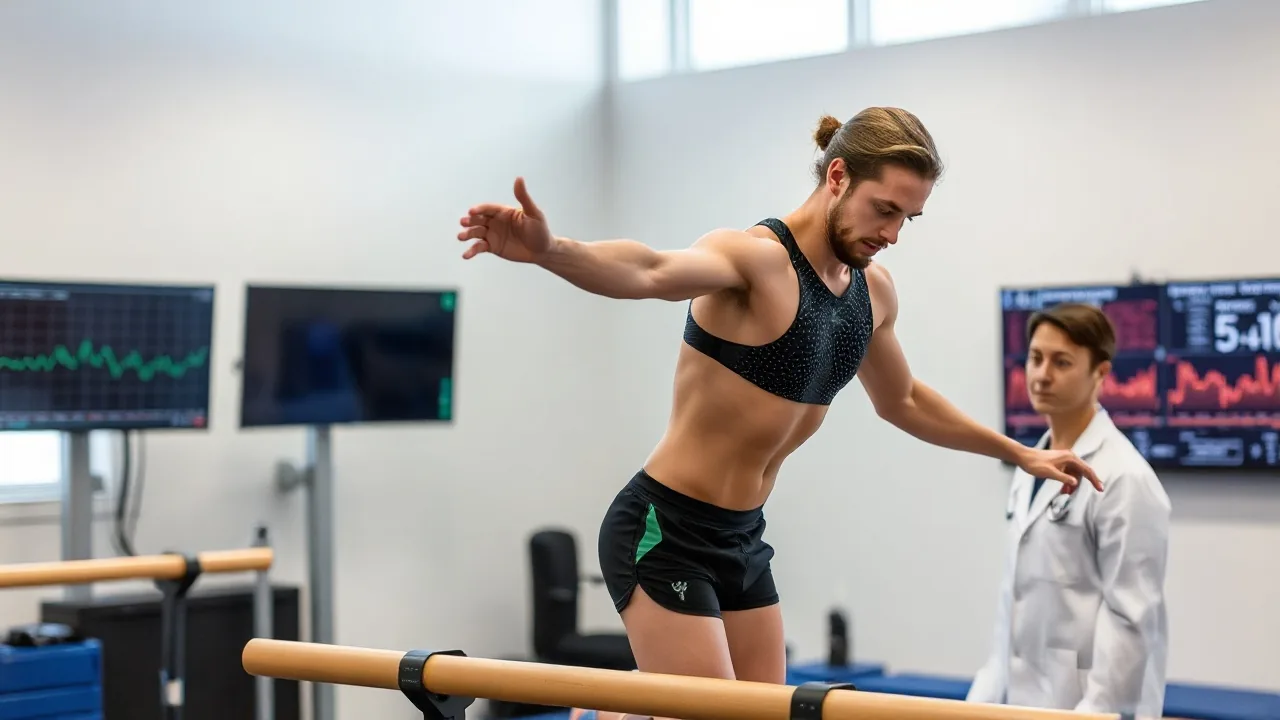
Simone Biles' recent health scare has refocused attention on the physical toll elite gymnastics demands and the cutting-edge medical tools now available to support athlete recovery. In June 2026, as the four-time Olympic champion navigated health challenges while preparing for major competitions, sports medicine specialists worldwide are deploying new diagnostic and rehabilitation technologies that were unavailable just a few years ago.
The incident underscores a broader shift in how elite athletic programs manage risk. Team physicians, biomechanics engineers, and performance scientists are now working in tandem to detect and prevent injuries before they become critical. For athletes competing at the highest level, the stakes are both financial and personal—a single injury can derail years of preparation and millions in sponsorship value.
Advanced Diagnostics and Real-Time Monitoring
Sports medicine has transformed dramatically through wearable sensors and AI-powered imaging. Modern gyms and national team facilities now deploy motion-capture systems that track an athlete's movement pattern in three dimensions, identifying microtrauma and asymmetries that traditional video analysis would miss.
"We're now able to see stress patterns on bone and soft tissue at a granularity we never had before," explains Dr. James Chen, head of sports medicine at a major U.S. Olympic training center. "A gymnast like Simone can wear sensors during training, and within minutes we have data on ground reaction forces, spine alignment, and muscular fatigue across dozens of muscle groups."
Healthtech companies have invested heavily in this space. Real-time biofeedback apps now sync with wearables to alert coaches when an athlete's fatigue index exceeds safe thresholds. Some facilities use thermal imaging and inertial measurement units (IMUs) embedded in custom leotards or shoes to prevent overtraining.
Magnetic resonance imaging (MRI) machines specifically designed for athletes are faster than ever. High-field 3.0T MRI scans that once took 45 minutes now deliver detailed soft-tissue images in under 15 minutes, reducing the disruption to training schedules while improving diagnostic confidence.
Personalized Recovery Protocols and Predictive Analytics
Athlete recovery is no longer one-size-fits-all. Machine learning models trained on millions of athlete datasets now predict injury risk by analyzing sleep, heart rate variability, training load, and nutrition data. These models can flag when an athlete is approaching a danger zone days or weeks before symptoms appear.
Facilities supporting elite gymnasts now employ personalized recovery strategies tailored to each athlete's unique physiology. Ice baths have been supplemented (and in some programs replaced) by targeted compression therapy, electrical muscle stimulation, and infrared sauna protocols that are individually calibrated.
"The science of recovery has moved far beyond intuition," says Dr. Michelle Rodriguez, a sports physiologist consulting with multiple national Olympic programs. "Every athlete has a unique metabolic signature. Some recover fastest with cold exposure; others need heat. Now we can determine that within the first week of working with an athlete."
Performance science teams now use genetic testing and muscle biopsy data to understand an athlete's fiber-type composition, mitochondrial efficiency, and inflammatory response patterns. This allows coaches to customize training stimulus and recovery interventions at a biological level.
The Gymnastics-Specific Challenge
Gymnastics presents unique medical demands. Unlike distance running or swimming, where training load is measured in volume and repetition, gymnastics demands explosive power, precision, and extreme ranges of motion—often on apparatus that leaves little margin for error.
The sport's injury profile has shifted as athletes push higher difficulty levels. Ankle injuries, shoulder impingement, and lower back strain remain common, but newer concerns include repetitive stress on the ulna in bar workers and cervical spine issues in tumbling athletes. Injury prevention protocols now specifically target these high-risk sites with pre-hab exercises validated through research studies published in the Journal of Athletic Training and Sports Medicine journals.
Three key technology categories are reshaping gymnastics safety:
- Augmented reality training systems that overlay biomechanical targets during practice, helping athletes self-correct form in real time
- Pressure-sensitive flooring that measures landing forces and identifies asymmetries across the left and right side of the body
- Drone-based video analysis that captures training from multiple angles simultaneously, feeding data into biomechanics software
These tools have reduced serious injury rates by an estimated 15-20% in programs that have fully adopted them, according to preliminary data presented at the 2026 American College of Sports Medicine Conference.
Broader Implications for Elite Sport
The attention on Simone Biles' health challenges has ripple effects across the sports medicine industry. Equipment manufacturers are designing safer apparatus. Research funding for gymnastic-specific injury prevention has increased. And elite programs are competing to hire the best sports medicine talent and adopt the newest technology.
For athletes and their families, this shift is meaningful. A health concern that might have ended a career in 2010 can now be managed, rehabilitated, and overcome within months. The combination of advanced diagnostics, personalized recovery science, and preventive technology has genuinely extended the career span of elite athletes while reducing long-term damage.
As summer 2026 progresses and major competitions approach, the medical and performance teams supporting elite gymnasts will continue pushing the boundaries of what's possible in athlete health and recovery.