
Son's Question Sparks Discovery of New 'Royal Engineer' Honeybee
A scientist's two-year-old son's innocent question led to the discovery of a new type of worker honeybee. Dubbed 'royal engineers,' these bees create specialized cells for queen development.

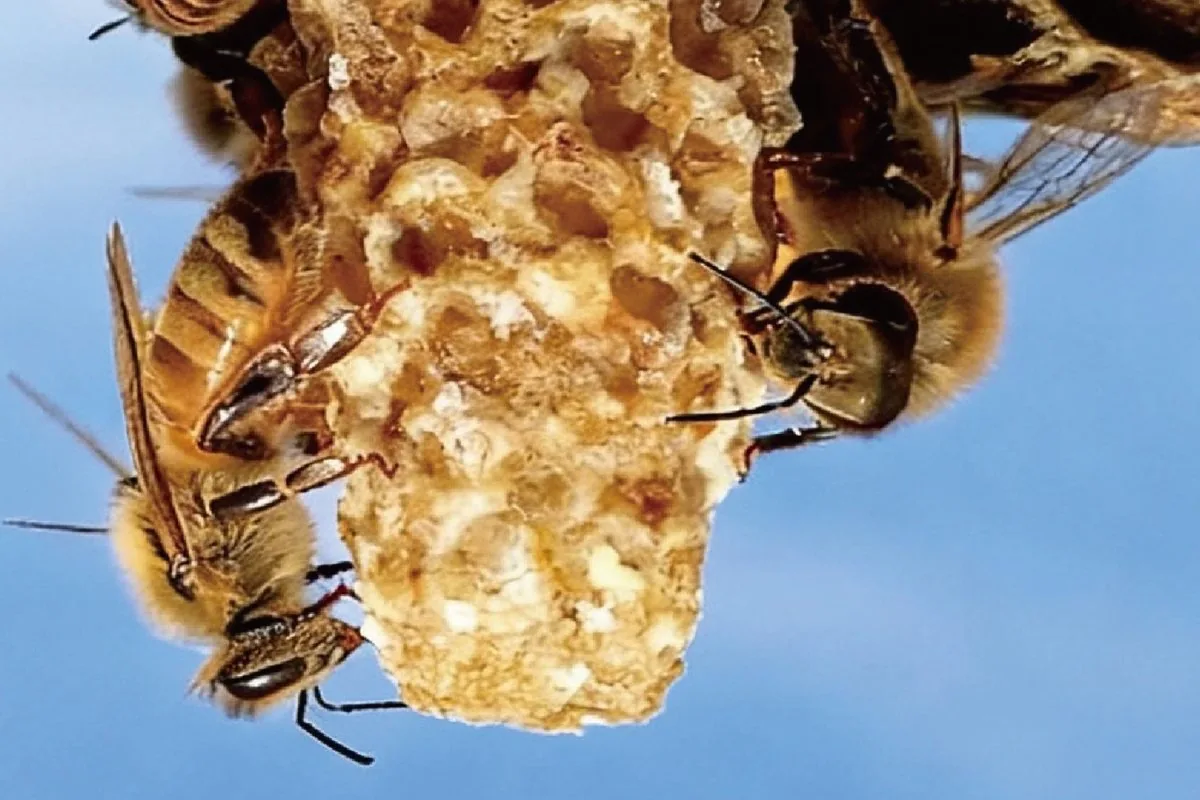
A seemingly simple question from a two-year-old boy has illuminated a previously unknown facet of honeybee society, leading researchers to identify a new class of worker bee responsible for nurturing future queens. The groundbreaking discovery, published in the journal Nature, reveals a sophisticated division of labor and specialized architecture within the hive.
Honeybee colonies are renowned for their intricate social structures, typically comprising a single reproductive queen, numerous male drones, and a vast workforce of female worker bees. These workers are the backbone of the hive, undertaking essential tasks such as guarding the colony, foraging for resources, feeding larvae, and meticulously constructing the hive's iconic hexagonal cells.
The revelation began when Dr. Kai Wang, a bee expert at the Chinese Academy of Agricultural Sciences in Beijing, brought his young son, Dongyue, to observe their laboratory's observation hive. Pointing to a queen cell—a distinctive, peanut-shaped structure where queen larvae are raised—the then two-year-old inquired, “Daddy, is this also a bee’s house? Why isn’t it a hexagon?”
“That innocent question hit me like a lightning bolt,” Wang recounted. The observation sparked a dedicated investigation by Wang and his team into the construction and purpose of these unique queen cells. Their close examination revealed that worker bees employed their mandibles not just for building, but also to actively chew and manipulate wax specifically for queen cells. Further investigation using infrared thermal cameras showed that these specialized workers elevated their body temperatures while engaged in this task, effectively using their thoraxes as “tiny, living furnaces” to soften the wax.
Specialized Workers and Engineered Microenvironments
This dedicated behavior led Wang to classify these insects as a new type of worker bee, which he has termed “royal engineers.” Their unique role extends beyond simple construction; their gene expression patterns, particularly in their abdomens, differed from those of typical workers. This specialization is critical, as traditional understanding long held that queens become queens solely due to consuming royal jelly, a substance secreted by workers. The structure and composition of the queen cell itself were considered secondary.
However, Wang's team, employing scanning electron microscopy, uncovered that the wax used for queen cells possesses distinct properties. It is less dense, more pliable, and has a higher melting point compared to the wax used for standard worker cells. To test the significance of these findings, the researchers conducted an experiment using 172 queen larvae. Some larvae developed in standard lab-created worker wax cells, while others were placed in cells engineered with the specialized queen cell wax.
The results were striking. Queens developing in cells made from ordinary worker wax were observed to be smaller and exhibited a higher mortality rate. This experiment strongly suggests that queen cells are not merely passive architectural containers but are actively engineered microenvironments that play a crucial role in the successful development of a queen bee. The work highlights the sophisticated, often overlooked, architectural behaviors and strategic planning within honeybee societies.
“We often think we already know so much about honey bees, but the level of strategy, organisation and sheer complexity involved in their architectural behaviour goes far beyond our current understanding,” Wang stated. “They are true masterminds.” This discovery opens new avenues for understanding insect behavior and the intricate adaptations that ensure the survival and success of complex social colonies, underscoring that even the most familiar creatures can hold profound secrets.