
AI Designs Superior CRISPR 'Molecular Scissors' for Gene Editing
Researchers have used AI to engineer novel CRISPR proteins that outperform natural gene-editing tools. These advanced "molecular scissors" could accelerate breakthroughs in medicine and agriculture.

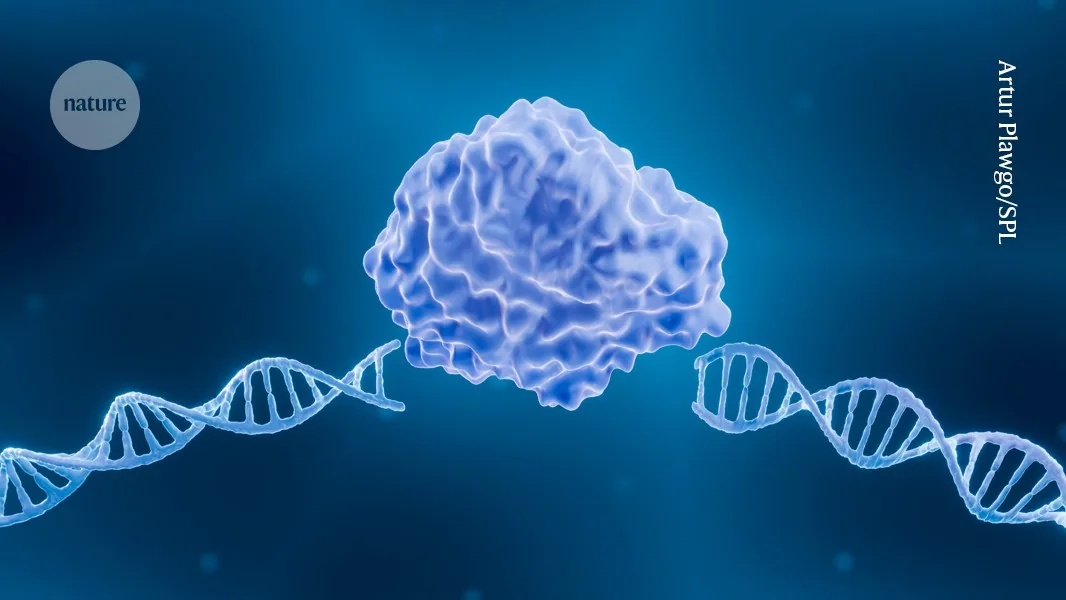
Scientists have developed artificial intelligence-driven models to create synthetic CRISPR proteins that demonstrate enhanced efficiency in editing genomes compared to their naturally occurring counterparts. This advancement holds significant potential for driving discoveries across fields ranging from medicine to agriculture. The findings were published on July 16, 2026, in the journal Science.
"Much like CRISPR democratized the ability to edit DNA at will, AI-based protein design promises to allow anyone to create totally novel properties in the protein space," stated Soeren Lienkamp, a molecular biologist at the University of Zurich, who was not involved in the study. He further commented that the research effectively "marries two transformative fields": AI-guided design and RNA-guided nucleases, enzymes capable of cutting DNA and RNA strands.
These nucleases are fundamental to the gene-editing system known as CRISPR. The system utilizes a 'guide RNA' molecule to direct the nuclease to a specific target DNA sequence. Once at the target, the nuclease functions like precise molecular scissors, excising the targeted genetic material. This action enables scientists to edit, delete, or insert genetic information, offering unprecedented control over the genome.
CRISPR technologies are derived from the defense mechanisms bacteria employ against viral infections. Prominent CRISPR nucleases, such as Cas9 and Cas12, are repurposed from bacterial systems. Despite the power of gene editing, the process remains intricate. According to Jennifer Doudna, a biochemist at the University of California, Berkeley, and a lead author of the study, the complex, orchestrated steps required for nucleases to function make it challenging to innovate beyond naturally evolved mechanisms. Doudna, who shared the 2020 Nobel Prize in Chemistry for her foundational work on CRISPR systems, noted, "Once you start tweaking things, you realize pretty quickly that while you can make changes, they ultimately produce something that isn’t functional."
Enhancing Gene Editing Through AI Design
Artificial intelligence tools offer a potent means to accelerate the identification of promising candidates for new, functional nucleases. Instead of undertaking hundreds or thousands of trial-and-error laboratory experiments, researchers can theoretically delegate this exploration to machine learning algorithms. To investigate this possibility, Doudna and her colleagues focused on engineering synthetic versions of TnpBs, a class of small nucleases that represent evolutionary predecessors to the widely used Cas12 enzyme.
The research team aimed to determine the extent to which they could modify the protein sequences of TnpBs while preserving their gene-editing capabilities. A critical factor for protein function is its ability to adopt a specific three-dimensional shape, or conformation. The researchers initiated their work by inputting the desired final conformation of a TnpB variant into an AI model. They then instructed the AI to reverse-engineer the necessary changes to the underlying DNA templates that would result in a protein maintaining that specific shape. This AI-driven approach generated thousands of potential genetic modifications. However, the initial output did not provide information regarding the functional activity of the resulting proteins, necessitating further experimental validation.
Subsequent steps involved experimental validation and refinement. By iteratively using AI to predict functional protein structures and then testing these predictions in the lab, the scientists were able to create novel TnpB variants. These engineered nucleases exhibited distinct cutting patterns and efficiencies compared to naturally occurring enzymes. The ability to design custom CRISPR proteins with specific properties opens new avenues for precision gene therapy and agricultural applications. This work marks a significant step towards realizing the full potential of AI in biological engineering, moving beyond nature's existing toolkit to create bespoke molecular machines. The development could lead to more targeted and effective gene therapies for inherited diseases and enhance crop resilience.