
Stephen Hawking's Father Expressed Concerns Over 'Lazy' Son in Private Diary
Newly revealed private diaries from Stephen Hawking's father, Frank Hawking, show he harbored anxieties about his son's academic progress, initially fearing him to be 'lazy' despite Stephen's burgeoning intellectual curiosity.

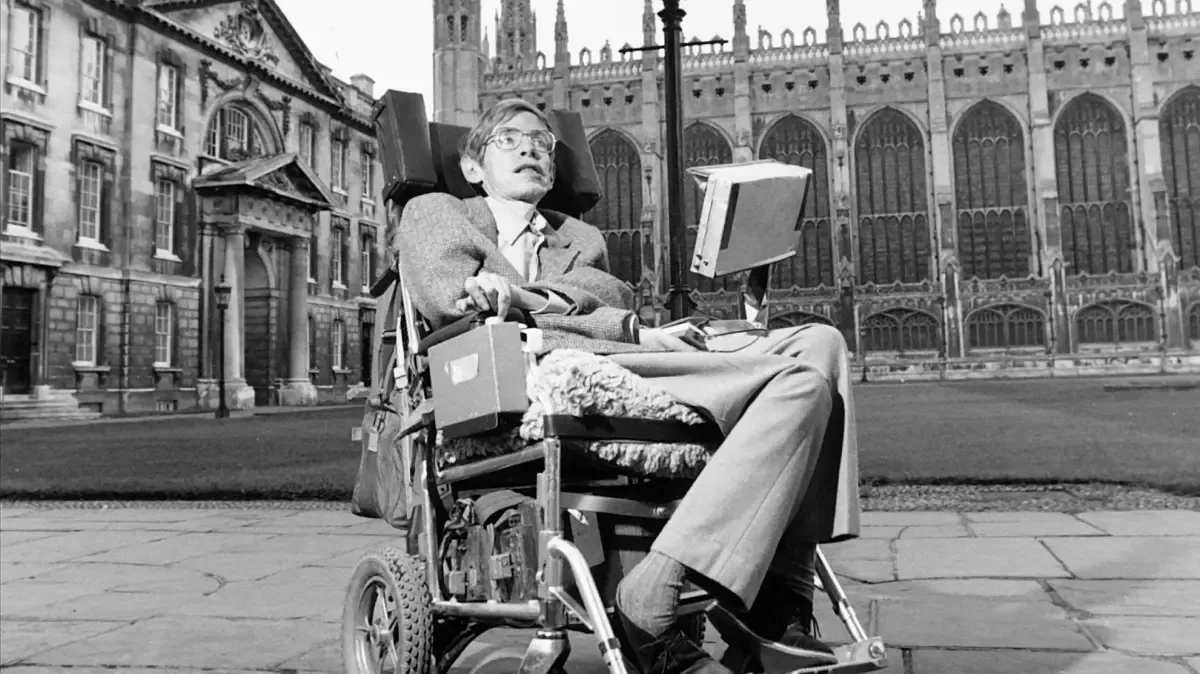
Newly surfaced private diaries penned by Frank Hawking, the father of renowned theoretical physicist Stephen Hawking, offer an intimate, and at times surprising, look into his private thoughts. The journals, written in a unique coded shorthand, reveal Frank's early anxieties about his son's academic dedication, with Stephen eventually becoming one of the most brilliant minds of the 20th century.
Frank Hawking, a respected physician and medical researcher himself, expressed concerns in the late 1950s and early 1960s, during Stephen's time at Oxford University, that his son was not applying himself sufficiently. This perspective is particularly striking given Stephen Hawking's later groundbreaking work in cosmology and quantum gravity, which revolutionized our understanding of the universe.
The revelation comes from a collection of Frank Hawking's personal papers, recently digitized and analyzed. While Frank was a supportive figure throughout his son's life, these candid writings suggest a paternal worry that Stephen's intellectual pursuits might be hampered by a lack of perceived discipline. Frank noted in his entries that Stephen seemed to be dawdling, contrasting with his own rigorous academic and professional path.
Early Worries Contrast with Future Triumphs
Despite these initial private reservations, Frank Hawking remained a steadfast supporter of his son's scientific ambitions. The diaries also contain entries detailing Frank's pride in Stephen's eventual achievements, even as he grappled with his son's diagnosis of amyotrophic lateral sclerosis (ALS) and the challenges it presented. The documents provide a poignant counterpoint to the public image of unwavering support, showcasing the complex emotional landscape of a parent observing a child's unconventional trajectory.
Stephen Hawking's journey from a young man whose father worried about his focus to a global scientific icon is a testament to his extraordinary intellect and perseverance. His contributions, including work on black holes and the origins of the universe, have left an indelible mark on modern physics. The Hawking radiation theory, for instance, predicted that black holes emit thermal radiation, a concept that fundamentally altered astrophysical understanding.
These diaries not only shed light on the Hawking family dynamics but also offer a rare glimpse into the personal life of Frank Hawking, who himself was a significant figure in tropical medicine. His work in Africa during World War II was crucial in combating diseases like malaria. Understanding his private thoughts adds another layer to the narrative of a family navigating intellectual brilliance, personal challenges, and the universal experience of parental concern.
The insights gleaned from Frank Hawking's journals are expected to be of interest to biographers, historians of science, and anyone fascinated by the life of Stephen Hawking. They serve as a reminder that even extraordinary individuals have parents who, like all parents, experience a spectrum of emotions and anxieties regarding their children's futures, irrespective of the eventual outcomes.