
UFO Files: What Declassified Government Reports Reveal About UAP
The U.S. government has released declassified documents on unidentified aerial phenomena, offering new transparency into decades of unexplained sightings and official investigations.

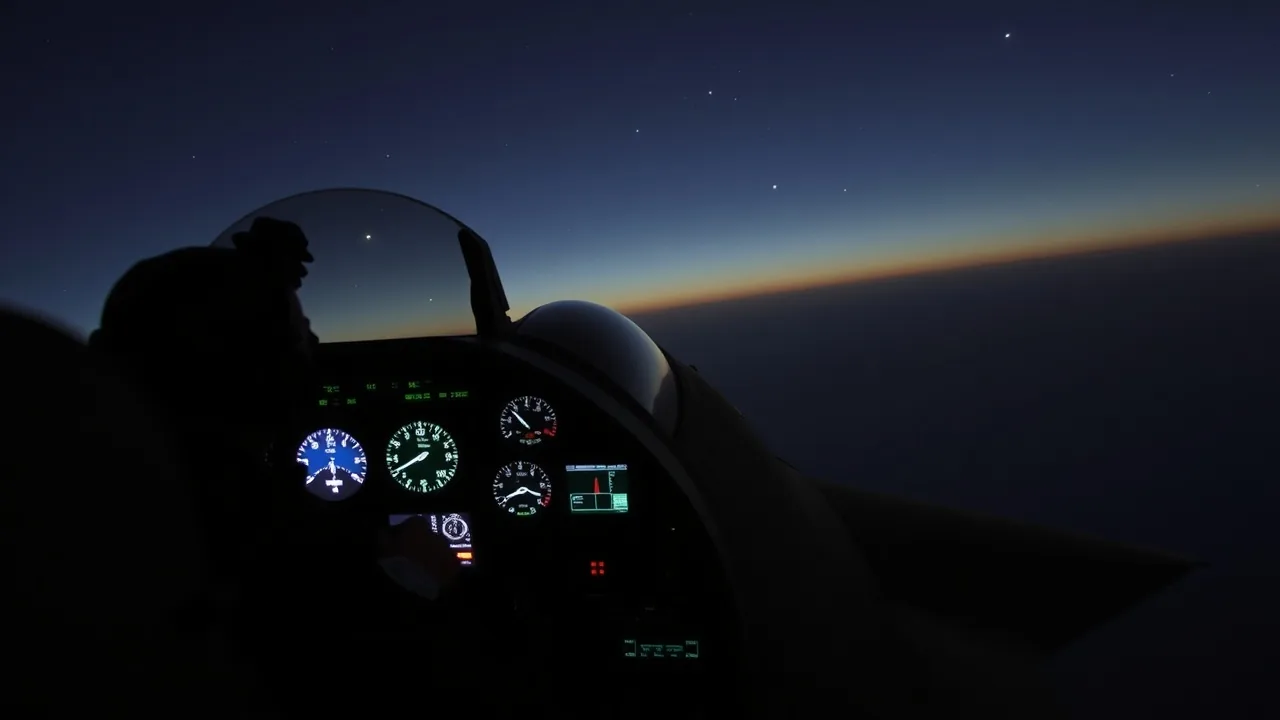
In 2023 and 2024, the U.S. Department of Defense and intelligence agencies released hundreds of previously classified documents detailing encounters with unidentified aerial phenomena (UAP), reshaping public understanding of government investigations into unexplained sightings. These releases came as part of broader congressional demands for transparency and follow years of official acknowledgment that pilots and military personnel have observed objects performing maneuvers beyond known technology capabilities.
The UAP disclosures stem from incidents documented across military installations, naval vessels, and commercial airspace. One landmark moment came in December 2022, when the Office of the Director of National Intelligence (ODNI) released a report stating that UAP sightings had increased significantly, with 144 incidents reported by government personnel between 2004 and 2021 alone.
"The lack of a common framework for reporting and investigating UAP meant that observations were fragmented, often not shared across agencies, and difficult to analyze systematically," according to findings by the Congressional Research Service in early 2024. This institutional gap prompted legislators to mandate standardized reporting protocols and dedicated funding for UAP research within the Department of Defense.
What the Declassified Documents Show
Declassified documents released through Freedom of Information Act (FOIA) requests and congressional oversight reveal specific technical details about these encounters. Navy pilots, for instance, reported objects moving at speeds exceeding 500 miles per hour without visible means of propulsion or exhaust. Several incidents describe instantaneous directional changes and hovering at extreme altitudes where conventional aircraft cannot operate.
Key details from released materials include:
- 2004 encounter off the coast of San Diego involving a Nimitz-class carrier strike group and objects tracked on radar before visual confirmation
- 2015 incident captured on infrared video by Navy pilot Lt. Ryan Graves, showing a spherical object moving against prevailing winds
- Multiple reports from military personnel describing metallic, silent objects near sensitive installations including nuclear weapons storage facilities
- Radar data indicating objects executing maneuvers inconsistent with aerodynamic limitations of known aircraft
Pentagon officials have stated plainly that these unexplained phenomena represent a potential aviation safety hazard and a possible national security concern. The All-domain Anomaly Resolution Office (AARO), established in July 2022, now coordinates investigation and analysis across the military and intelligence communities.
Government Transparency and Ongoing Classification
While recent releases represent unprecedented openness, large portions of government reports on UAP remain classified. Officials cite operational security, protection of intelligence sources and methods, and legal restrictions on disclosing information about foreign technology testing as justification for continued redactions.
Congressional oversight committees, particularly the Senate Select Committee on Intelligence, have pushed for faster declassification. Senators including Mark Warner have introduced legislation requiring regular reporting on UAP incidents and investigation findings, with mandatory summaries provided to Congress and, in some cases, public disclosure.
The Pentagon's stance reflects a tension between two objectives: acknowledging that military personnel have witnessed genuine unexplained events while avoiding premature conclusions about their origin or nature. "We take these sightings seriously as potential aviation safety issues and legitimate security concerns," a Department of Defense spokesperson stated in March 2024. "That does not mean all reports describe the same phenomenon or that any single explanation applies universally."
National security officials have also emphasized that some UAP sightings may ultimately have conventional explanations including classified drone programs, foreign surveillance platforms, or sensor artifacts. However, a subset of documented incidents remain unresolved after years of official analysis, lending credibility to further investigation.
Privacy, Data Collection, and Information Security
The declassification process itself raises privacy and information security questions. Military personnel who report incidents are now named in some released documents, raising concerns about operational security and witness privacy. The Pentagon has responded by developing protocols to redact identifying information while preserving analytical value of sighting reports.
Intelligence agencies have also grappled with how to catalog and store massive volumes of UAP data without compromising other classified programs. Sensor data from military aircraft and radar systems sometimes appears adjacent to or correlated with UAP encounters, creating classification challenges when releasing findings.
The Congressional mandate for a centralized reporting system has required building new databases and ensuring interagency information sharing while maintaining compartmented access to sensitive intelligence. These technical and legal hurdles have slowed full public release of some materials, despite legislative pressure for accelerated transparency timelines.
Looking forward, the U.S. government's approach to UAP disclosure appears to be evolving from denial and secrecy toward measured acknowledgment and systematic investigation. Continued releases of UFO files will likely provide researchers, policymakers, and the public with clearer frameworks for understanding what military personnel actually encounter in the skies, even if final explanations remain elusive.