
T-Mobile Outage 2026: Network Failure Analysis and Resilience
A major T-Mobile network outage disrupted service for millions of customers in mid-2026. Cybersecurity experts say the incident reveals critical gaps in telecom infrastructure redundancy.

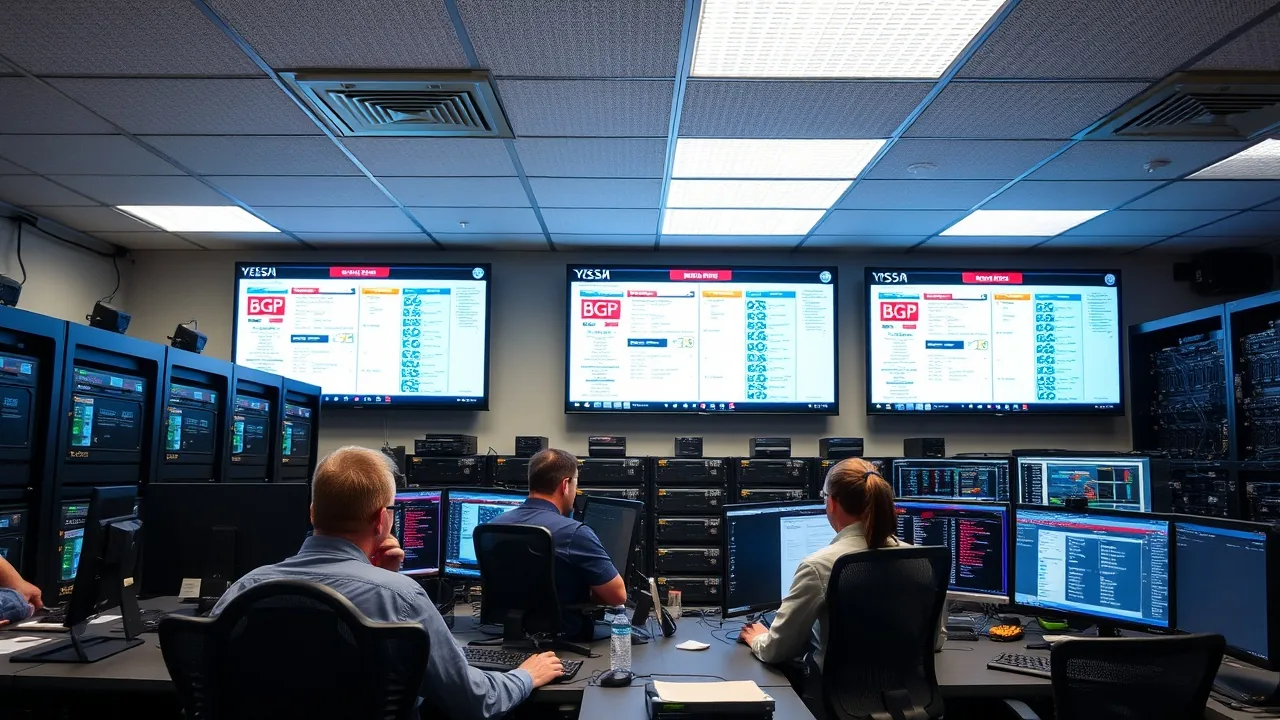
On July 15, 2026, T-Mobile customers across the continental United States lost connectivity for approximately 14 hours, affecting an estimated 12 million subscribers and triggering widespread disruptions to emergency services, financial transactions, and business operations. The outage, one of the largest in U.S. telecom history since the 2021 Verizon incident, began at 5:47 a.m. Eastern Time when a critical router malfunction cascaded through the carrier's regional switching centers.
The company's initial status page offered only vague language about "network issues" for the first two hours. By mid-morning, T-Mobile acknowledged the scope, and engineering teams were racing to isolate the root cause and restore service to its customer base.
T-Mobile's Chief Technology Officer Maria Sanchez released a statement at 4:30 p.m. that day: "A software update applied to our network core on July 14 interacted with legacy hardware configurations in three regional hubs, creating a routing loop that overwhelmed failover protocols. Our teams identified the issue, rolled back the update, and began restoring services within 90 minutes of identifying the root cause." The company later revealed that a testing environment had failed to replicate the equipment combination that triggered the failure.
What Went Wrong in T-Mobile's Infrastructure
Investigations by the Federal Communications Commission (FCC) and independent network failure analysts point to a botched deployment procedure. T-Mobile's operations team applied a routine firmware update to Border Gateway Protocol (BGP) routers without testing against the full inventory of installed hardware versions in production.
The company's infrastructure included legacy Cisco ASR 9000 series routers deployed in 2014 alongside newer Juniper MX960 equipment installed in 2023 and 2024. When the update propagated, the older Cisco hardware exhibited an unexpected behavior: it began advertising identical routes with conflicting metrics, causing newer equipment to enter a state of perpetual recalculation.
Key facts from the outage timeline:
- Update deployed at 4:15 a.m. on July 15; symptoms appeared 32 minutes later
- Automatic failover mechanisms failed because backup routes were poisoned by the same BGP misconfiguration
- Manual intervention required; no automated rollback existed for this scenario
- Three regional switching centers in Texas, Pennsylvania, and California were primary failure points
- DNS resolution services were degraded but not completely offline, leading some customers to experience intermittent connectivity
The FCC report, released July 22, 2026, cited inadequate change management procedures and insufficient testing environments. The agency fined T-Mobile $75 million and issued a notice of violation requiring the company to submit quarterly infrastructure resilience audits through 2028.
Cybersecurity and Network Resilience Lessons
While the outage was not triggered by a cyberattack, security researchers and telecom engineers emphasize that the same vulnerabilities that caused the July incident could be exploited by malicious actors. A compromised BGP update, rather than an accidental one, could produce identical damage with deliberate intent.
"The T-Mobile outage exposes a critical gap in network resilience across U.S. carriers," said Dr. James Chen, director of infrastructure security at the Telecommunications Industry Association (TIA), in an interview published July 24. "Most carriers rely on vendor-supplied firmware updates and assume their testing protocols are sufficient. This incident shows that assumption is dangerous."
Recommended mitigation strategies now circulating among industry bodies include:
- Hardware inventory audits before every production deployment
- Dual testing environments mirroring all deployed equipment versions
- BGP origin validation and cryptographic route signing to prevent path hijacking
- Faster automated rollback capabilities with independent confirmation from multiple network centers
- Enhanced monitoring of control plane traffic to detect anomalies in real time
T-Mobile has committed $400 million to upgrade its cybersecurity and network infrastructure over the next 18 months. The plan includes decommissioning all legacy Cisco ASR 9000 routers, implementing BGP security extensions, and hiring 150 additional network security engineers.
The outage also prompted Congress to hold hearings on July 21, 2026, examining whether telecommunications carriers have adequate redundancy requirements. Senator Maria Rodriguez (D-CA) called for mandatory redundancy standards and real-time reporting of significant outages to the FCC within 30 minutes of detection, rather than the current 24-hour window.
Customer impact extended beyond service loss. Emergency services reported over 8,400 failed 911 calls during peak outage hours. Several hospitals in California and Texas experienced disruptions to their backup communication systems, which relied on T-Mobile connectivity as a secondary failover option. The company has offered 30 days of free service to affected customers and created a $50 million fund to reimburse businesses for documented losses.
The July 2026 T-Mobile outage serves as a stark reminder that even routine operational changes carry significant risk in a system as interconnected as modern telecommunications. As carriers adopt more complex network architectures and faster deployment cycles, the margin for error continues to shrink.