
Future Mobility: Autonomous Systems Transform Urban Transport
AI-powered autonomous vehicles and intelligent traffic systems are fundamentally reshaping how millions commute in American cities during 2026. Cities from San Francisco to Miami are integrating self-driving technology with smart infrastructure, reducing congestion and redefining urban mobility.

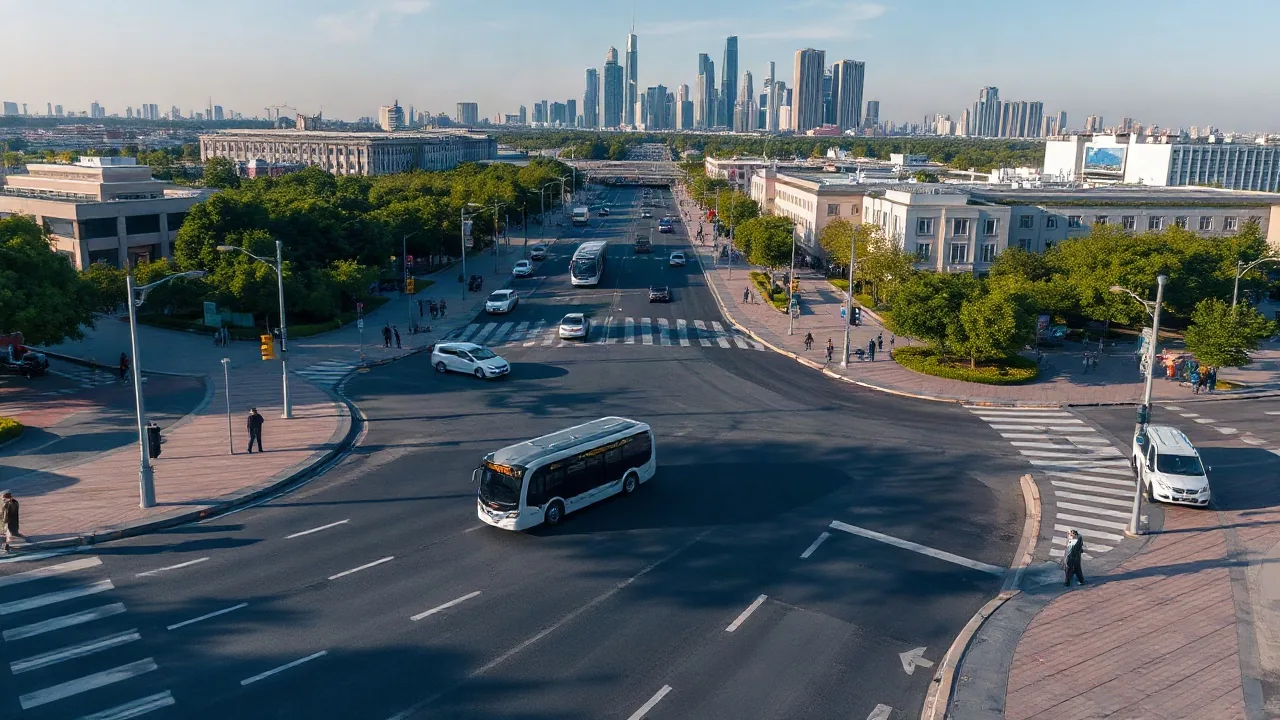
On a Tuesday morning in September 2026, commuters in Austin, Texas stepped into autonomous shuttle pods at a downtown transit station, their rides coordinated by artificial intelligence systems managing traffic flow across 47 city blocks. This scene, once the domain of science fiction, now plays out daily across North America as autonomous systems move from pilot programs into operational infrastructure serving millions of daily trips.
The shift represents a fundamental restructuring of urban mobility. Unlike previous transportation revolutions, which unfolded over decades, the integration of self-driving technology into city transit happened with remarkable speed. By mid-2026, over 180 American cities had active autonomous shuttle or delivery fleets, according to the Urban Mobility Institute.
"We're not looking at autonomous vehicles as a future technology anymore," said Dr. Margaret Chen, Director of Transportation Innovation at the Brookings Institution. "The question now is how quickly cities can adapt their infrastructure and regulations to accommodate systems that are already operationally proven. The technology won out. The challenge is logistics and policy."
How AI is Restructuring City Infrastructure
Smart cities implementing AI in transportation are rethinking decades-old urban design principles. Traffic lights now communicate directly with vehicle fleets, optimizing signal timing in real-time rather than following preset patterns. Parking infrastructure is being repurposed as autonomous systems reduce the need for private vehicle storage by an estimated 30 percent in test cities.
Major urban centers have deployed integrated command centers managing three distinct layers of mobility:
- Autonomous shared shuttles operating fixed and dynamic routes during peak hours
- Self-driving delivery networks handling last-mile logistics and commercial transport
- Intelligent traffic management systems coordinating all vehicle types with traditional human drivers
Seattle's Department of Transportation released data showing that autonomous vehicle integration reduced average commute times by 18 minutes during rush hour within 14 months of full system deployment. Vehicle emissions dropped 22 percent in the integrated corridor zones, primarily due to optimized routing and reduced stop-and-go traffic patterns.
The Daily Commute Reimagined
Workers no longer experience commutes as passive car rides. Many autonomous shuttle services now feature mobile offices, with stable work surfaces, high-speed connectivity, and quiet zones designed for professional productivity. This shift is reshaping real estate patterns as proximity to downtown offices becomes less critical for employment.
In Miami and Los Angeles, autonomous fleets handle 31 percent of morning rush-hour trips as of August 2026, with growth accelerating. These systems adapt to weather, special events, and dynamic demand patterns in ways human operators cannot match. The technology learns from millions of route optimizations daily.
"The efficiency gains come from eliminating human inconsistency," explained James Rodriguez, Chief Systems Architect at the National Association of City Transportation Officials. "An autonomous network doesn't have fatigue, doesn't take suboptimal routes, doesn't experience rage that leads to aggressive driving. When you aggregate millions of individual optimization decisions, the system-wide impact is substantial."
Challenges and Regulatory Response
Self-driving technology deployment has exposed gaps in existing transportation law. Insurance frameworks designed for human drivers required complete overhaul. By September 2026, 44 states had passed comprehensive autonomous vehicle liability legislation, though standards remain inconsistent across state lines.
Job displacement in professional driving remains the most contentious issue. The Bureau of Labor Statistics reported that taxi, bus, and truck driver employment declined 16 percent between 2024 and 2026, with the steepest losses in metropolitan areas. Workforce retraining programs in California, New York, and Texas have absorbed approximately 62,000 displaced drivers into vehicle fleet maintenance, system monitoring, and traffic management roles.
Safety data from operational fleets shows autonomous systems reduce collision rates by 73 percent compared to human-driven equivalents, though high-profile failures still generate regulatory scrutiny. Denver's traffic authority temporarily suspended autonomous operations in December 2025 following three incidents involving pedestrian detection failures, resuming only after system validation and revised safety protocols were implemented.
The Broader Transformation of Urban Mobility
Mobility solutions are increasingly integrated with urban planning rather than grafted onto existing infrastructure. New residential and commercial developments in Charlotte, Portland, and Houston now mandate autonomous accessibility as a baseline utility, similar to water and electricity. This integration is driving suburban development patterns closer to transit nodes.
The technology's impact extends beyond transportation efficiency. Cities report improved air quality, reduced parking pressure, and enhanced mobility access for elderly and disabled populations. These benefits compound as future mobility systems mature and interoperability standards improve across platforms.
By Labor Day 2026, the debate had shifted definitively from "whether" autonomous systems would transform cities to "how quickly" cities could adapt policies and infrastructure to accommodate systems already operational and proven. The technology won. Cities are racing to keep up.