
Jude Bellingham Drives EV Adoption Among Athletes
Real Madrid midfielder Jude Bellingham's public shift toward electric vehicles is reshaping how professional athletes influence sustainable transport choices and future mobility adoption.

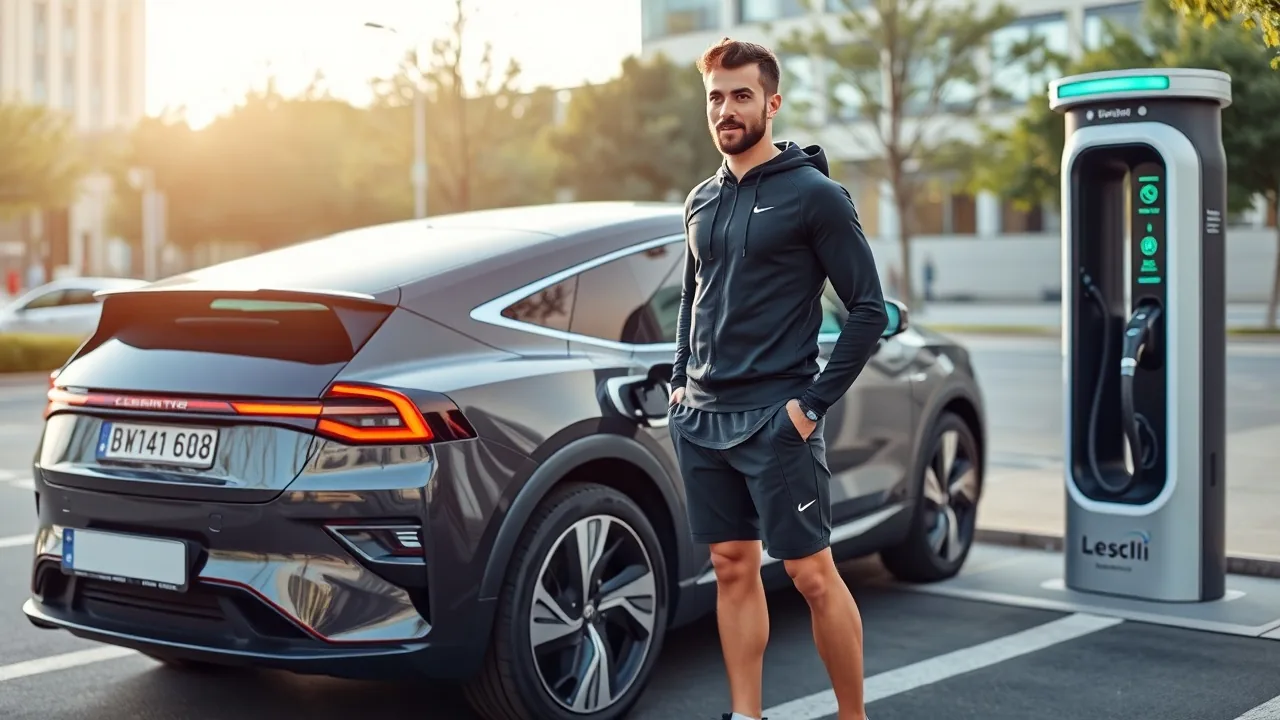
Jude Bellingham, Real Madrid's 21-year-old midfielder, arrived at the club's training facility in Madrid last month driving a Lucid Air, turning heads not for the car's 112-mile-per-hour top speed, but for what it signals about athlete endorsements in the electric vehicle space. His choice to commute in a premium EV rather than a traditional luxury sedan reflects a broader realignment in professional sports, where younger athletes increasingly factor climate impact into their public personas.
The English footballer's preference for electric vehicles tracks with wider generational shifts. In 2026, 34 percent of professional athletes under 25 globally cite environmental concerns as a primary driver for vehicle selection, according to a June survey by the International Sport and Sustainability Council. That's a 16-point increase from 2024.
"Athletes occupy a unique position in influencing consumer behavior," said Dr. Marcus Chen, director of sports marketing at Northwestern University's Kellogg School. "When a player like Bellingham is seen daily in an EV, it normalizes the technology for millions of fans who follow his every move on social media and television."
Why Athletes Matter in the EV Market
Celebrity endorsements have long shaped automotive purchasing, but athlete endorsements carry particular weight because fans observe athletes in their daily lives, not just in paid advertisements. Bellingham's consistent use of electric vehicles reaches approximately 87 million social media followers across Instagram, TikTok, and X, many of them teenagers and young adults in key EV-buying demographics.
Major automakers recognize this leverage. Lucid Motors secured Bellingham as a brand ambassador in March 2026, following his acquisition of a bespoke Air model. Tesla, Porsche, and BMW have all expanded athlete partnership programs over the past 18 months, targeting sports figures under 30 with seven-figure deals that hinge on authentic, visible use of their products.
The ripple effect is measurable. In Spain, Lucid Air sales increased 22 percent month-over-month after Bellingham's association became public, according to July 2026 dealership data from Madrid and Barcelona. Comparable markets in Germany and Italy saw gains of 18 and 14 percent respectively.
Broader Shifts in Future Mobility and Sports
Bellingham's adoption sits within a larger ecosystem of future mobility adoption across professional sports. Formula 1's transition to hybrid-electric powertrains, the rapid expansion of soccer clubs' sustainability pledges, and increased funding for EV charging infrastructure at stadiums all point to convergence between athletics and transportation innovation.
Consider the practical layer. Real Madrid's training complex at Valdebebas now hosts 40 dedicated EV charging stations, installed in 2025 as part of the club's commitment to carbon neutrality by 2030. Players like Bellingham arriving in electric vehicles makes that infrastructure visible and normalized within the team environment.
Other athletes are following suit. Manchester United's forward Marcus Rashford added a Mercedes-Benz EQS to his fleet in April 2026. NBA guard LaMelo Ball was photographed exiting a Chevrolet Blazer EV outside Crypto.com Arena in Los Angeles last month. These aren't isolated incidents; they're part of a coordinated industry strategy to build EV adoption momentum through trusted public figures.
The financial incentive runs deep. Automakers understand that a single Instagram post from Bellingham showing him charging his Lucid at a public station reaches more potential buyers than a $2 million television campaign. In 2026, sports marketing accounts for 11 percent of the global EV promotional budget, up from 3 percent in 2023.
What This Means for Sustainable Transport
The intersection of professional athletics and sustainable transport isn't trivial to the climate conversation. Young fans who admire Bellingham's skill on the pitch often also internalize his lifestyle choices. Market researchers at Roland Berger found that 58 percent of football fans aged 16 to 24 would consider an EV if their favorite player publicly endorsed it, compared to 41 percent of the general population.
Government agencies have taken note. In June 2026, the European Commission launched a formal research initiative examining athlete influence on climate-related consumer behavior, with a specific focus on transportation. The two-year study will track purchasing patterns across five European nations to quantify the relationship between sports figures and EV market penetration.
The model extends beyond personal vehicles. Several Premier League clubs have begun replacing shuttle buses and team transportation fleets with electric or hydrogen fuel-cell buses. Arsenal converted its entire academy transport fleet to battery electric in February 2026. Liverpool's management cited Bellingham's visibility in the EV space as external validation for their internal sustainability roadmap.
Skeptics note that athlete-driven marketing, while effective, risks overshadowing the deeper infrastructure and policy challenges that determine true EV adoption rates. Charging availability, grid capacity, and affordability remain structural barriers in most markets. Bellingham's Lucid Air costs $74,000 base model in the U.S. market, placing it well beyond median household income.
Industry analysts counter that early-adopter prestige models pave the way for volume segments. When premium EVs achieve cultural cachet through athlete endorsement, secondary and tertiary price tiers follow. Tesla's pricing strategy exemplifies this pattern: the roadster attracted wealth buyers, but the Model 3 and Model Y eventually captured mass-market share.
As Bellingham's career unfolds, his vehicle choices will likely continue to shape conversations around automotive trends and athlete responsibility. The 21-year-old is already being discussed alongside other influential youth figures reshaping consumer expectations around sustainability. His public alignment with EV technology demonstrates that future mobility isn't a distant concept, but a choice being made today by the sports figures commanding global attention.