
Social Security Benefits and Retirement Transportation Costs
Retirees face mounting pressure as Social Security benefits lag behind rising transportation expenses. New data reveals how mobility costs are reshaping retirement budgets in 2026.

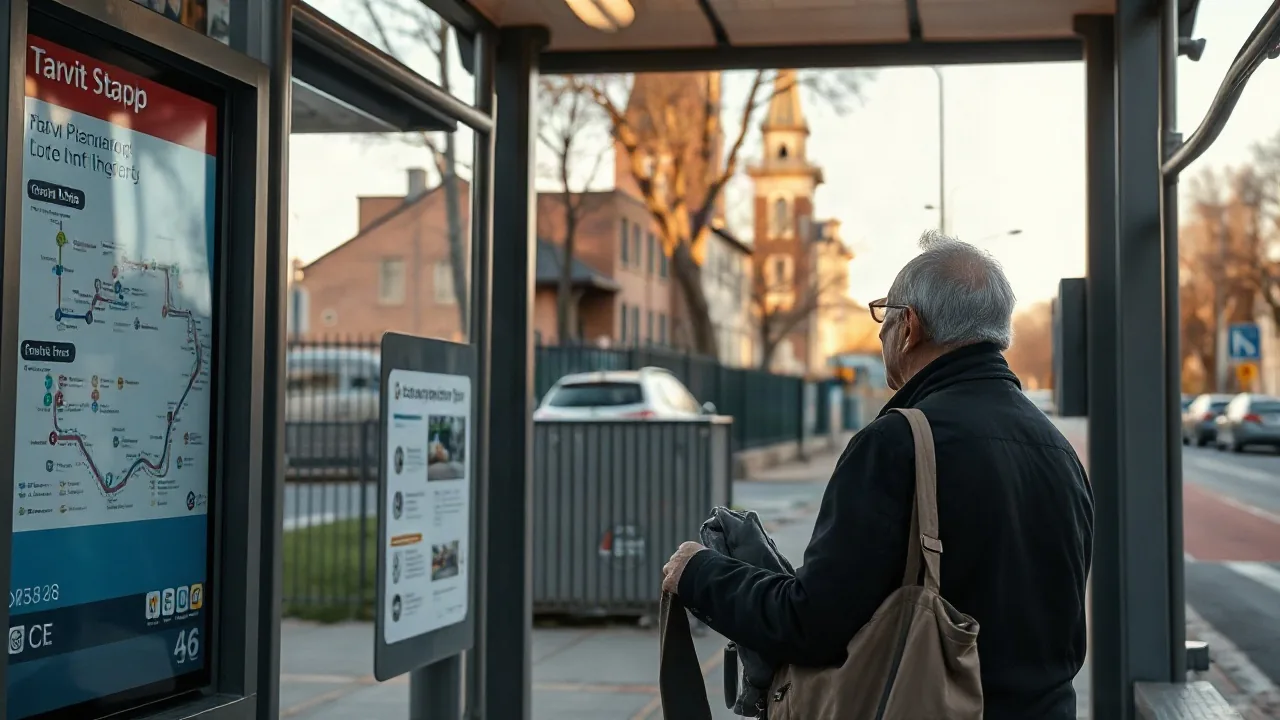
Maria Chen, 67, lives in Denver and receives $1,847 monthly in Social Security benefits. She spends nearly $340 of that on regional bus passes, ride-sharing trips to medical appointments, and occasional taxi services. For millions of Americans like Chen, Social Security benefits that have grown only 3.2 percent annually since 2020 now cover transportation expenses that have climbed nearly 8 percent yearly over the same period.
The gap between income growth and mobility costs has become a critical issue for the nation's 56 million Social Security recipients. In August 2026, the average retired worker received $1,907 monthly, down slightly from peak 2025 levels due to recalculation adjustments. Meanwhile, transportation costs—including public transit fares, vehicle maintenance, fuel, and insurance—have accelerated in urban and suburban areas nationwide.
According to Dr. Patricia Lim, senior economist at the Urban Institute, "We're seeing retirees make difficult trade-offs between mobility and other essentials. Some are skipping medical appointments to save on transit costs; others are delaying necessary vehicle repairs." Lim's research, published in July 2026, surveyed 8,400 households where at least one member received retirement income.
How Benefit Adjustments Miss the Mark
The annual cost-of-living adjustment (COLA) for Social Security is pegged to the Consumer Price Index (CPI), which has consistently underestimated transportation inflation in 2026. While the 2026 COLA was 2.4 percent, the actual cost of public transit fares in major metropolitan areas rose 5.8 percent in the same 12-month period.
Consider these real-world impacts:
- Chicago's CTA raised monthly passes from $105 to $116 in March 2026, a 10.5 percent jump.
- New York City's MTA implemented a 5.5 percent increase on local and express bus fares in June 2026.
- San Francisco Bay Area transit fares climbed 7.2 percent in May 2026 alone.
- Gasoline prices in the Midwest averaged $3.41 per gallon in August 2026, up from $2.89 the prior year.
The mismatch is structural. CPI calculations weight transportation at roughly 17 percent of the overall index, while many retirees allocate 18 to 25 percent of their monthly budget to mobility costs. Retirees living in suburbs or rural areas, where public transit is sparse or nonexistent, face even steeper burdens.
Shifting Strategies for Urban Mobility
Some cities are adapting. In June 2026, Washington D.C. introduced the "Senior Mobility Pass," offering residents 65 and older unlimited transit for $30 monthly—a 60 percent discount off standard rates. Ridership among qualified seniors jumped 34 percent in the first eight weeks. Similar programs are now under review in Philadelphia, Los Angeles, and Portland.
However, such initiatives remain piecemeal. Nationally, only 29 percent of transit agencies offer meaningful senior discounts, according to the American Public Transportation Association's 2026 census. Federal funding for public transport serving older Americans has flat-lined since 2023.
Private mobility options present their own challenges. Ride-sharing services like Uber and Lyft now charge surge premiums during morning and evening hours when seniors often need appointments. Average trip costs in major cities reached $18 to $24 for short rides in mid-2026, eating into fixed incomes quickly.
Susan Blackwell, 71, in Phoenix, described her dilemma: "I can afford either the bus or a ride-share, but not both regularly. The bus is cheaper, but it doesn't go to my rheumatologist's office. I end up driving myself, which I'm less confident about at my age."
The Broader Cost-of-Living Crisis
Transportation is only one piece of a larger puzzle. Retirees on fixed Social Security also contend with rising housing, healthcare, and food costs. The 2026 Senior Cost Index, developed by the University of Massachusetts Boston, found that actual living expenses for a 65-year-old couple exceeded government projections by 22 percent.
Housing remains the largest expense, consuming 35 percent of the average retiree's budget. But cost of living pressures cascade. When transportation costs rise, seniors reduce discretionary spending on fitness, social activities, and even fresh groceries—leading to secondary health problems.
Advocacy groups are pushing for reform. The Economic Policy Institute has called for a "retiree CPI" that weights expenses according to actual senior spending patterns. The proposal would adjust Social Security annually by a separate index reflecting real costs faced by older Americans. Congressional hearings on the idea took place in July 2026, though no bill has yet advanced.
Until policy shifts, millions of retirees will continue navigating a landscape where benefit growth lags behind budget reality. For many, the choice to stay mobile—and thereby connected to healthcare, family, and community—comes at an ever-rising price that their fixed income simply cannot sustain.