
Arctic Winter Ice Loss: Ancient Arctic Clues Suggest Underestimation
New research suggests winter Arctic sea ice loss may be greater than current models predict, drawing on ancient climate data to refine estimates.

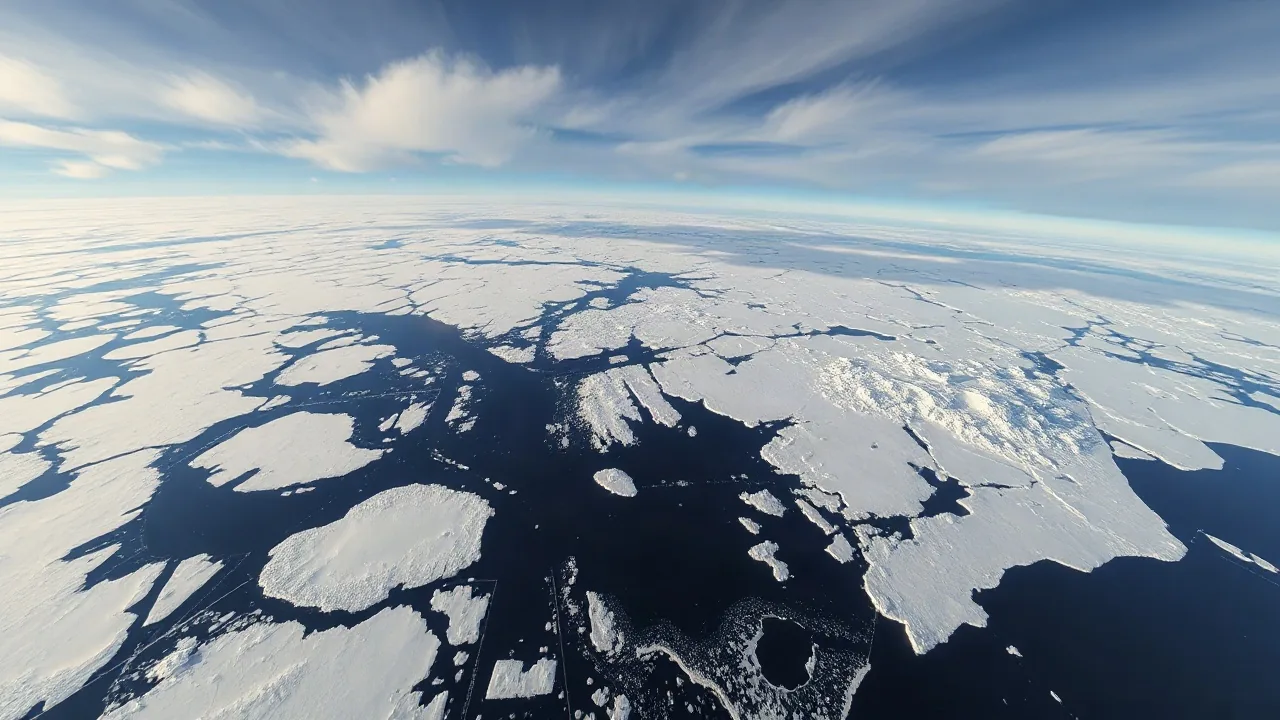
New scientific analysis indicates that the extent of winter Arctic sea ice loss may be significantly underestimated, with ancient climate records suggesting a warmer Arctic than previously accounted for in current projections. The findings, which draw upon geological and paleoclimate evidence, could necessitate a revision of sea ice models used to predict future climate conditions in the region.
Researchers examined proxies such as sediment cores and ice sheet melt records to reconstruct past Arctic conditions. These ancient clues point to periods in Earth's history when the Arctic experienced prolonged warmer spells and substantial sea ice decline, even during winter months. This historical perspective provides a crucial baseline for understanding the potential resilience and vulnerability of current Arctic sea ice.
Historical Data Challenges Current Projections
Current monitoring of Arctic sea ice primarily relies on satellite data, which offers a detailed view of recent decades. However, these records may not fully capture the long-term variability and potential for rapid ice loss. By integrating paleoclimate data, scientists aim to build a more comprehensive picture of Arctic ice dynamics over thousands of years.
Dr. Anya Sharma, lead paleoclimatologist on the study, stated, "Our analysis of ancient Arctic environments reveals a dynamic system that has experienced dramatic shifts. What we're seeing in the historical record suggests that the ice cover has been more susceptible to warming than our current models fully represent, particularly in the winter months." The study highlights the importance of looking beyond recent satellite observations to understand the full scope of changes occurring in the Arctic.
The implications of underestimating winter sea ice loss are considerable. Arctic sea ice plays a critical role in regulating global temperatures by reflecting solar radiation back into space. A reduction in this reflective capacity, known as the albedo effect, can lead to amplified warming in the Arctic and have cascading effects on weather patterns worldwide. Furthermore, changes in sea ice extent impact Arctic ecosystems, indigenous communities, and global shipping routes.
Previous research in 2026 had already raised concerns about declining Arctic ice. Reports from organizations like NASA and the European Space Agency documented concerning trends in both Arctic and Antarctic sea ice levels. This new study adds a crucial historical dimension, suggesting that the problem might be even more severe and persistent than recent data alone indicates.
The research team emphasized that further interdisciplinary collaboration between paleoclimate scientists, oceanographers, and atmospheric physicists is essential. By combining diverse datasets and methodologies, they hope to refine sea ice projections and provide policymakers with more accurate information for climate change mitigation and adaptation strategies. The goal is to ensure that future climate models are robust enough to account for the full range of historical Arctic variability.