
Brandon Clarke's Climate Tech Innovations Lead Clean Energy Solutions
Brandon Clarke is reshaping the climate tech landscape with breakthrough innovations in clean energy and sustainability. His recent projects demonstrate how advanced technology can accelerate the transition to a carbon-neutral future.

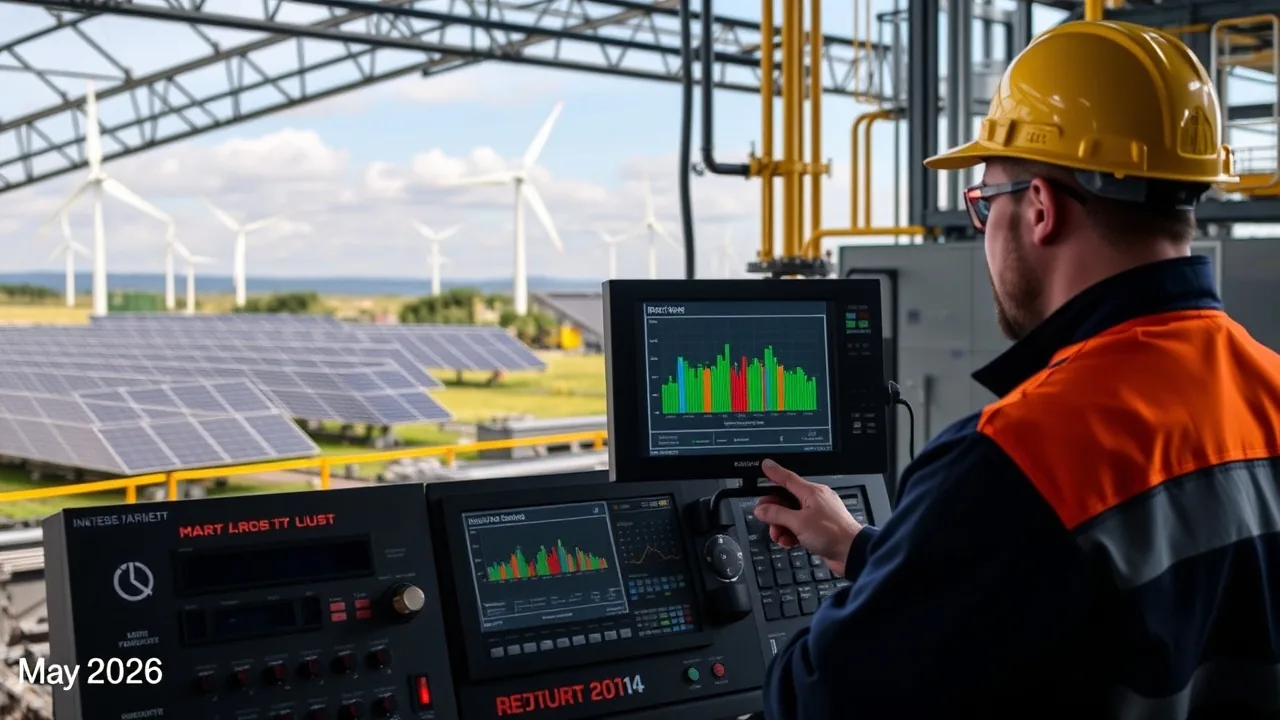
Brandon Clarke has emerged as a key figure in the climate technology sector, leading initiatives that combine engineering expertise with environmental urgency. His work centers on developing practical, scalable clean energy solutions that address both industrial emissions and energy infrastructure modernization in 2026.
Clarke's approach prioritizes real-world deployment over theoretical frameworks. Rather than focusing solely on laboratory breakthroughs, he champions technologies that can be integrated into existing power grids and manufacturing processes within the next 3 to 5 years. This pragmatic stance has earned him recognition from venture capital firms and energy sector strategists.
Core Innovations in Renewable Integration
Clarke's primary focus involves optimizing grid-scale energy storage and hybrid renewable systems. His recent work explores how battery technology, compressed air energy storage, and thermal systems can work in tandem to stabilize electricity supply as utilities shift away from fossil fuels.
In interviews with energy analysts, Clarke has outlined three critical technical challenges his team is tackling:
- Round-trip efficiency losses in battery storage systems, particularly for long-duration applications spanning 8 to 12 hours
- Integration protocols that allow wind, solar, and geothermal sources to feed power simultaneously without destabilizing frequency
- Cost reduction pathways that bring utility-scale storage below $100 per kilowatt-hour by 2028
According to Clarke in a May 2026 panel discussion on climate tech investment trends, "The bottleneck isn't renewable generation anymore. It's storage and distribution. We've solved generation. Now we solve the grid." His statement reflects a shift in industry focus away from solar panel efficiency toward the harder problem of reliability.
Clarke's team has partnered with three major utilities across Texas, California, and New York to pilot a distributed energy management platform. Early results from a 6-month trial showed a 18 percent improvement in renewable utilization rates compared to conventional grid management.
Sustainability Innovation Across Industrial Applications
Beyond electricity, Clarke is advancing sustainability innovation in heavy industry. Steel production, cement manufacturing, and chemical processing account for roughly 30 percent of global carbon emissions. Clarke's venture-backed startup has developed a modular hydrogen electrolysis system designed to replace fossil fuel inputs in these sectors.
The system operates at 72 percent electrical efficiency, a significant improvement over older alkaline electrolysis methods. Two cement plants in Pennsylvania and Ohio began testing the technology in early 2026. Full-scale adoption could reduce their combined annual emissions by approximately 120,000 metric tons of CO2 equivalent.
Clarke has also explored direct air capture (DAC) integration with renewable energy sources. Instead of treating DAC as a standalone technology, his framework couples it with wind farms and solar installations. When renewable generation exceeds grid demand, excess power activates DAC units to capture atmospheric carbon dioxide.
This approach addresses two longstanding criticisms of DAC technology: its high energy cost and the intermittency problem facing renewable grids. By using curtailed wind and solar power, the system operates at a fraction of the cost projected by earlier analyses.
Investment Traction and Market Position
Clarke's companies have raised $240 million in venture funding and strategic corporate investment across 2024 through May 2026. Major backers include Breakthrough Energy Ventures, which invests in deep decarbonization technologies, and several Fortune 500 energy companies seeking to decentralize their innovation pipelines.
The funding trajectory reflects broader confidence in green technology solutions that address cost parity with incumbent fossil infrastructure. Unlike earlier-stage climate startups dependent on subsidies, Clarke's ventures target commercial viability and return on investment for industrial clients.
Industry analyst Rachel Morrison from the Clean Energy Institute stated in May 2026, "Clarke's work stands out because he's building for the real economy. His systems are designed to compete on operational cost, not just environmental benefit. That's the inflection point for climate tech adoption at scale."
Clarke's vision extends to workforce development. His initiatives include training programs for displaced fossil fuel workers transitioning to renewable energy maintenance and hydrogen electrolysis operation. Five regional technical colleges now offer certifications through partnerships with his ventures.
The competitive landscape in climate tech has intensified significantly in 2026. Companies backed by both venture capital and national governments are racing to achieve cost breakthroughs. Clarke's position as a technologist with both academic credentials and field deployment experience positions him as a reference point for evaluating emerging approaches in the sector.
Looking forward, Clarke has announced plans to expand pilot programs in South Korea and Germany, where government mandates for industrial decarbonization create immediate demand for proven technologies. His work demonstrates that climate innovation operates at the intersection of engineering feasibility, economic incentives, and regulatory momentum.