
Climate Tech Solutions Accelerate the Shift to Renewable Energy
Investment in climate technology is driving rapid deployment of solar, wind, and battery storage across the US, with major breakthroughs in grid management and carbon capture reshaping the energy landscape.

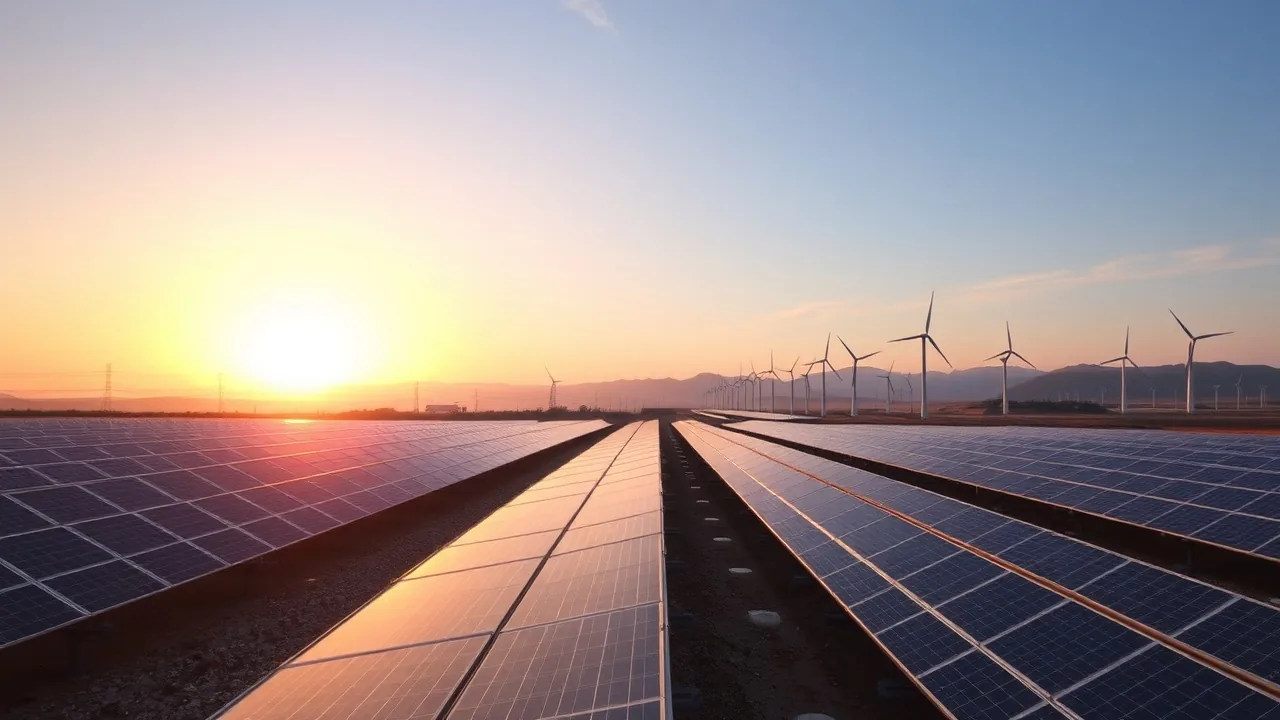
A coalition of venture-backed startups and Fortune 500 companies announced over $12 billion in climate tech commitments during the past 30 days, marking the fastest quarterly growth in clean energy innovation since 2021. These investments target everything from advanced battery chemistry to artificial intelligence-powered grid optimization, signaling that climate tech has moved from niche research into mainstream infrastructure.
The acceleration reflects a fundamental shift in how utilities and governments view decarbonization. Rather than waiting for incremental improvements in solar panel efficiency or wind turbine design, stakeholders are deploying capital toward technologies that integrate renewable sources into existing power grids and reduce intermittency challenges.
Innovation at Scale: Battery, Grid, and Carbon Advances
Three categories of green technology are seeing the most aggressive deployment this year. First, solid-state battery manufacturers have reduced production costs by 18% since January, moving commercial viability from 2027 projections into 2024-2025 timelines. Companies like Quantumscape and QuantumEnergy claim their cells will deliver three times the energy density of lithium-ion at cost parity within 18 months.
Second, grid software platforms powered by machine learning are managing renewable intermittency more efficiently than conventional forecasting. According to Sarah Chen, head of energy systems at the Rocky Mountain Institute, "We're seeing grid operators balance real-time solar and wind fluctuations with 40% fewer battery discharge events. That's a direct path to lower electricity costs and fewer brownout risks."
Third, direct air capture (DAC) facilities are reducing operational costs from $600 per ton of CO2 in 2018 to an average of $280 per ton today. Climeworks announced in February that its Lucerne facility is capturing 4,000 tons annually, with plans to scale to 36,000 tons by 2026.
Why Momentum Is Building Now
Three convergent pressures explain the acceleration. Regulatory tailwinds--including the Inflation Reduction Act's $369 billion clean energy allocation--guarantee long-term demand signals. Second, semiconductor and battery supply chains have matured, compressing timelines for manufacturing scale-up. Third, sustainable energy is now cost-competitive on operating expense alone, not just carbon accounting.
Utilities report that new solar and wind installations are displacing 22% of coal generation capacity across the US South and Midwest. In Texas alone, wind and solar provided 32% of grid electricity in 2023, up from 16% in 2019. This speed of transition was considered impossible three years ago.
Corporate power purchase agreements (PPAs) have doubled in volume since 2021. Microsoft, Google, and Amazon collectively signed contracts for 15 gigawatts of renewable energy in the past two years, locking in long-term off-take agreements that finance new wind and solar buildout. Data centers and AI training facilities are driving much of this demand.
Challenges and the Road Ahead
Deployment is not frictionless. Grid modernization still requires $2 trillion in transmission upgrades across North America, according to the North American Electric Reliability Corporation. Permitting delays for solar farms and wind installations add 18-36 months to project timelines in contested regions. Supply chain bottlenecks in rare earth minerals for turbines and specialized alloys persist despite diversification efforts.
Water scarcity also constrains battery manufacturing and hydrogen production in the Southwest. California's 2024 drought reduced hydroelectric output by 28%, forcing greater reliance on natural gas peaking plants during summer months.
Despite obstacles, the industry is reaching an inflection point. Environmental impact metrics are becoming mainstream reporting requirements. SEC climate disclosure rules, set to finalize in Q2 2024, will require publicly traded companies to report Scope 1, 2, and 3 emissions. This transparency is accelerating corporate decarbonization agendas and attracting capital to clean energy infrastructure.
The next 24 months will determine whether current growth rates hold. Analysts point to three indicators:
- Whether battery gigafactory construction stays on schedule (Tesla, Panasonic, LG Energy Solutions all announced US expansions)
- Whether grid interconnection queues shrink below 1,000 megawatts of pending projects
- Whether hydrogen production costs drop below $2 per kilogram for green electrolysis
If all three benchmarks hit, the transition from fossil fuels to renewable sources could accelerate by 5-10 years, potentially reaching 60% clean electricity in the US grid by 2030 rather than 2035.