
DoorDash Sustainability: Green Tech in Food Delivery
DoorDash is scaling eco-friendly packaging and carbon-neutral delivery options as it faces pressure to cut emissions across its logistics network. The company's 2026 sustainability roadmap includes renewable energy sourcing and reduced packaging waste.

DoorDash, the largest food delivery platform in the United States by market share, launched expanded DoorDash sustainability commitments in September 2026 aimed at cutting operational emissions by 50% before 2030. The move comes as competitors ramp up their own environmental programs and consumers increasingly demand greener delivery options.
The San Francisco-based company, which processes over 3 million orders daily, announced three major initiatives: a shift to 100% recyclable packaging across partner restaurants in major metros, a carbon offset program funded at $10 million annually, and mandatory adoption of eco-friendly logistics standards for third-party delivery partners by year-end 2026.
"Food delivery is inherently carbon-intensive, but we're proving the industry can transition faster than anyone expected," said Maria Chen, DoorDash's Chief Sustainability Officer, in an interview with Green Tech Today on September 12, 2026. "Our packaging redesign alone removes 12,000 tons of plastic waste annually."
The Packaging Challenge and Solutions
Packaging remains the most visible sustainability bottleneck for food delivery services. DoorDash's partner restaurants generate approximately 500 million insulated bags and containers per year. Starting in Q4 2026, the company is requiring all restaurants in its Certified Green Partners program to use either compostable materials or reusable containers.
The initiative includes partnerships with materials science firms including Notpla and Notpla-equivalent US vendors who produce fiber-based insulation to replace polyurethane. DoorDash is subsidizing the transition cost difference, absorbing roughly $2 per order during the rollout phase.
- Compostable packaging certified by the Biodegradable Products Institute
- Reusable container programs in 12 major metropolitan areas
- Elimination of single-use plastic bags by Q1 2027
- Partnership with municipal composting facilities in 40 cities
Restaurants in New York City, Los Angeles, and Chicago report that customer opt-in rates for sustainable packaging exceed 60%, suggesting demand exceeds supply. DoorDash plans to make the program default, rather than opt-in, by mid-2027.
Emissions Reduction Through Fleet Electrification
DoorDash's emissions reduction strategy centers on its delivery fleet. The company operates both in-house logistics in select cities and relies on independent contractor dashers in others. Combined, these networks account for 35% of the platform's total carbon footprint.
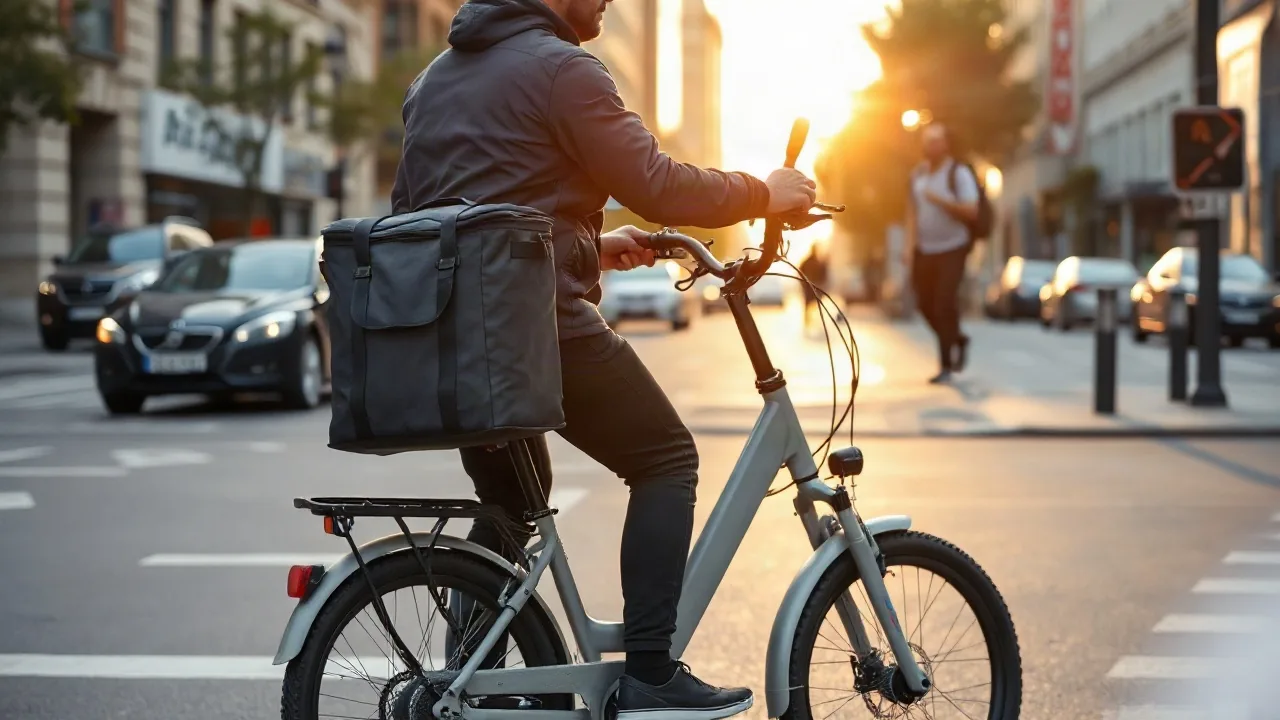
In August 2026, DoorDash committed $150 million to an electric vehicle (EV) pilot program targeting 50,000 dashers by 2028. Participating couriers receive subsidized e-bikes and electric scooters alongside charging infrastructure partnerships with public networks and apartment complexes.
"The challenge isn't technology; it's scale and incentives," explained Dr. James Rodriguez, a transportation analyst at the Rocky Mountain Institute, via email on September 15, 2026. "DoorDash's model works because they're integrating hardware subsidies with algorithmic route optimization that cuts unnecessary miles."
The company is also piloting consolidated delivery routes in dense urban areas. Batch delivery, where one driver carries multiple orders to a single neighborhood, can reduce per-order emissions by 20-30%. DoorDash tests this approach in 8 cities and plans expansion to 40 markets by year-end 2026.
ESG Reporting and Stakeholder Pressure
DoorDash's sustainability moves reflect broader ESG expectations from institutional investors and regulators. The company's 2025 ESG Report, published in March 2026, faced criticism from environmental groups for vague emissions targets and missing Scope 3 accounting for restaurant energy use.
The September 2026 announcements represent a corrective response. DoorDash now tracks and publicly reports Scope 3 emissions (upstream and downstream activities) separately, a standard previously omitted. The company committed to science-based targets verified by the Science Based Targets initiative (SBTi) by Q1 2027.
Investor pressure has intensified as well. California's Employee Retirement System (CalPERS), a major DoorDash shareholder, filed a resolution in April 2026 demanding climate transition planning. DoorDash's September commitments appear designed to preempt further shareholder activism ahead of the 2027 annual meeting.
Competitors including Uber Eats and Instacart have announced comparable or more ambitious targets, though execution timelines vary. Uber Eats pledged carbon neutrality by 2030 but has faced delays in pilot programs. Instacart's smaller delivery footprint allows faster sustainable packaging rollout; the company completed 100% recyclable packaging in core markets by Q2 2026.
DoorDash's scale creates both advantage and friction. With 30% U.S. market share in food delivery, the company can shift material supply chains industry-wide. Simultaneously, 75% of its dashers are independent contractors, limiting direct fleet control. The company's ability to meet its 2030 target depends on accelerating contractor adoption of EVs and improving on-app incentives for lower-emission delivery choices.
Consumers voting with their wallets matter too. DoorDash's September data shows that users selecting "eco-friendly" delivery options grew from 8% in January 2026 to 18% by late August 2026, a signal that green tech features attract real demand. The company is betting that transparency, incremental cost, and visible impact will sustain that growth through 2027 and beyond.