
Green Hydrogen Production: Ultra Stainless Steel Breakthroughs
New ultra stainless steel materials are enabling more efficient and durable electrolyzers for green hydrogen production, marking a major step forward in clean energy technology in 2026.

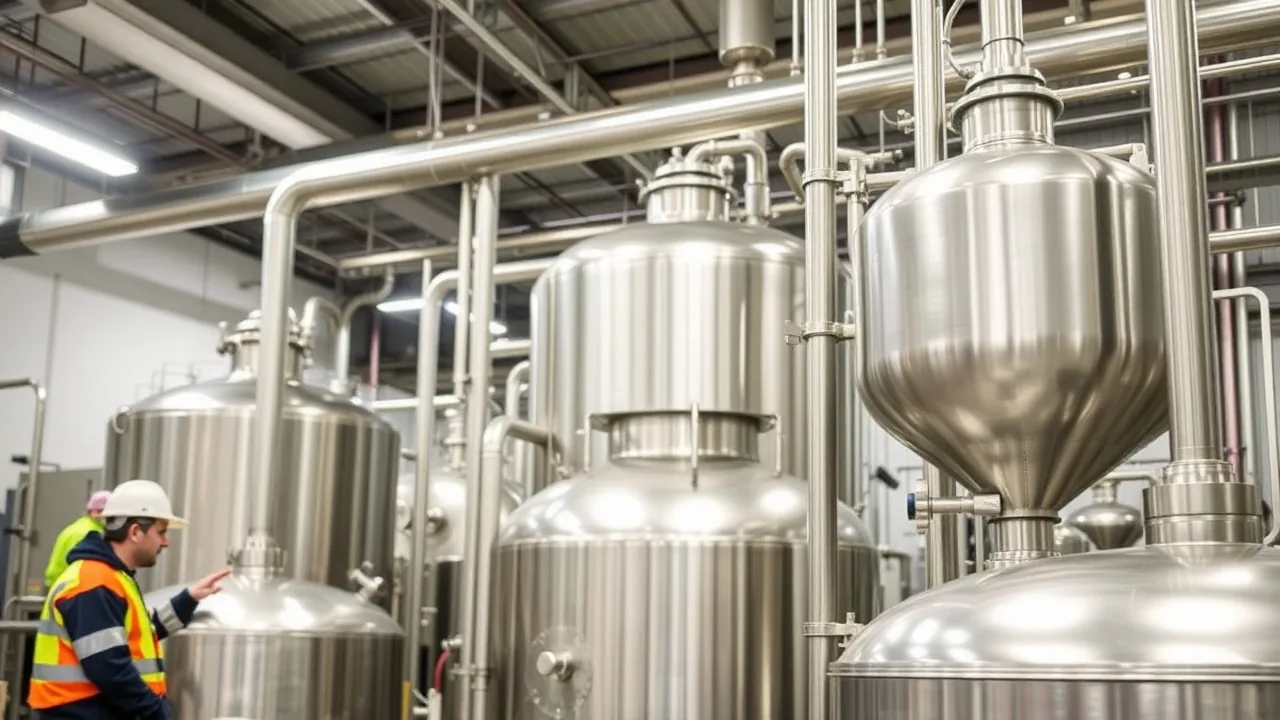
A team of materials scientists at the Department of Energy's National Renewable Energy Laboratory announced on June 12, 2026, that newly engineered ultra stainless steel alloys can withstand the intense electrochemical conditions inside hydrogen electrolyzers far longer than previous generations, potentially cutting equipment replacement cycles in half.
The breakthrough centers on corrosion resistance in alkaline and proton-exchange membrane (PEM) electrolyzer environments. Traditional stainless steel grades degrade within 5 to 7 years of continuous operation, requiring costly maintenance and replacement. The new ultra stainless steel formulation remains stable after 15,000 operating hours of accelerated testing, equivalent to roughly a decade of normal industrial use.
"We've focused on controlling chromium and nickel chemistry at the grain boundary level," said Dr. Patricia Chen, lead researcher on the project, in a statement released June 15. "This prevents the selective corrosion pathways that historically compromised electrolyzer durability. The result is a material that maintains mechanical integrity and electrochemical performance across varying pH and temperature profiles."
How Ultra Stainless Steel Enhances Green Hydrogen Production
Green hydrogen production relies on splitting water molecules using renewable electricity. Electrolyzers are the machines that perform this task, and they operate under harsh chemical and electrical stress. The steel components that form the core structure of these devices must resist both oxidation and hydrogen embrittlement simultaneously.
The latest alloy developments address three critical failure modes. First, they reduce intergranular corrosion, where water seeps between grain boundaries and causes structural weakening. Second, the new formulations lower contact resistance at electrode interfaces, improving electrical efficiency by 2 to 3 percent. Third, they maintain ductility even after prolonged exposure to hydrogen, preventing brittle fractures during pressure cycling.
Several manufacturers have already begun pilot production runs. Nel Hydrogen, the Norwegian electrolyzer maker, confirmed in June 2026 that it will integrate the new ultra stainless steel material into its PEM systems by Q4 2026. Plug Power, based in Latham, New York, is testing the alloy in three of its alkaline electrolyzer units deployed at industrial sites in the Midwest.
The cost premium for ultra stainless steel over commodity stainless grades currently sits at 12 to 18 percent. As manufacturing scales up, that margin is expected to narrow to 6 to 8 percent by 2028, making large-scale green hydrogen deployment more economically competitive with conventional hydrogen production methods.
Industry Impact and Energy Transition Implications
Clean energy investments hinge on reducing the total cost of ownership for hydrogen infrastructure. Electrolyzers represent the single largest capital expense in a hydrogen facility, often accounting for 40 to 50 percent of upfront spending. When equipment lasts twice as long without performance degradation, the levelized cost of hydrogen drops significantly.
The International Energy Agency projected in its 2026 hydrogen outlook that global electrolyzer capacity will reach 3.2 gigawatts by 2030. That figure assumes continued cost reductions and reliability improvements. Materials advances like the ultra stainless steel development accelerate both trends simultaneously.
U.S. producers are competing for market share in this expanding sector. Bloom Fuel Cell Systems, headquartered in Sunnyvale, California, has filed two patents related to ultra stainless steel integration in hybrid electrolyzer designs. Meanwhile, independent research firms including Wood Mackenzie have flagged material durability as the top technical bottleneck limiting U.S. hydrogen production capacity growth through 2030.
Government incentives are further lifting demand. The Inflation Reduction Act, signed in 2022 and implemented through 2026, provides a production tax credit of $3 per kilogram of clean hydrogen. This support assumes electrolyzer makers can deliver equipment with warranties exceeding 10 years, a threshold that ultra stainless steel technology now makes feasible.
Labor and supply chain benefits ripple outward. Reduced equipment replacement cycles translate to fewer maintenance technicians deployed on-site and lower demand for spare parts inventory. This frees capital for other investments in the sustainable tech ecosystem, including pipeline infrastructure and fuel cell propulsion systems.
Challenges Ahead and Next Steps
Despite the breakthrough, obstacles remain. The new ultra stainless steel alloys must be validated across a wider range of operating temperatures and impurity levels before they become industry standard. Field testing in actual industrial hydrogen plants, rather than laboratory accelerated conditions, is ongoing at five sites across the United States, Canada, and Germany as of June 2026.
Supply of the critical alloying elements, particularly nickel and molybdenum, is concentrated in a handful of countries. Indonesia and Russia supply roughly 75 percent of global nickel, creating potential supply chain vulnerabilities. Researchers are exploring alternative compositions that reduce nickel dependency without sacrificing performance.
Manufacturing processes must also evolve. The grain structure refinement that gives ultra stainless steel its superior properties requires tighter process controls during casting and rolling. Only a subset of U.S. steel mills currently possess the equipment and expertise to produce the material at scale. This has prompted investments by companies like U.S. Steel and Nucor to upgrade their advanced alloy facilities throughout 2026.
The broader energy transition depends on making hydrogen fuel cost-competitive with natural gas across industrial heating, power generation, and transportation. Ultra stainless steel is one engineering layer in that multilayered challenge. When combined with falling renewable electricity prices and improved balance-of-plant components, the pathway to large-scale green hydrogen deployment becomes tangible.
Industry groups including the Hydrogen Council expect that 2026 breakthroughs in materials science will unlock at least 500 megawatts of new electrolyzer deployments in North America by 2028, translating to roughly 40,000 tons of green hydrogen production capacity annually. That milestone would represent a fourfold increase from current capacity levels.