
Vast Underground Fungal Networks Hold 300 Megatons of Carbon
Scientists have measured Earth's extensive underground fungal networks, revealing they store approximately 300 megatons of carbon. These vital systems support plant life and sequester carbon, particularly in grasslands.

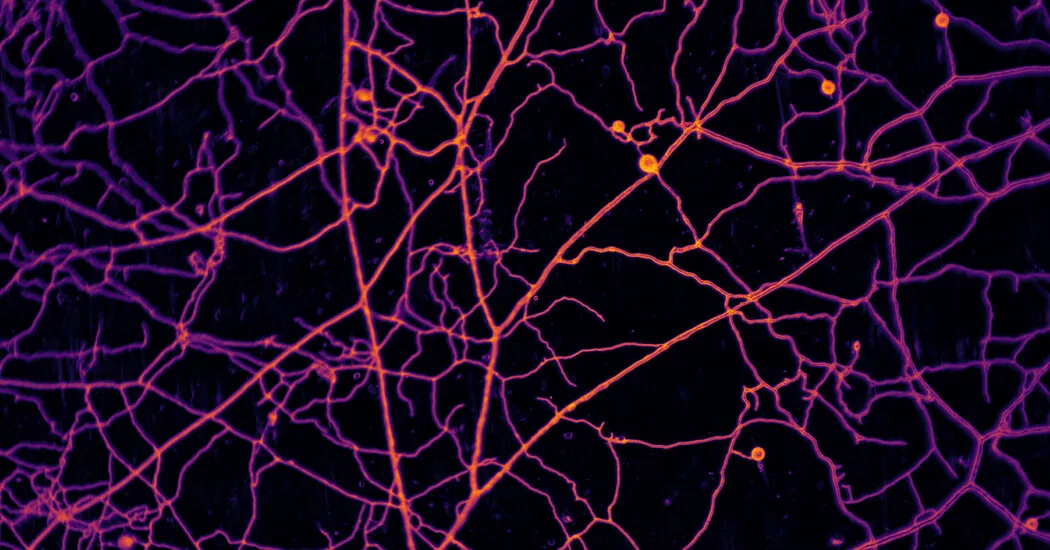
An international team of scientists has quantified the immense scale of Earth's underground fungal networks, revealing they store an estimated 300 megatons of carbon—several times the amount held by all humans. These intricate webs of arbuscular mycorrhizal fungi, which connect to plant roots, play a crucial role in ferrying water and nutrients to plants while simultaneously sequestering atmospheric carbon. The groundbreaking research, published this week in the journal Science, utilized advanced techniques including machine learning and high-resolution imaging robots to map these subterranean systems across global ecosystems.
The study's findings highlight the staggering length of these fungal filaments, estimated at 68 quadrillion miles if laid end-to-end—a distance that dwarfs the span between Earth and the sun by over 700 million times. This vast underground infrastructure contains a significant portion of the planet's carbon, with the 300 megatons estimate being roughly four to six times the total carbon content of the entire human population. Researchers emphasized the critical, yet often overlooked, role these fungi play in terrestrial ecosystems.
Grasslands Emerge as Key Carbon Sinks
A significant revelation from the research is the exceptional density of these fungal networks found beneath the world's grasslands. This discovery bolsters the understanding of grasslands as vital carbon sinks, ecosystems that historically receive less conservation attention compared to forests. Toby Kiers, an evolutionary biologist at Vrije University Amsterdam and a co-author of the study, stated, "People just aren’t paying attention to these ecosystems. What we want to do with these data is really shine a light on some of these hidden patterns underground." The data aims to shift focus toward these crucial, yet underappreciated, environments.
Arbuscular mycorrhizal fungi are symbiotic organisms essential for the survival of over 70 percent of Earth's terrestrial plant species. Beyond their functions in nutrient transport and carbon sequestration, these fungi are instrumental in improving soil stability and enhancing plant resilience against environmental stressors like drought and disease. Understanding the full scope of their contribution is becoming increasingly important as scientists seek to comprehend and mitigate the impacts of climate change. The research represents a significant step forward in appreciating the complex biological processes occurring just beneath our feet.