
US 2026 Winter Weather Forecast and Climate Tech Solutions
National forecasters predict a volatile 2026 winter season across the United States, with climate tech and renewable energy playing an increasingly critical role in infrastructure resilience and grid stability.

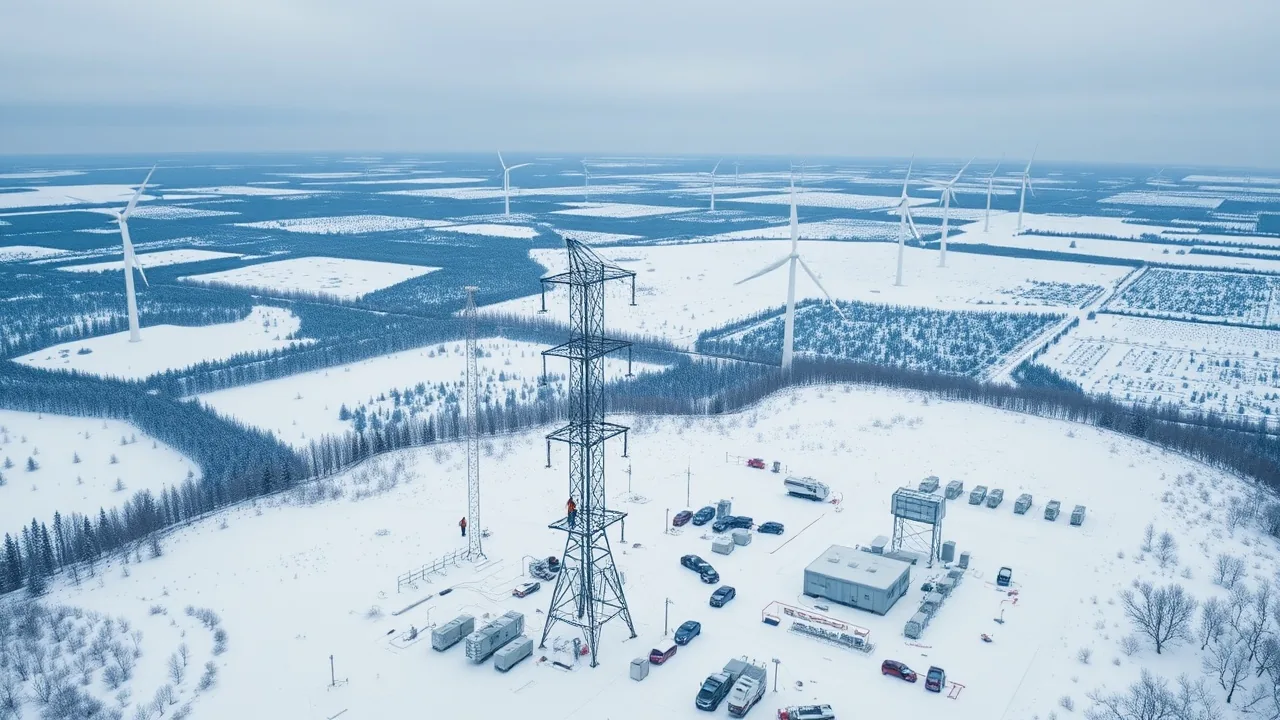
The National Weather Service issued its official winter forecast for 2026 in late July, flagging above-normal precipitation across the Pacific Northwest and Northern Plains, paired with temperature swings that could strain power grids and accelerate demand for climate tech solutions. Meteorologists at the Climate Prediction Center are closely monitoring the transition from the current neutral La Niña pattern, which will shape storm tracks and cold-air intrusions through March 2027.
"We're seeing a convergence of factors that will test grid operators and infrastructure managers this winter," said Dr. Maria Chen, senior climatologist at the National Center for Atmospheric Research in Boulder, Colorado. "That's not just about extreme cold or snow. It's about the volatility and the speed of transitions, which demand smarter energy management systems."
Early indicators suggest above-normal snowfall in the Upper Midwest and Great Lakes regions, with potential impacts on transportation, agriculture, and energy demand. At the same time, the Southwest and Southern Plains face drier-than-normal conditions, a pattern that will further stress already depleted water resources and complicate wildfire prevention efforts heading into spring 2027.
How Extreme Weather Is Reshaping Energy Infrastructure
The convergence of volatile weather patterns and aging power infrastructure has become a focal point for utilities nationwide. Winter 2025 saw multiple cold-weather events that knocked offline natural gas plants and stressed transmission lines, underscoring vulnerabilities that renewable energy advocates say demand urgent investment in distributed, weather-resilient systems.
Grid operators are deploying battery storage systems, advanced demand-response platforms, and real-time forecasting tools to manage the peaks and valleys of winter demand. Several utilities in the Midwest have accelerated rollouts of lithium-ion storage facilities, with installations growing 35 percent year-over-year through mid-2026.
Texas-based Vistra Energy, one of the nation's largest independent power producers, announced in June 2026 that it would invest an additional $800 million in solar and battery projects specifically designed to bolster winter resilience. "Winter generation is no longer dominated by thermal plants," said a company spokesperson. "We're building flexibility into the grid through storage and distributed renewables."
Similarly, a coalition of utilities in New England has launched a coordinated climate adaptation initiative that pairs onshore wind capacity additions with microgrid development and demand-side management programs. The first phase targets 2.5 gigawatts of new wind capacity by the end of 2027, with battery storage integrated into each facility.
Extreme Weather Events and Supply Chain Resilience
The 2026 winter forecast arrives amid growing concern about cascading supply-chain failures triggered by extreme weather disruptions. Manufacturing facilities in the Midwest and East Coast rely on uninterrupted power and transportation access; extended winter outages can idle production and ripple through the broader economy.
Companies are responding by investing in on-site generation, microgrids, and backup systems. A survey by the American Manufacturing Association, released in August 2026, found that 62 percent of respondents had implemented or were planning backup power systems, up from 41 percent in 2023.
The semiconductor industry, concentrated in Arizona and the Pacific Northwest, is particularly vulnerable to winter disruptions. Taiwan Semiconductor Manufacturing Company (TSMC), which operates a growing fab complex near Phoenix, has secured power agreements with local solar and wind operators to ensure stable supply even during demand spikes.
Green hydrogen startups, meanwhile, see the winter forecast as validation for their long-term pitch: seasonal energy storage at scale. Projects like Plug Power's electrolysis facility in upstate New York are designed to convert off-peak renewable electricity into hydrogen during low-demand periods, then convert it back to power during winter peaks or grid emergencies.
Regional Climate Patterns and Local Preparedness
The Pacific Northwest is bracing for one of its wettest winters in a decade. Heavy precipitation, combined with warming trends at higher elevations, will shift the snow-to-rain ratio downward, increasing flooding risk and reducing summer water supplies. Local utilities in Washington and Oregon are accelerating investments in run-of-river hydroelectric installations and pumped-storage projects to maximize capture of winter runoff.
California, facing persistent drought, will see minimal precipitation relief from the 2026 winter pattern. State water agencies are leaning more heavily on sustainability measures including groundwater banking, direct potable reuse, and demand reduction programs. The Department of Water Resources is partnering with solar developers to site facilities on degraded agricultural land, generating power while freeing water for urban and environmental uses.
In the Northern Plains, the forecast calls for above-normal snow but highly variable temperatures. Agricultural stakeholders are preparing equipment for both late-season blizzards and mid-winter thaws that can damage crops and increase disease pressure. Rural cooperatives are investing in distributed green energy infrastructure, from grain-drying systems powered by renewable sources to community solar arrays that provide income during low-agricultural periods.
The contrast between wet and dry regions highlights a core challenge: climate adaptation must be hyperlocal. National infrastructure policies work best when they create space for regional innovation and decision-making. States like Colorado and Utah are experimenting with drought-contingency programs that integrate renewable energy planning with water conservation, treating the two resources as interdependent.
The 2026 winter forecast, in short, is a stress test for a grid and infrastructure system in transition. The regions most prepared are those that have already begun weaving together renewable energy, storage, demand flexibility, and regional coordination. Utilities and communities that delay investment will face higher costs and greater disruption as volatility increases.