
AMD Ryzen AI Max 400 Series Processors Debut with Strix Halo Upgrades
AMD has introduced its new Ryzen AI Max 400 series processors, featuring enhanced memory capabilities for its "Strix Halo" integrated graphics.

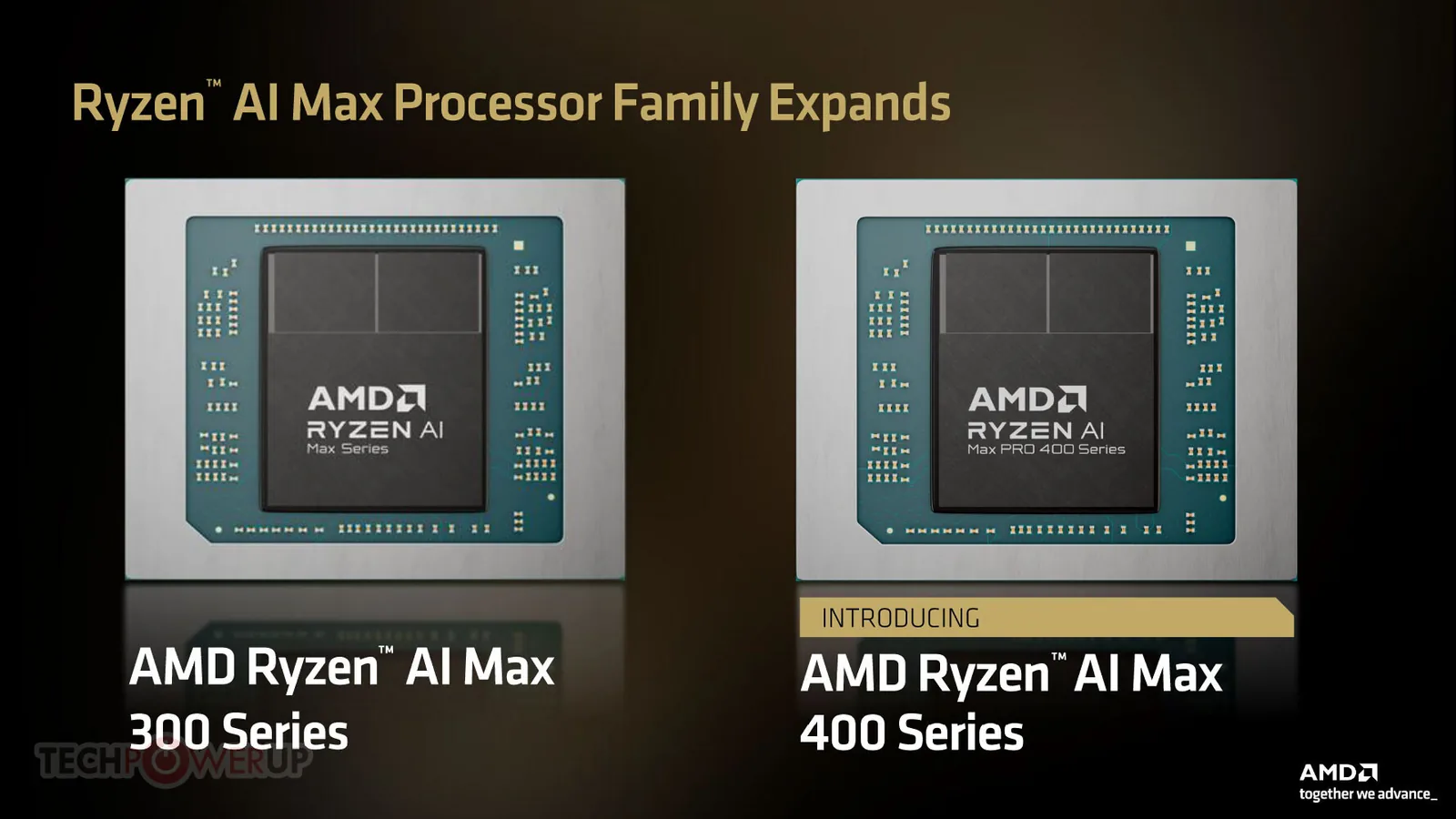
AMD has officially launched its latest line of processors, the Ryzen AI Max 400 series, signaling a significant advancement in their on-device artificial intelligence capabilities and integrated graphics performance. The standout feature of this new series is the enhanced memory configuration for what AMD codenamed "Strix Halo," a powerful integrated graphics solution expected to rival discrete GPUs in certain applications.
The Ryzen AI Max 400 series is designed to bolster AI performance directly on the processor, allowing for more complex AI tasks to be handled locally without relying on cloud servers. This move aligns with the broader industry trend towards more powerful edge AI processing, reducing latency and improving data privacy for AI-driven features in consumer electronics and business applications. The "Strix Halo" component, now benefiting from upgraded memory, promises substantial gains in graphical fidelity and processing speed for AI workloads.
Enhanced Memory for Strix Halo
While specific details regarding the exact memory speeds and configurations remain somewhat under wraps, AMD has indicated that the "Strix Halo" platform within the Ryzen AI Max 400 series will feature significantly improved memory bandwidth and capacity. This upgrade is crucial for high-performance AI inference and complex graphical rendering. Sources suggest a move towards LPDDR5X memory, known for its higher speeds and lower power consumption compared to previous generations. This upgrade is expected to directly translate into smoother AI operations, faster data processing for machine learning models, and more responsive graphical performance in compatible applications.
This enhanced memory architecture is particularly vital for AI tasks that are memory-intensive. For instance, running large language models or advanced image recognition algorithms directly on a device requires rapid access to vast amounts of data. The improvements in the Ryzen AI Max 400 series aim to address these demands, positioning AMD’s new processors as a compelling option for developers and users seeking cutting-edge on-device AI capabilities. The AMD Ryzen processors have long been a staple in the PC market, and this latest iteration underscores their commitment to pushing the boundaries of integrated processing power.
The introduction of the Ryzen AI Max 400 series comes at a time when the demand for AI-accelerated computing is rapidly growing across all sectors. From productivity software and creative tools to gaming and virtual assistants, the ability to process AI tasks efficiently and locally is becoming a key differentiator. AMD's focus on integrated AI hardware, combined with powerful graphics, could offer a more cost-effective and power-efficient solution for many users compared to systems requiring separate AI accelerators or high-end discrete graphics cards.
Industry analysts view this move as a strategic step for AMD to strengthen its position in both the consumer and enterprise markets. By integrating more powerful AI capabilities directly into their mainstream processor lines, they can appeal to a wider range of customers who may not require the full power (or cost) of dedicated AI hardware. The competition in the AI processor space is intensifying, with Intel also pushing its own AI-enhanced chips, making AMD's advancements particularly noteworthy. This launch is a clear indication that the future of computing will heavily rely on sophisticated AI processing integrated directly into the silicon.