
Best Robot Lawnmowers: Top 5 Picks for a Smarter Yard
Robot lawnmowers are improving rapidly, offering more reliable navigation and better performance. This year's top models can handle complex yards, but some limitations persist.

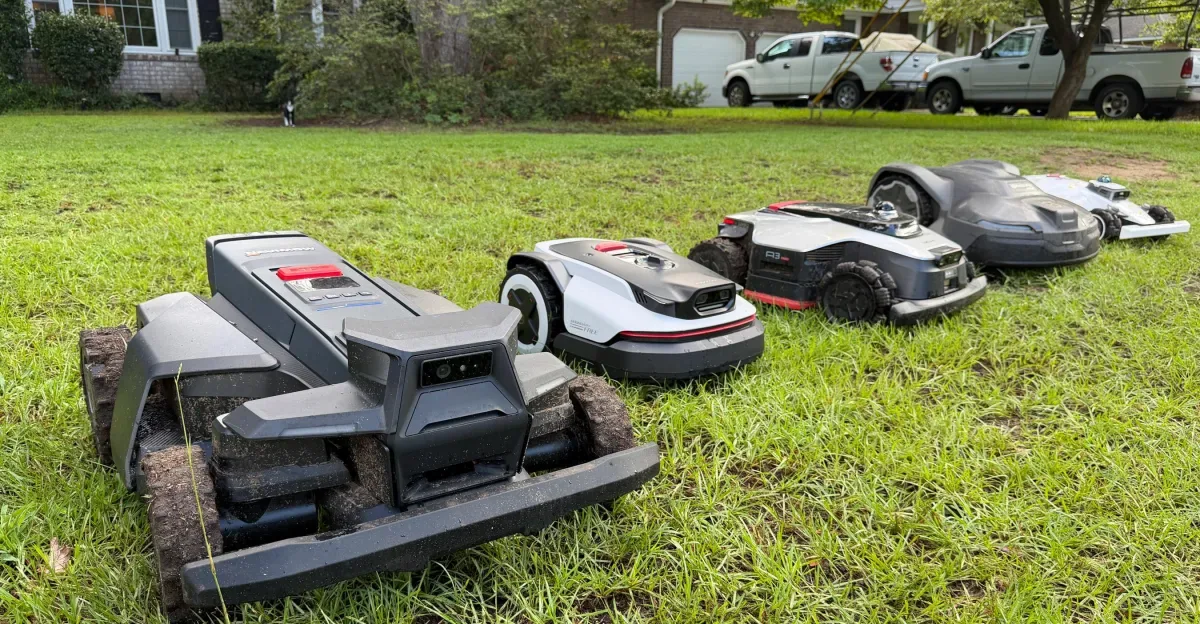
Robot lawnmowers are making significant strides in home lawn maintenance, evolving from novelties into capable tools that can drastically reduce yard work. While these autonomous devices have become considerably more adept at navigating complex landscapes and avoiding common pitfalls, they are not yet entirely set-and-forget solutions. This past summer, five advanced models were rigorously tested on a three-quarter-acre property in coastal South Carolina, featuring sandy soil, centipede grass, and numerous trees. The results showcased substantial enhancements in navigation and maneuverability, with the machines successfully avoiding previous issues like getting stuck.
The consistency offered by robot mowers is a standout feature. By operating daily and trimming only millimeters at a time, these devices cultivate a noticeably lusher, healthier lawn. This frequent, minimal trimming process leads to a denser turf that is more resilient and visually appealing. Furthermore, their quiet operation allows them to work around the clock without disturbing pets, local wildlife, or neighbors, contributing to a more peaceful outdoor environment. The professional-looking, striped finish they impart adds a final touch of polish to the lawn.
Key Advancements Driving Performance
This year's models incorporate several critical upgrades, including Network Real-Time Kinematic (NetRTK) navigation, enhanced fallback systems, and improved all-wheel-drive capabilities for tackling varied terrain. RTK technology, which uses a network of ground-based reference stations and GPS, provides highly precise location data down to the centimeter. This is crucial for accurate navigation, especially as many automowers have moved away from traditional boundary wires. While previously challenging to implement, especially in areas with spotty GPS, the new NetRTK feature leverages cloud connectivity and existing RTK networks, often requiring only a Wi-Fi or 4G connection on the mower itself. For most tested units, this meant successful operation out-of-the-box without the need for on-site antenna installation, provided sufficient network coverage.
Complementing the RTK system, most of these mowers now integrate secondary navigation technologies such as lidar or vSLAM. These systems act as a backup, ensuring the mower stays on course even when the RTK signal is temporarily lost. This dual-approach navigation significantly reduces instances of the mower becoming lost or stuck, a common frustration in previous generations. The combination of advanced navigation and more robust, larger machines meant an end to the laborious task of retrieving confused mowers from beneath trees or other obstacles.
Despite these impressive advancements, robot lawnmowers still face limitations. As autonomous machines equipped with blades, their unsupervised operation carries inherent risks. Some units have been observed damaging lawn sections or accidentally damaging outdoor electrical cords. Several models created divots in bare patches by digging, and one even attempted to ascend a small tree. While obstacle detection has improved, it remains a challenge for items like garden hoses, cables, and even parked vehicles. Owners must still exercise caution and perform pre-operation checks. Addressing automated gates remains a persistent hurdle, often requiring manual intervention to allow full property coverage. The reliance on cloud services for NetRTK, though currently offered free, introduces potential long-term dependencies and vulnerabilities.
The cost of these sophisticated devices remains a significant factor, with top-tier models representing a considerable investment. Concerns about long-term durability, similar to those with robot vacuums, are also prevalent. The market offers a wide array of models, making the selection process dependent on specific yard size, terrain, and landscaping features. For this review, four high-end models were evaluated alongside an entry-level option on varied lawn types to determine their suitability for different user needs. It's also worth noting that while existing models can continue to be sold and supported in the US, new robot mower models face an uncertain future under recent FCC regulations.
The Segway Navimow X430 ($2,499) emerged as the top performer. This 60-pound unit, equipped with 4WD and advanced suspension, navigated challenging terrain, including potholes and uneven transitions between yard sections, without getting stuck. Its combination of RTK, vSLAM, and vision-based navigation ensured complete coverage without getting lost. The mower's "xero-turn" maneuverability minimizes lawn damage, and its 17-inch dual-disc cutting width allows for efficient mowing, completing large areas quickly. A remote control feature aids in precise edge trimming. However, its reliance on internet weather data for rain sensing sometimes led to unnecessary cancellations of mowing sessions.
For users unable to rely on RTK, the Dreame A3 AWD Pro 2500 ($3,099.99) offers a strong lidar and camera-based navigation alternative. It performed comparably to the Segway, with only occasional stumbles. Its advantage lies in not requiring a clear view of the sky for its base station, offering more flexible placement. The sliding edge-cutting deck is effective, though the minimum cutting height is fixed. Lidar navigation can be less reliable in complex environments, and the mower has shown a tendency to dig in bare spots. Its "Garden Guardian" mode uses the camera for security, and it can alert people to its presence.