
Dell's $700 XPS 13 Laptop Challenges MacBook Neo at Computex
Dell unveiled an affordable new XPS 13 laptop at Computex, starting at $699.99, directly targeting Apple's budget-friendly MacBook Neo with a blend of premium design and entry-level specs.

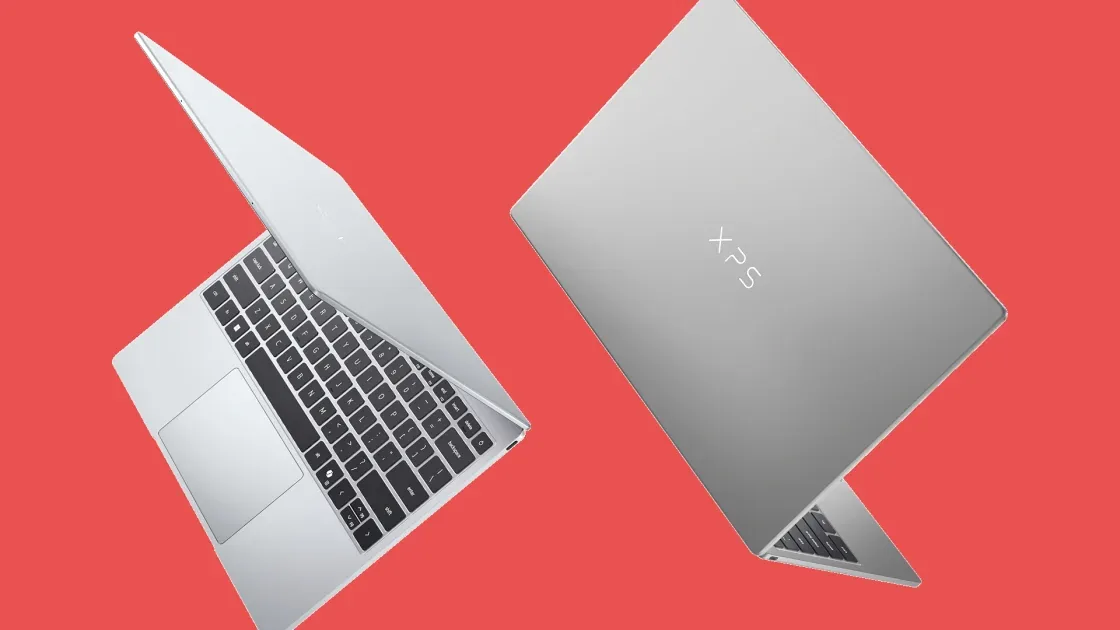
TAIPEI – Dell introduced a significantly re-envisioned XPS 13 laptop at Computex 2026, aiming to capture the budget-conscious market with a starting price of $699.99. This move positions the new model as a direct competitor to Apple's MacBook Neo, which previously set a low benchmark for affordable laptops. The updated XPS 13 retains core elements of the premium XPS design while adopting more accessible components to meet its aggressive price point.
Historically, Dell's XPS line has been synonymous with high-end performance and premium features, commanding prices to match. For instance, the recently released Dell XPS 14 and XPS 16 start at $1,889.99 and $2,039.99, respectively. In a departure from this tradition, the manufacturer has transformed the XPS 13, previously an ultraportable powerhouse, into an entry-level option. This strategy involves leveraging Intel's new entry-grade Core Series 3 "Wildcat Lake" processors, with an upgrade path to the more capable Core Ultra Series 3 "Panther Lake" slated for a later release. The introduction of the MacBook Neo earlier in 2026, with its starting price of $599, significantly altered market expectations for budget laptops.
Dell will offer the new XPS 13 to students at a $100 discount, though this promotion is limited to the back-to-school season. Despite its more affordable positioning, the laptop aims to incorporate many of the signature XPS design cues and functionalities. However, it will forgo some of the most premium features found in its higher-priced siblings, such as the seamless invisible touchpad and flush keyboard. Additionally, it sports a 1080p webcam, a step down from the 4K resolution on other XPS models.
Design and Portability
The new XPS 13 maintains the distinctive XPS aesthetic, featuring a slim, portable all-aluminum chassis. It includes a backlit keyboard and Dell's signature high-resolution InfinityEdge display, notable inclusions for a sub-$700 device. In a pre-briefing, Dell representatives openly compared the XPS 13 to the MacBook Neo, acknowledging Apple's success in the low-cost sector while highlighting the Dell laptop's advantages. The XPS 13 is designed to be slightly more compact and lighter than the MacBook Neo, weighing just 2.2 pounds and measuring 0.5 by 11.7 by 7.9 inches (HWD). Its 13.4-inch display is marginally larger than the Neo's 13-inch screen.
The all-metal construction is a crucial differentiator, emphasizing build quality in a more budget-friendly machine and aligning it with the premium feel expected from the XPS brand. The laptop is available in two finishes: "Sky," a lighter silver, and "Storm," a darker silver variant. While backlit keys are becoming standard, the MacBook Neo notably lacks this feature, a concession made to achieve its low price point.
The keyboard on this affordable XPS 13 adopts a more traditional chiclet layout, deviating from the edge-to-edge keys on higher-end XPS systems. Similarly, the touchpad employs a standard hinge mechanism. Dell's decision to retain these more conventional elements may appeal to users who find the newer, integrated designs divisive. Full testing will be required to assess the user experience of these components.
Internally, the Dell XPS 13 is powered by Intel's new Core Series 3 "Wildcat Lake" processors. These chips are part of Intel's updated 18A manufacturing process. The base configuration utilizes the Core 5 320, with an option to upgrade to the more powerful Core Ultra 7 355 from the "Panther Lake" family, which is expected later. The Intel Core version comes with 8GB or 16GB of DDR5 memory and 256GB or 512GB of SSD storage. The launch model at $699.99 will feature a 512GB SSD. The Core Ultra variant will support up to 16GB or 32GB of dual-channel memory and offer storage up to 1TB.
Connectivity includes two USB Type-C ports on the Intel Core version, supporting DisplayPort 2.1 and Power Delivery. The Core Ultra model will feature Thunderbolt 4 support on its USB-C ports. Both configurations benefit from Wi-Fi 7, offering a significant upgrade over the MacBook Neo's Wi-Fi 6E connectivity. The display is a sharp 2,560-by-1,600-pixel (1600p) touch panel with a variable refresh rate between 30Hz and 120Hz, a feature that can enhance battery life by dynamically adjusting to content, unlike the Neo's fixed 60Hz screen.
Dell's strategic pricing and feature set for the XPS 13 represent a significant development in the PC market. The budget laptops category has seen increased competition, spurred by Apple's aggressive entry. Dell's approach, bringing its renowned XPS design principles to a more accessible price tier, could resonate well with consumers seeking a balance of quality, performance, and value. The success of this new XPS 13 will ultimately depend on its real-world performance and user experience, but it has certainly made a strong first impression at Computex 2026.