
Flexible Boron Achieves Unprecedented Electrical Conductivity
Scientists have synthesized a novel form of boron that exhibits exceptional electrical conductivity, boasting a performance 10 million times greater than traditional forms. This flexible material also possesses significant plasticity, opening doors for new technological applications.

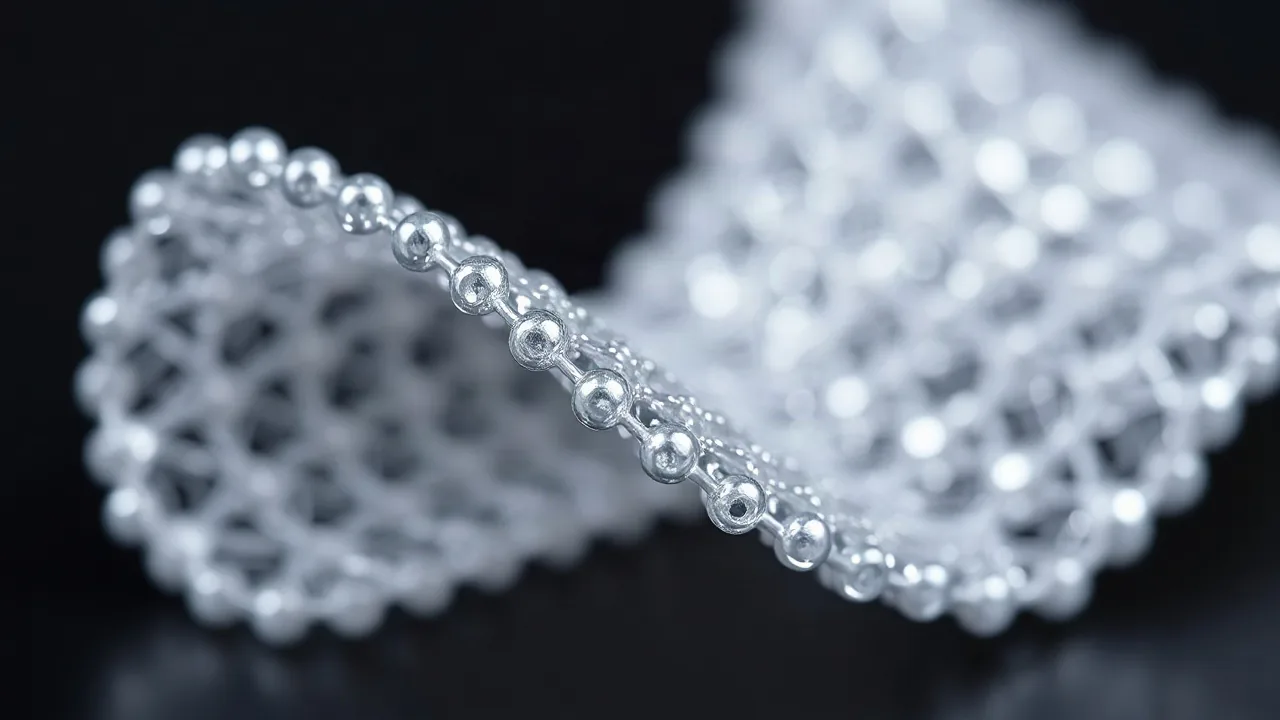
Researchers have engineered a new allotrope of boron that demonstrates remarkable electrical conductivity and flexibility, a breakthrough detailed in the journal Nature. This novel material is reported to be up to 10 million times more conductive than conventional boron forms, while also exhibiting plasticity akin to metals. The discovery could pave the way for significant advancements in various technological fields, from electronics to energy storage.
The material, an open-framework boron allotrope, was synthesized using advanced computational modeling and experimental techniques. Its unique atomic structure allows for an unprecedented flow of electrons, making it an exceptional conductor. Unlike brittle forms of boron, this new variant can bend and deform without fracturing, a characteristic highly sought after in flexible electronics and resilient components.
A Leap in Material Science
The unprecedented conductivity level positions this flexible boron as a potential game-changer. Traditional boron is known for its hardness and brittleness, limiting its use in applications requiring mechanical flexibility. This new form, however, retains its conductive properties even when subjected to stress and strain. "The combination of high conductivity and plasticity in a single material is what makes this discovery so significant," stated Dr. Anya Sharma, lead researcher on the project from the National Advanced Materials Laboratory. "We've essentially created a material that behaves like a semiconductor in terms of conductivity but possesses the mechanical resilience of a metal."
The potential applications are vast. In the realm of electronics, this material could enable the creation of more durable and flexible circuits, wearable devices, and advanced sensors. Its high conductivity also suggests utility in energy transmission and high-performance batteries, where efficient electron flow is paramount. The research team is currently exploring methods for scaling up production to meet potential industrial demand. Further studies will focus on characterizing the material's long-term stability and performance under various environmental conditions.
The development process involved extensive theoretical simulations to predict boron's behavior under different atomic arrangements before experimental verification. This interdisciplinary approach, blending theoretical physics and materials science, was crucial to identifying the specific crystalline structure that yields these extraordinary properties. The flexibility, combined with its conductive capabilities, offers a unique advantage over existing conductive polymers or metal alloys, which often compromise on one property to achieve the other. The researchers believe this breakthrough represents a significant step forward in the quest for next-generation materials that can meet the demands of increasingly sophisticated technologies.