
Google Fitbit Air: Screenless Fitness Tracker Revives Brand
Google's new Fitbit Air is a screenless, $99 fitness tracker focusing on health essentials and long battery life, marking a return to the brand's roots.

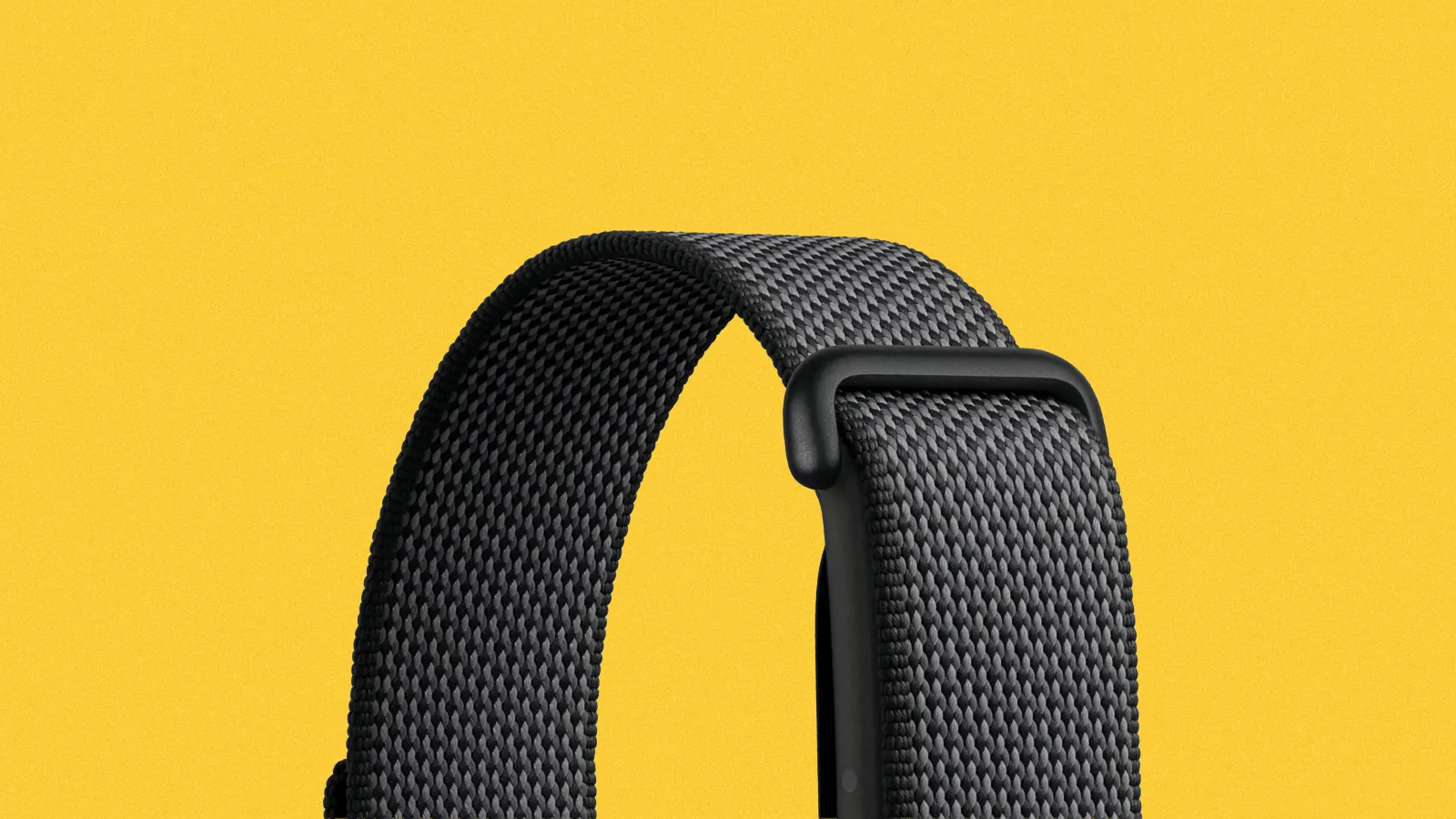
Google has officially launched the Fitbit Air, a new screenless fitness tracker that aims to bring the brand back to its core mission of accessible health monitoring. Priced at $99, the device emphasizes essential health tracking, extended battery life, and a minimalist design, steering clear of the constant notifications and app-heavy interfaces common in today's smartwatches.
The Fitbit Air represents a significant strategic shift for Google, which acquired Fitbit in 2021. Instead of replicating the smartwatch experience, the Air strips away features like text and email displays, focusing solely on passive health data collection. This approach echoes the original Fitbit's philosophy from nearly two decades ago, when the company first popularized fitness trackers. The original clip-on device, with its rudimentary LED display, prioritized simple step counting, laying the groundwork for the wearable technology market.
While comparisons to Whoop are inevitable due to the similar form factor and health-tracking focus, Google positions the Fitbit Air as a distinct offering. The original Fitbit launched in 2009, predating Whoop by several years. Fitbit's early success was instrumental in popularizing the fitness tracker category, even before Apple's transformative entry with the Apple Watch in 2015, which shifted the focus towards screen-centric, app-integrated wearables.
A Return to Simplicity and Core Health Metrics
The design of the Fitbit Air is intentionally understated. It features a lightweight, pebble-shaped tracker that can be easily swapped between various band styles, catering to both athletic and lifestyle preferences. Google claims the device is 20 percent lighter than the Fitbit Luxe and boasts up to seven days of battery life. It automatically monitors key metrics including workouts, sleep patterns, heart rate, blood oxygen levels, and recovery data.
Interaction with the Fitbit Air primarily occurs through the updated Google Health app. The standard version offers core health insights, while an optional Google Health Premium subscription ($10 per month or $99 annually) unlocks advanced coaching tools and Gemini-powered AI insights designed to analyze long-term health trends. Google intends for this app to evolve into a comprehensive health hub, similar to Apple's Health platform, potentially integrating medical records and other wellness data.
The Fitbit Air is considerably smaller than its competitor, the Whoop 5.0. Google states the Air measures approximately 1.4 by 0.7 by 0.3 inches and weighs 12 grams with its band. In contrast, the Whoop 5.0 is listed at roughly 1.37 by 0.94 by 0.42 inches, making it notably thicker and wider. The Air's battery life of up to seven days also falls short of Whoop's quoted 14-day maximum. However, the Fitbit Air's lower price point of $100 significantly undercuts Whoop's subscription-based model, where the entry-level annual plan costs $199.
Unlike Whoop, which targets users focused on optimizing performance through detailed strain and recovery metrics, the Fitbit Air appears to be aimed at a broader audience seeking essential health data without the complexity. Online discussions reveal a growing demand for wearables that provide robust health insights without demanding constant attention or dominating the user's wrist. This is a market segment where Apple has shown limited interest, focusing instead on its dominant smartwatch line.
While the Fitbit Air may not directly challenge Whoop's stronghold among elite athletes, particularly given Whoop's advanced recovery ecosystem and coaching features, its significance lies in its potential to capture a large middle ground in the wearable market. This device suggests Google is re-evaluating what made the original Fitbit popular: not another screen competing for attention, but a discreet piece of hardware that normalizes the collection and utility of everyday health data at scale. The underlying sensor technology and software are now sophisticated enough to make passive tracking a genuinely valuable tool for a wider range of consumers.