
HoverAir Versa Achieves FCC Certification Via Modular Design
China's HoverAir Versa, a modular vlogging camera that converts into a drone, has become the first to gain FCC certification since the agency's foreign drone ban. Its design circumvents new regulations by separating components.

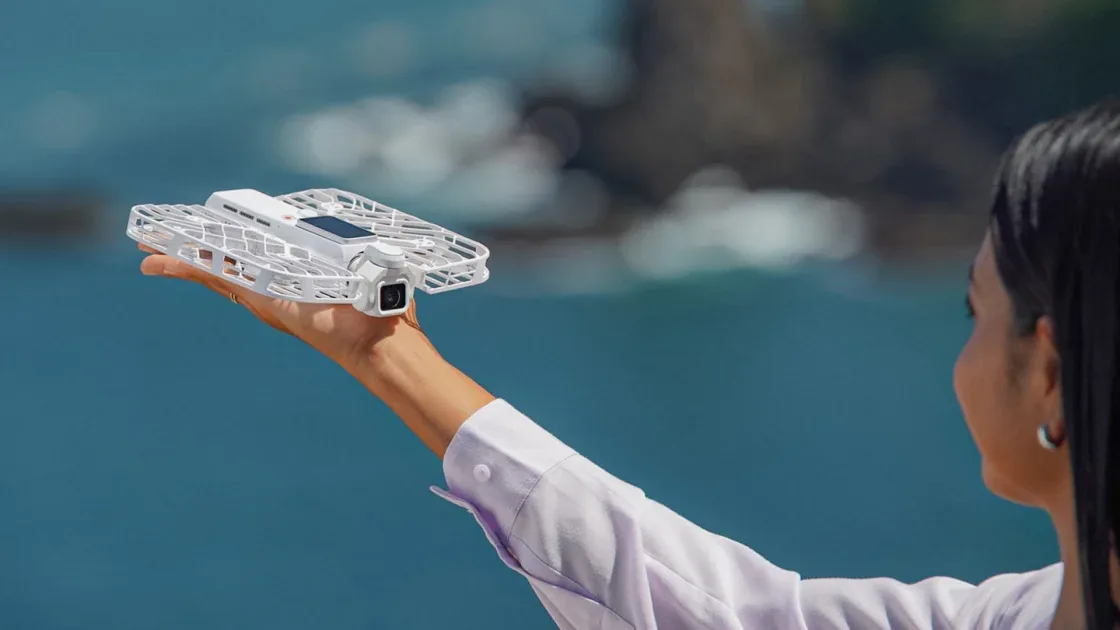
The HoverAir Versa, a new vlogging camera from the Chinese company HoverAir (an imprint of Zero Zero Robotics), has achieved a significant milestone by becoming the first consumer quadcopter to earn U.S. Federal Communications Commission (FCC) certification since the agency enacted its ban on newly introduced foreign drones. This development, announced recently, marks a potential breakthrough for consumers eager for new drone technology in the United States.
The Versa operates as a handheld, gimbal-stabilized vlogging camera, similar in concept to popular devices like the DJI Osmo Pocket 3. It features a compact, candy-bar form factor and a 3-axis stabilized camera capable of recording video up to 4K60 resolution. However, its unique selling proposition lies in its modularity: the Versa can snap into an optional "Flight Kit" accessory, transforming it into a compact selfie drone.
Modular Design Sidesteps FCC Ban
The key to the Versa's FCC approval lies in its innovative, piecemeal design. According to HoverAir, the Flight Kit, which includes the propellers and drone-mounting components, does not contain any radio frequency (RF) transmitters. This distinction means the Flight Kit does not require its own FCC ID or a separate listing in the FCC database. "The Flight Kit is an accessory designed to extend the HoverAir Versa’s capabilities, but because it contains no RF transmitters, it does not require a separate FCC ID or individual listing in the FCC database," a HoverAir representative explained to PCMag. The Versa camera module and its remote control, however, are listed in the FCC database, having received the necessary certifications.
This approach is particularly noteworthy given the FCC's recent actions. In recent months, the agency has been actively revoking approvals for drones previously cleared for sale in the U.S. and has shown little inclination to grant exemptions under its foreign drone ban, which was implemented late last year. The Versa's successful certification suggests a novel interpretation of the ban's requirements, potentially opening a door for other modular electronics.
When configured for flight, the assembled Versa drone weighs approximately 230 grams. This weight is crucial as it falls below the threshold that would trigger Federal Aviation Administration (FAA) registration and Remote ID requirements for recreational pilots. However, commercial operators will need to attach an external Remote ID transmitter to the device, which is sold separately, to comply with regulations.
Beyond its flight capabilities, the Versa boasts a Type 1/1.3 image sensor and an OLED touchscreen. HoverAir also claims the camera can capture footage with up to 17.5 stops of dynamic range, a figure that, if accurate, would surpass many high-end vlogging cameras on the market. Industry observers have noted this claim with skepticism, suggesting it should be viewed with caution until independently verified.
The HoverAir Versa is currently launching on Indiegogo. Early bird pricing for the camera-only unit is set at $449, increasing to $499 after an initial promotional period. The FlyMore Combo, which includes the Flight Kit, is available for $629 for early backers, with a later price of $887. A more comprehensive Creator Combo, featuring additional batteries and accessories, is priced at $799 initially, rising to $1,270.