
Intel Arc G3 CPUs Launch for Handheld Gaming PCs
Intel has officially released its new Arc G3 CPU family, designed to enhance performance in handheld gaming PCs. The new processors aim to bring desktop-like graphics capabilities to portable devices.

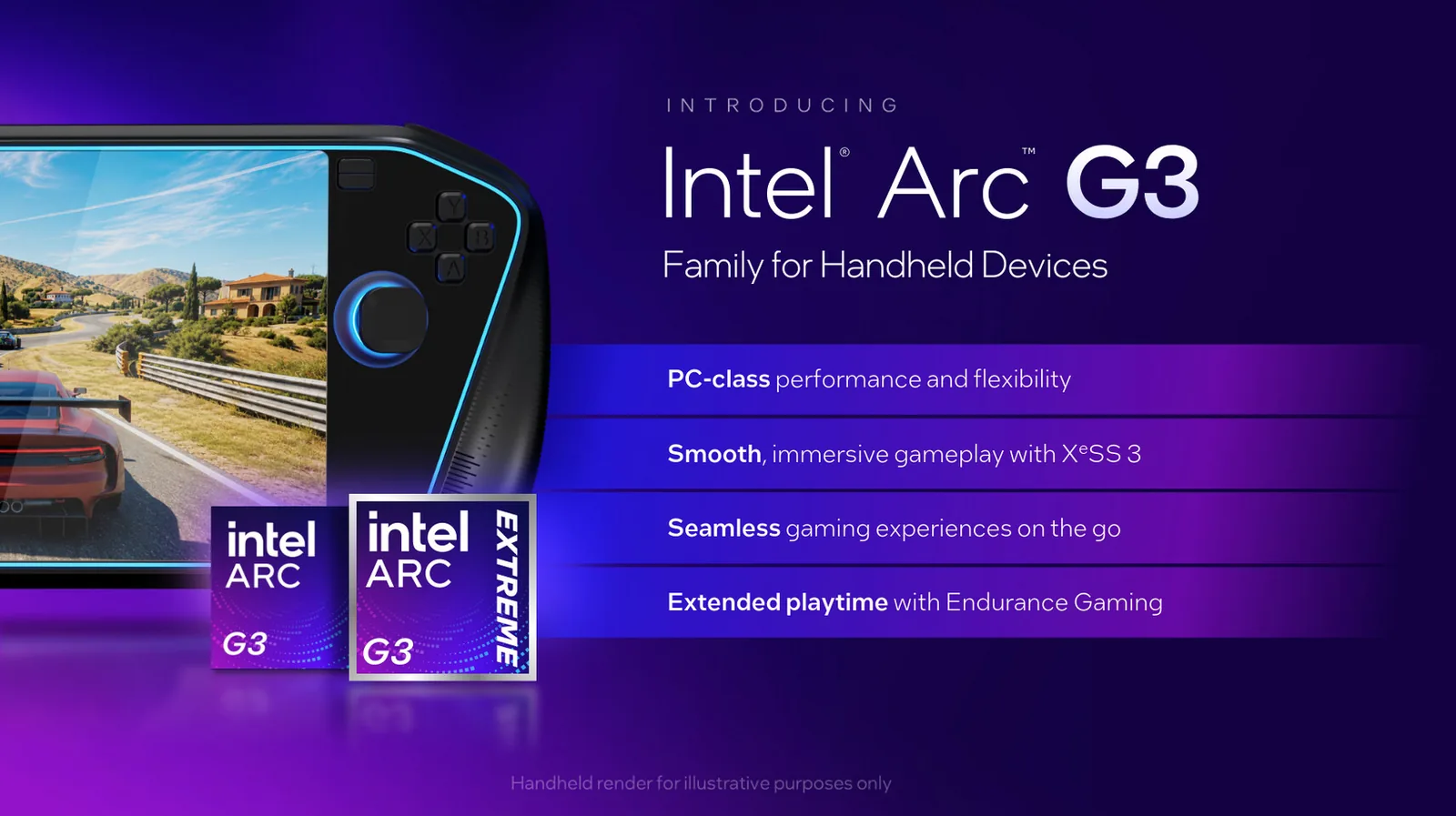
Intel has officially launched its new Arc G3 CPU family, a series of processors specifically engineered for the burgeoning market of handheld gaming PCs. This release marks a significant step for Intel in a segment that has seen rapid growth with devices like the Steam Deck and ASUS ROG Ally becoming increasingly popular among gamers seeking portable yet powerful gaming experiences.
The Arc G3 series integrates Intel's Xe-LPG graphics architecture, offering a substantial upgrade in graphical capabilities compared to previous integrated solutions. This allows for higher frame rates and more detailed visuals in modern games, bringing a more console-like or even desktop-like gaming experience to a handheld form factor. While specific clock speeds and core counts vary across the G3 models, the overarching goal is to provide a balanced performance profile suitable for a wide range of demanding PC titles.
Enhanced Graphics and Performance
The integration of Intel's Arc graphics technology is a key differentiator for the G3 series. These GPUs are designed to compete more directly with dedicated mobile graphics cards, offering features like hardware-accelerated ray tracing and AI-driven upscaling technologies, such as Intel's own XeSS. This means gamers can potentially enjoy visually richer games with better performance, even on battery power. The processors are built on a 4nm process node, aiming for improved power efficiency alongside raw performance gains.
According to Intel's product brief, the Arc G3 CPUs are expected to offer significant improvements in gaming benchmarks, with some configurations claiming to surpass the performance of older dedicated mobile GPUs. This is crucial for handheld PCs, where thermal and power constraints are always a consideration. The success of this new Intel Arc G3 CPUs family will likely depend on how well these chips perform in real-world gaming scenarios and how effectively hardware manufacturers can integrate them into their compact devices.
The company has not yet released specific pricing or availability details for the G3 CPUs themselves, but it is anticipated that system integrators and handheld PC manufacturers will announce new devices featuring these processors in the coming months. This could lead to a new wave of highly capable handheld gaming devices hitting the market, potentially offering more competition and choice for consumers.
This move by Intel is a direct response to the growing demand for powerful, portable gaming solutions. As the handheld gaming PCs market matures, component manufacturers are investing more heavily in specialized hardware. Intel's entry with the Arc G3 line aims to capture a significant share of this segment, challenging established players and offering an alternative for developers of future handheld devices.