
MacBook Pro Evolution: 5 Years of Design, Power, and AI
Apple's MacBook Pro has seen significant evolution in the last five years, with major upgrades in design, processor power, and AI capabilities, culminating in the M5 chip generation. Future models promise further advancements.

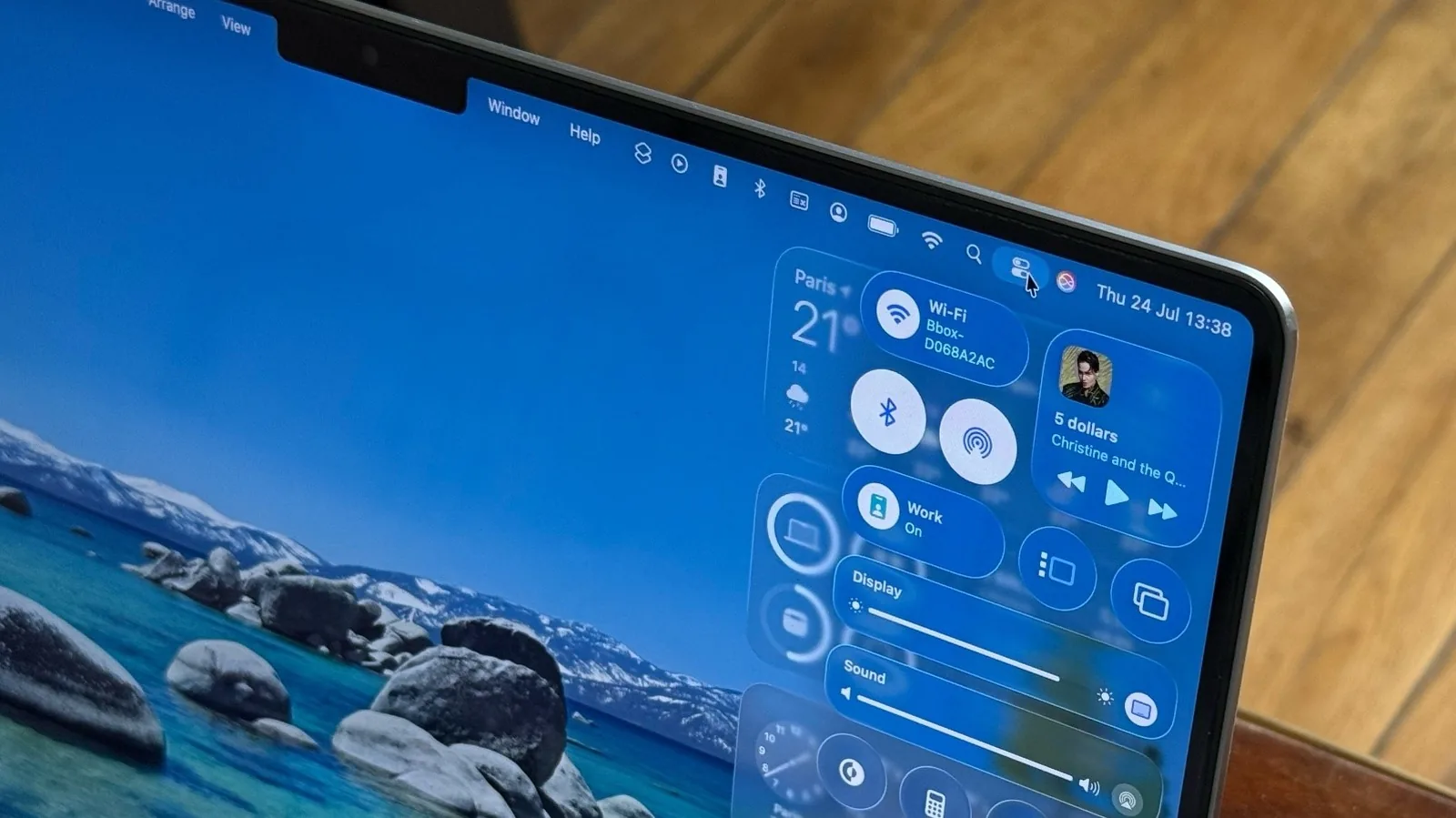
The MacBook Pro line has undergone a dramatic transformation over the past five years, moving from its late 2021 redesign to the current 2026 iterations. This period marks a critical shift for Apple, driven by the introduction of its own silicon, a renewed focus on performance, and an increasing emphasis on artificial intelligence integration. Even as the chassis has largely remained consistent, the internal advancements have redefined what a MacBook Pro can do.
The major overhaul in late 2021 coincided with the introduction of the M1 Pro and M1 Max chips, succeeding the initial M1 processor. This redesign aimed to rectify shortcomings of previous models, incorporating a new industrial design for better thermal management, an improved webcam, a revisited keyboard system, expanded port selection, the return of MagSafe charging, and a cutting-edge mini-LED display. These laptops continue to be performance benchmarks, and as the fifth anniversary approaches, expectations for the 2026 models point towards enhanced AI workloads, even more potent processors, and subtle display refinements.
Looking ahead to potential late 2026 or early 2027 updates, speculation suggests an all-new design, an OLED display, and even touchscreen capabilities could be on the horizon. However, the progress made between 2021 and 2026, despite retaining the same core chassis, is substantial. Updates have included support for Thunderbolt 5 and a new darker color option.
Processor Power and AI Integration
The transition from Intel processors to Apple Silicon has been a defining narrative. The M3 MacBook Pro, for instance, brought the refined design and features to a more accessible price point, ditching the older Intel aesthetic. This included a 14-inch mini-LED display, a full array of ports like MagSafe and an SD card slot, improved thermals, the removal of the Touch Bar, and an upgraded webcam. For $1,599, users gained access to the premium MacBook Pro experience previously reserved for models with Pro or Max chips. This move away from Intel was crucial, addressing user complaints about limited port selection and the often-criticized Touch Bar, which failed to gain widespread developer support and remained largely a gimmick.
The evolution of Apple's custom silicon, from the M1 series to the anticipated M7, showcases a relentless pursuit of performance. The current M5 generation, featuring a new Fusion Architecture and 3-nanometer process technology, significantly boosts core counts and efficiency over the 5-nanometer M1. Graphics performance has seen up to a 2.5x increase, and memory bandwidth has more than doubled from the M1 to the M5. Crucially, the M5 incorporates dedicated Neural Accelerators in each core, delivering up to six times the peak GPU compute for AI tasks compared to the M1. Enhanced ray-tracing engines and shader cores also promise superior graphics performance for gaming and professional applications. Memory configurations have expanded dramatically, with M5 models supporting up to 128GB of RAM, a stark contrast to the M1's 64GB maximum.
The focus on AI has become a dominant theme. While the M1 Pro and M1 Max press releases mentioned "machine learning," the M5 series press releases are replete with mentions of "AI." This shift reflects not only an industry trend but Apple's strategic pivot. The performance gains are tangible: an M5 Pro can generate images up to 7.8 times faster than an M1 Pro, process LLM prompts 6.9 times faster, and handle 3D rendering 5.2 times faster. These improvements are attributed to advanced manufacturing, enhanced Neural Engine cores, and optimized unified memory.
Display technology has also seen refinement. While the core mini-LED panel introduced in 2021 has been maintained, brightness levels have increased. The M4 generation brought brighter Liquid Retina XDR displays, offering 1,000 nits for SDR and 1,600 nits for HDR content. The M5 Pro can achieve twice the brightness of the M1 Pro under similar battery loads, enhancing outdoor usability. Furthermore, Apple introduced a nano-texture display option for Pro and Max models, a technology previously seen on the Pro Display XDR, Studio Display, and iPad Pro, designed to minimize glare and reflections, offering a significant benefit for users working in bright environments.
The webcam, upgraded to 1080p in 2021, has benefited from both hardware and software advancements. The integration of a larger image sensor and wider aperture improved low-light performance, further enhanced by image signal processors in the M1 chips. Subsequent software updates have introduced features like Portrait mode for bokeh effects, Studio Light for improved illumination, Background replacement for privacy, and Edge Light to mimic a ring light. The M4 generation introduced a 12MP Center Stage camera, keeping the user framed dynamically, and the Desk View feature, useful for presentations.
The evolution of the MacBook Pro over the last five years demonstrates Apple's commitment to pushing the boundaries of portable computing. From reclaiming design control with its own silicon to pioneering advancements in display technology, processing power, and a profound integration of AI capabilities, the MacBook Pro continues to set a high bar for premium laptops.